THE PARADOX OF PORN: the Internet as sex educator

The New York Times recently reported that a woman in Los Angeles sat down at her desk at the end of a long day and discovered that the search history on the family computer included “child porn.” A couple of days later, her 13-year-old son admitted that he had typed in that search. “He said he was looking for porn made for children,” the mother said. “He explained, embarrassed, that he just wanted to know what his body was supposed to look like at his age.”

I can relate to that. Can’t you? Kids are insatiably curious about bodies, their own and others’, especially in that time of life when their bodies are changing. And as advice columnists routinely attest, the #1 concern they field from readers boils down to “Am I normal?” The paradox of pornography is that it puts naked bodies on full display in all their voluptuous glory – a godsend to anyone who’s curious and in the dark about such things. At the same time, the kinds of bodies you see in pornography often convey a distorted picture of what constitutes “normal.” Not all the time, but a lot of the time the women’s boobs are enormous, the men’s dicks are gigantic, the crotches are shaved and hairless, and the skin is smooth, white, and waxy. And the paradox for kids is that we live in an era when any naked pictures of humans under the age of 18, even cartoon drawings, can be construed not just as pornography but as grounds for serious legal prosecution. The agony of hormonally activated adolescents starving and literally dying for lack of information about sex was the subject of Frank Wedekind’s deeply wild, long-suppressed 1891 play Spring Awakening, as well as the terrific 2006 Broadway musical based on the play. These days when kids go looking for a little bit of sex education online, they’re more likely to end up with TMI.

ken-bruiser collage

It would be great if we all grew up in body-positive households where nakedness occurred casually and appropriately from an early age, not necessarily equated with sex or something “dirty.” I was impressed to visit Iceland, where virtually everyone sits in hot tubs almost every day, and to note that the dressing rooms mandated the strictly enforced hygienic protocol that every person shower completely naked – and not in separate curtained-off cubicles but in open (sex-segregated) gang showers. Kids grow up seeing all sizes and shapes and ages of naked bodies, displayed in all their beautiful specificity yet with a community ethos of respectful modesty and mutual acceptance. Korean spas convey a similar healthy openness. It would be great to be exposed early and often to the notion that what you see in the mirror reflects exactly what you’re supposed to look like. If you don’t grow up in that kind of culture, how do you satisfy your curiosity? “Playing doctor” used to be the way kids explored seeing each other’s naked bodies. Nowadays it’s Doctor Google who holds all the answers.

You can be a lot older than 13 and still turn to online porn with the same questions: am I normal? What is my body supposed to look like? The Internet is kind of like the Bible – with enough persistent clicking around, you can find whatever you want there, to support any theory you want. Fretful parents can absolutely find scary images. Gender-queer explorers can find kindred spirits. Diversity hounds can find an XXX-rated Noah’s ark. People with crippling qualms about their own bodies can find evidence to support harsh self-judgments. “Over-exposure to porn, especially idealized body types, has led to disappointment with normal guys and a need to fantasize to achieve orgasm,” D.R. told me. “It’s also led to an unhealthy view of and disappointment in my own size and output.” (The word “output” is his modest way of voicing what I’ve heard from other men – porn can instill a sense of inferiority not just about the size of your dick but also the amount of jizz you shoot.)

Yet for every guy who feels shamed and intimidated by the invidious comparisons that online porn facilitates, someone else sees past the imperfections and experiences liberation. “Internet porn and social media is so great,” enthused S.A. “It’s making me 100% confident there are tons of guys who share my interests in various things to various degrees, some a lot more than me. I really think looking at naked guys, their genitals, butts, seeing all their curves and what used to be sort of weird-looking parts, so many variations in bodies, is very helpful to my emotional, psychological, social, and even physical health.”

It’s not easy being totally honest about sex, about bodies, about pornography, about curiosity. But I think it’s worth pursuing. What do you think?


DID YOU SEE: NY Times column on grief

Patrick O’Malley’s sensitive column “Getting Grief Right” in yesterday’s New York Times Sunday Review reinforced what I myself know from both personal and professional experience: grief knows no timetable. Mourning the loss of a loved one takes as long as it takes. It is not at all unusual for a bereaved person to fret that “it’s taking too long” or to worry that other people will think they’re crazy for still feeling consumed with unpredictable waves of sorrowful tears. Grieving people often accuse themselves of “wallowing” in their misery. And there are plenty of guidebooks and bereavement counselors out there who mean well — by applying Elisabeth Kubler-Ross’s theory about the stages of death and dying to the experience of grieving, or by suggesting that the first year is the worst and that things get better after the first round of anniversaries. But often that sort of “designer grief” doesn’t really help. Just as often, it makes the person who’s mourning feel worse, misunderstood, or enraged. Nor does medicating a bereaved person with antidepressants make sense. Grieving is a normal and healthy process for which there is no shortcut or substitute.

grief illo by arianna vairo

I resonated most with O’Malley’s suggestion that the story of loss has three chapters, and they look different and roll out in time a different way for each person. “Chapter 1 has to do with attachment: the strength of the bond with the person who has been lost. Understanding the relationship between degree of attachment and intensity of grief brings great relief for most patients. I often tell them that the size of their grief corresponds to the depth of their love.” Chapter 2 has to do with the death event itself. The impact of a sudden death, a freak accident, or a young child will automatically have an entirely different magnitude from the death, however painful, of an elderly parent or someone who has been ill for a long time. Chapter 3, says O’Malley, “is the long road that begins after the last casserole dish is picked up — when the outside world stops grieving with you.” This is when a support group or therapy can be helpful in providing a space where you don’t have to explain or make excuses for the feelings of drift, disorientation, and sadness that go with the territory of grief.

Check out O’Malley’s column here and let me know what you think.

RESOURCES: Brene Brown’s Guideposts for Wholehearted Living

As one of my teachers once said at a New Year’s meditation retreat, “So another year has gone by. Some good movies, some bad movies….” We have to joke about movies because otherwise it would be impossible to tolerate this period of almost relentlessly bad news. I spare myself the low-level fear-mongering TV news. Instead, I rely on The New Yorker for high-quality depressing news about war, misery, and injustice all over the world, including the US. Fortunately, The New Yorker also comes with high-quality reporting on medicine, science, culture, and new media, not to mention great cartoons.

theratrix cartoon
​For inspiration, I’ve been reading Brené Brown, who became widely known for her TED talk on the subject of vulnerability and whose book Daring Greatly made a big impression on me this year. I especially like it that in addition to her astute analysis of the shame mechanisms that keep us small, she offers a road map to a different way of looking at things. I want to share with you her “10 Guideposts for Wholehearted Living”:

  1. Cultivate Authenticity – Let go of what people think about you
  2. Cultivate Self-Compassion – Let go of perfectionism
  3. Cultivate a Resilient Spirit – Let go of numbing and powerlessness
  4. Cultivate Gratitude and Joy – Let go of scarcity
  5. Cultivate Intuition and Trusting Faith – Let go of the need for certainty
  6. Cultivate Creativity – Let go of comparison
  7. Cultivate Play and Rest – Let go of exhaustion as a status symbol and productivity as self-worth
  8. Cultivate Calm and Stillness – Let go of anxiety as a lifestyle
  9. Cultivate Meaningful Work – Let go of self-doubt and “supposed to”
  10. Cultivate Laughter, Song, and Dance – Let go of being cool and “always in control”

These suggestions are easier to offer than to accomplish but something to aspire to, anyway. What do you think?

DID YOU SEE: the Atlantic on Michael Kimmel

Stonybrook professor Michael Kimmel has a long distinguished career as an author, activist, and educator about men and masculinity. (His anthology The Politics of Manhood includes an essay by me.) So I was glad to see this article about him, “The Bro Whisperer,” in the online version of The Atlantic. The work he’s been doing for years has laid the groundwork for the movement to address rape and sexual assault on college campuses.

kimmel illo

A key passage in the article: “Much of the national conversation has focused on reducing binge drinking and prosecuting perpetrators. A more overlooked problem, according to Kimmel, is that many college men are insecure, unprepared for sex, and desperate to prove themselves to their friends. He says many of them approach hookups with the mentality that “sex is a battle: I have to conquer you, I have to break down your resistance.” The challenge, then, is to make men want sex that’s less like a battle and more like an unusually satisfying UN meeting, where everybody understands the proceedings and gets a vote.”

You can read the whole story online here. Check it out and let me know what you think.

Quote of the day: THE PARADOX OF PORN

Have you become desensitized to sex since starting porn and escorting?

No. What it has done is it has made it so in my personal sex life it’s more important to have a connection. There’s more passion now in my personal sex life. Touching and kissing and holding and really intense eye-to-eye connections, because you don’t get that in porn. I don’t know if I want to say this but porn is all about really uncomfortable positions so the camera can get the angles. Put your leg up here, stuff like that. Nothing you would ever do in your real life. I’ve held these positions for so long sometimes your body just aches. So I find myself needing the connection so much more now. Which I think is good. I was always worried before that I wasn’t going to appreciate sex any more. But it’s actually done the opposite.

— porn star Rocco Steele, interviewed by Adam Baran for Thesword.com

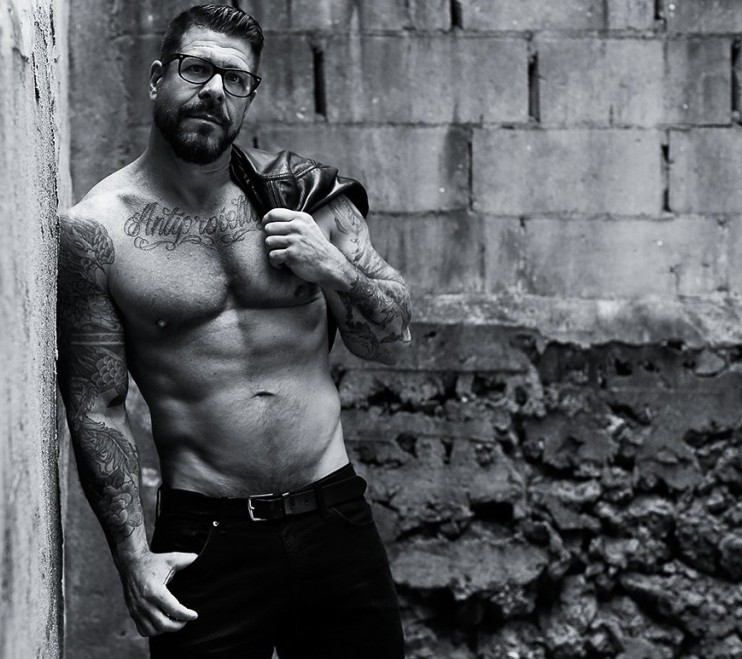
roccosteele

LET’S TALK ABOUT SEX: size matters

I Feel Bad About My Neck was the title of Nora Ephron’s last collection of essays, subtitled “And Other Thoughts on Being a Woman.” The male equivalent of such a book would obviously be titled I Feel Bad About My Dick. However much neurotic energy women spend obsessing about their weight, figure, skin, clothes, shoes, and hair, men’s (considerable) investment in those same concerns practically disappear in relation to the time and energy they spend fretting about their dicks.

snail.w529.h352.2x

“Is it big enough?” leads the pack, and of course it almost never is (thank you, pornography, for conveying a distorted image of what an average penis looks like). Even when the size is clearly adequate, there are other equally agonizing concerns: it may be long enough, but is it thick enough? It may be thick enough, but is it long enough? It may have length and girth, but does my dick work? does it get hard? does it get hard enough? does it stay hard long enough? does it squirt? does it squirt enough, fast enough, but not too fast? does it have a pleasing shape? what if it doesn’t? is it okay if I’m circumcised? is it a problem if I have a foreskin? is my foreskin too much or too little? is it unsightly? what about my balls — big enough? what about my pubic hair — too much? too little? groomed properly? not groomed enough? what about my asshole — should I shave it, bleach it, tattoo it…? (Again, thanks, porn.)

And all this goes on mostly inside our frazzled brains. Guys just don’t talk about this stuff. (Except maybe in therapy. There is some speculation that talking about his feelings of genital inadequacy to his analyst inspired Fritz Perls to invent gestalt therapy.)

Which is the main reason I found so fascinating a blog post that turned up on New York magazine’s website called “What It’s Like to Have a Micropenis.” Writer Alexa Tsoulis-Reay conducts an extensive interview with an unnamed 51-year-old white heterosexual Brit who has what is sometimes termed a “micropenis,” meaning that it measures three inches long or less when erect. The guy has a lot to say about the shame, embarrassment, anguish, and awkwardness of his endowment that I suspect many other men would relate to, no matter what size their dicks may be. As a professional who talks to men about sex for a living, I can say that it’s normal and reasonable to have a lot of feelings about your dick, including grief, anger, and fear of rejection. But I can also say that none of these feelings has to be the whole story. It’s a lifelong spiritual challenge to value your assets and not overidentify with your deficits. I operate on the assumption that anything that encourages you to be creative and imaginative — to expand your definition of sex beyond intercourse-to-ejaculation (sticking it in and pumping til it shoots) —  is only going to make sex play more fun, pleasurable, and satisfying for you and your partner.

What do you think?

BOOKS: The Cultural Encyclopedia of the Penis

10-2 penis encyclopedia
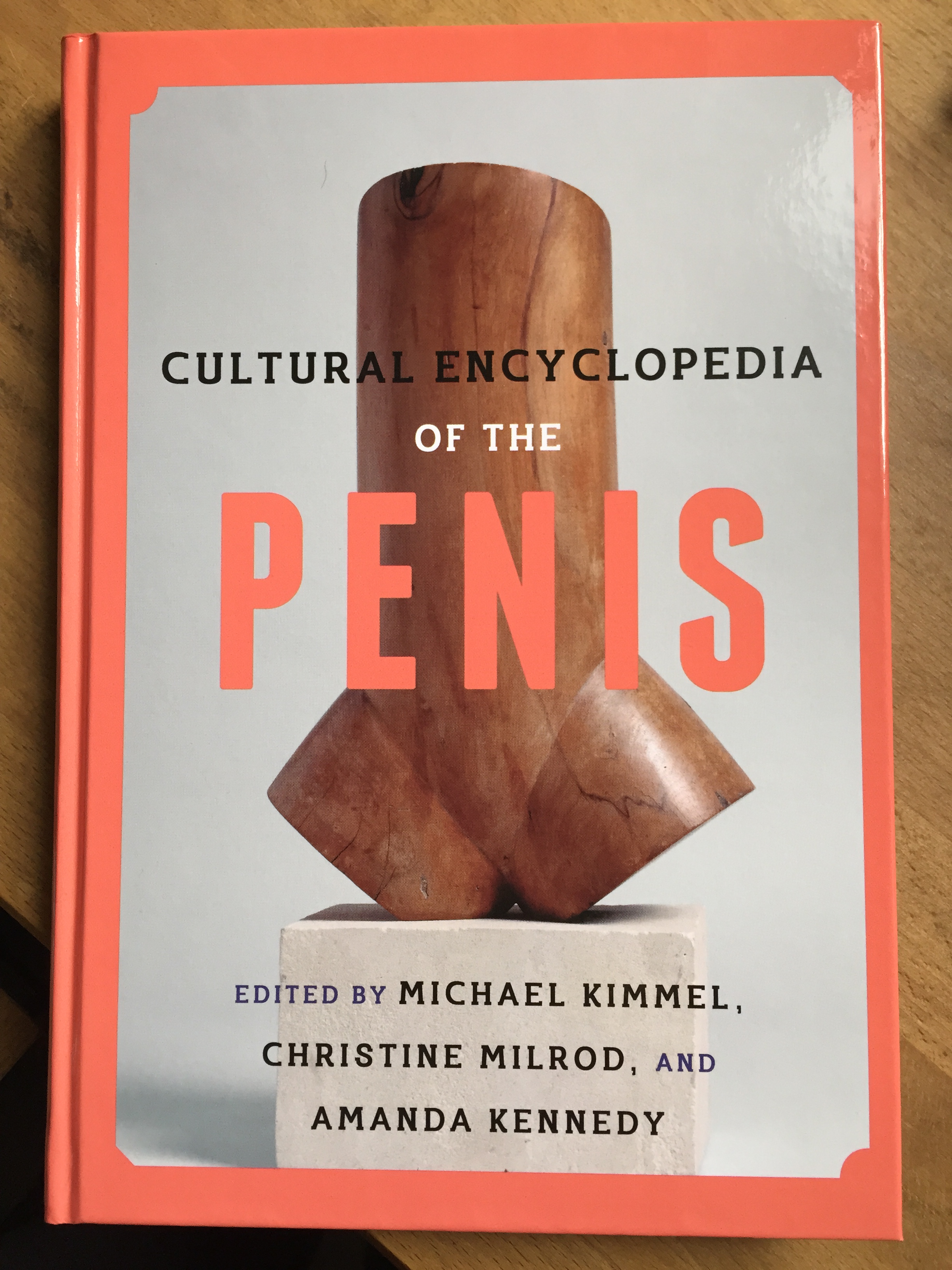
I was pleased today to receive my copy of The Cultural Encyclopedia of the Penis, a handsome hardcover reference book from Rowman & Littlefield edited by Michael Kimmel, a distinguished writer and authority on male sexuality, along with Christine Milrod and Amanda Kennedy. It’s an intelligent, serious but not overly scholarly volume with fewer illustrations than I would have imagined. The dozens of contributors include distinguished sexologists including Milton Diamond and my friend Winston Wilde, as well as Cynthia Albritton, aka Cynthia Plastercaster, famous L.A. groupie and member of The G.T.O.’s.

My subject was BODY ELECTRIC, and here’s my entry on that subject:

BODY ELECTRIC

In the realm of penis-pleasuring, “Body Electric” is code for a particular type of erotic massage. Invented by massage therapist and former Jesuit seminarian Joseph Kramer and first disseminated through a workshop for gay men called “Celebrating the Body Erotic,” Taoist erotic massage incorporates a wide variety of cock strokes intended to raise and circulate erotic energy around the body without the goal of ejaculation.

In 1984, Kramer founded a massage school in Oakland, California, that he named the Body Electric School after Walt Whitman’s famous ecstatic poem extolling the sacredness of the human body in all its forms and flavors. At the time, Kramer was on a mission to heal the split between sexuality and spirituality in his own life and to bring that healing to his tribe of gay men. With the onset of the AIDS epidemic, gay men had become terrified of touch and sex, and Kramer conceived a pleasurable way to share intensely erotic physical contact that involved no exchange of fluids and therefore constituted completely safe sex.

Synthesizing teachings from Stanislav Grof (on holotropic breathwork), Mantak Chia (on learning to separate orgasm from ejaculation), and tantra (on viewing sexuality as sacred energy), Kramer taught up to 40 workshops a year across the United States and Europe in 1988. He devised 30 different strokes for the “magic wand” that, unlike conventional masturbation, were designed not to facilitate ejaculation but to raise energy and extend pleasure indefinitely. He gave them playful, evocative names such as “Cock Shiatsu,” “Rock Around the Clock,” “Twist and Shout,” and “Hairy Palm Sunday.” Combined with steady, continuous, conscious breathing, a massage integrating these strokes culminated in a full-body contraction known as “The Big Draw,” which “squeezes the orgasmic energy you have generated into the core of your being where it shoots up through your heart and out the top of your head, connecting…with all other energies.” The combined flooding of breath and erotic energy can trigger a full-body orgasm. Some receivers hallucinate, weep, or have involuntary tremors that resemble grand mal seizures, while others simply feel pleasant tingling or peaceful calm.

Participants in Kramer’s workshops and week-long intensives gradually formed a community sharing a vocabulary and philosophy of sacred sexuality. In 1993 Kramer sold the Body Electric School, which continues to offer classes for groups of men and women in erotic touch as a healing practice.

—-

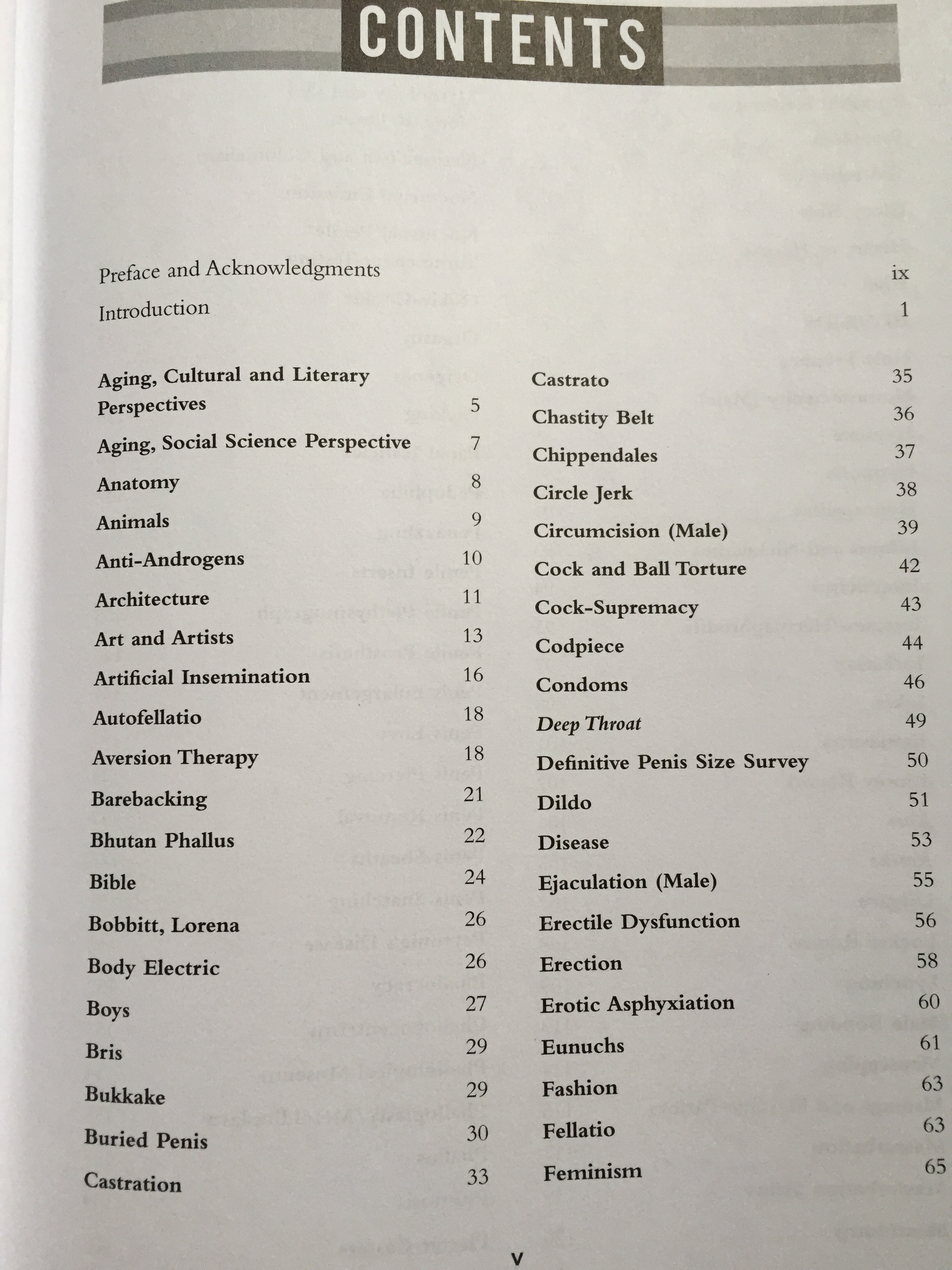
The Cultural Encyclopeida of the Penis is a pricey reference book — it lists for $85, which means it’s aimed more at schools and libraries than individuals — but you can order it from Barnes & Noble here. I’m reproducing the first page of the table of contents, as a teaser.

10-2 penis toc

MEDIA: Matt Alber’s “Handsome Man” video is a 4-minute primer on gay male intimacy

One of the paradoxes of gay male porn is that it shows all the juicy explicit details of sexual intimacy while rarely giving the slightest hint of emotional or social intimacy — such as what people say in order to get into sexual situations and what they say after everybody orgasms. So guys who watch a lot of porn, especially younger guys, guys who are in the closet, late bloomers, and the sexually inexperienced, can get lulled into thinking that’s all there is and forget or never learn how to conduct the simplest forms of interpersonal socializing.  Because if you’ve never seen it, how are you supposed to know what it looks like?

The new video by Texan gay singer-songwriter Matt Alber (which debuted today on AccidentalBear.com) represents a perfect antidote or companion to a steady diet of porn. In just 4 minutes and 44 seconds, it captures a multitude of glimpses of gay male intimacy that hardly ever show up even in full-length films and TV shows about gay life.

Two good-looking guys who aren’t kids, who have facial hair, geeky glasses, and imperfect bodies — 39-year-old Alber and his buddy Alan — wake up in bed together. They get up slowly, nuzzling and smooching. They have breakfast, they go back to bed, they take pictures of each other. They share a book. One writes a secret note on the back of a strip of photo-booth shots they’d obviously taken recently. The other one reads it after the guy leaves, and you see emotion surge into his eyes.

As these scenes play out, we hear the song “Handsome Man,” which kicks off Alber’s recently released EP Wind Sand Stars. The lyric conveys some of the simple thoughts and questions that emerge when you’re Getting to Know Someone:

Hey handsome man what’d ya do last night?
Did you have a good time? Was the music all right?
Did you wear that jacket with the deep blue jeans?
Bet the boys went crazy, bet you caused a scene.
Cuz everybody smiles when a handsome man walks by

Say handsome man, where you off to now?
Are you out in the garden or off to town?
Are there any new songs that you’re listening to?
I’m gonna take ya dancing when I come to see you

Handsome man, can I ask you this?
I know we’ve both been loved and we’ve both been kissed
But when the hounds are sleeping and the night is deep
Will you tell me the story of you and me?

I love that Matt Alber prizes these tiny mundane touches of gay male affection and interest and that he’s willing to model them, to be a kind of teacher of gay intimacy. Check out the video and let me know what you think. And if you haven’t ever seen it, be sure to check out the video that put Alber on the map, “End of the World,” an even more romantic four-minute fairy tale with the kind of happy ending you don’t see in porn.

THE PARADOX OF PORN: penis dimensions

THE PARADOX OF PORN

Perception: the more I look at porn, the smaller I think my dick is.

Reality: “While most models are presented in poses that make them appear to be massive brutes, most of them are really, really short. There’s a reason for it. While gay male mythology makes a great deal of noise about various cock sizes and the ways you’re supposed to be able to discern them — big feet, big ears, et al — the truth is that most dicks are about the same length and width. There are variations but, for the most part, the differences between various dicks are slight. Thus, if you have a perfectly average penis on a very short man, it looks huge. But the same cock on a very tall man, and it will look small. The munchkins win out in the model sweepstake. Knowing all this makes it difficult to believe that the mean-looking biker on the cover of Drummer is really anything more than a gym bunny who stands only as tall as my tits.” — John Preston, My Life as a Pornographer

Man measuring his penis size