DID YOU SEE: Esther Perel interviewed in The Sun

Belgian-born sex therapist Esther Perel is an expert on the subject of sex, intimacy, love, and desire in long-term relationships. The author of Mating in Captivity and the subject of a very smart and widely-circulated TED talk on desire, she was recently interviewed by Mark Leviton in The Sun, an excellent literary magazine renowned for its in-depth Q-and-As with remarkable thinkers.

perel2
I’m a tough customer when it comes to speaking and writing in this field, I suppose because these subjects are near and dear to my heart, and I hate the amount of misinformation, bad advice, and stale thinking that goes out under the rubric of relationship counseling. But Perel passes my bullshit-detector with flying colors.  I found myself completely engrossed in this article (“A More Perfect Union”) and in agreement with her almost every step of the way. I particularly like the way she talks about fantasies and also how she addresses the subject of parenting in contemporary life. Since I’ve quoted those passages online already, I’ll offer an excerpt here in which she talks about the subject of infidelity:

I don’t abide by the perpetrator-victim model of infidelity, in which the cheater is criminalized and the victim is given all the empathy. I also don’t believe an affair automatically means the relationship is bad. Here’s the usual view: If we, as a couple, have everything we want from each other, there’s no reason for either of us to go elsewhere. Hence, if one of us goes elsewhere, there’s something missing between us; infidelity is a symptom of a problem in the relationship.

That’s sometimes the case, but affairs often have more to do with the unfaithful individual than with the couple. People go elsewhere for sex not so much because they want to leave their partners but because they want to escape who they themselves have become. They are looking for parts of themselves that they’ve lost because of the relationship. But many adulterers are reasonably content in their marriage and monogamous in their beliefs. In my experience most have been faithful for ten or fifteen years before they’ve cheated.

If you see adultery only as a symptom, you sometimes take good relationships that have worked well for decades and make them look like failures. I don’t think that’s right…

I’ve seen couples in which I’m convinced there’s an affair going on but no one wants to talk about it. I’ve seen couples in which one person keeps asking the question and the other keeps denying it, or one keeps dropping hints and the other doesn’t want to pick up on them. I’ve had clients who are resisting having an affair, and others who can’t talk clearly about their marriage because they are intoxicated by an ongoing affair and everything else pales in comparison. Or they are irritable and don’t want to go home because of their guilt or because they don’t like their partner at the moment. Other clients might want to be in the relationship, but their partner has Alzheimer’s and can’t recognize them, and they need a way to rejuvenate themselves so they can spend an hour every day with their partner at the nursing home. I hear about kinds of infidelities that never existed before now, but infidelity itself is timeless. At all four corners of the world, at any moment, someone is either betraying a beloved or being betrayed. Infidelity: historically condemned, universally practiced.

You can read the entire interview online here. Check it out and let me know what you think.
RESOURCES: Gil Kessler teaches a master class in kinky play

For gay men who are interested in educating themselves about the skillful use of BDSM play in their sex lives, one of the best resources in New York City is Gil Kessler, who for 25 years has conducted an annual class for novices – men drawn to kinky play who have little or no experience, or players with some experience who want a refresher course. Kessler is currently enrolling students for the next class, which begins January 5 and runs through March 16.  The class consists of six four-hour sessions (every other Sunday from 3-7 pm), which he conducts at his residence in the West Village. It’s open to men who are at least 19 years old and comfortable working with other men, sometimes undressed. Everyone participates as both top and bottom in the demonstrations and workshop exercises. Among the topics covered are basic bondage, spanking and flogging, tit and genitorture, rope harnesses, things that pinch, mummification, and electricity. The cost of the class is extremely modest — $40, which covers all supplies, notes, and refreshments for the course. For more information, or to apply, contact Gil at novices2014@yahoo.com and include your name and phone number.

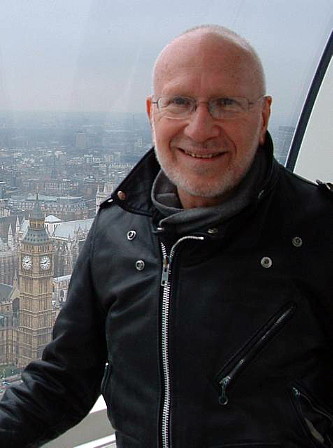
Gil in London - March 2006

I’ve known about Kessler by reputation for many years but only met him in person earlier this year. A retired college math professor, he is very meticulous in his teaching and practice. Underneath his unassuming exterior, he’s extremely knowledgeable not only about the mechanics of kinky play but also about the interpersonal dynamics that go into creating powerful BDSM scenes. The written handouts that he provides for each of his classes is exceptional — I’ve never seen more thorough, accessible instructions for BDSM practice.

His teaching evolved out of his membership in the Gay Men’s S&M Association (GMSMA), which met twice each month at the Gay and Lesbian Center on West 13th Street from the early 1980s until 2009, when the group disbanded. GMSMA defined itself not as a private sex club but more of an organization focused on social networking, activism, and education. From the beginning, it offered one-time workshops on specific topics (flogging, fire play, wax) and multi-session special interest groups (SIGs) that addressed larger issues (fantasies, foot fetishes, S/M literature, spirituality). An avid member, Kessler served a term as president of GMSMA and became resident archivist for the group, keeping copious notes on its workshops and activities, which eventually included a SIG for novices. (The GMSMA archives are housed at the Leather Archives and Museum in Chicago.)

“I’ve been conducting a Novices SIG since 1990,” Kessler told me. “It was originally for tops only. We soon offered one for bottoms only, conducted by experienced bottoms. But after a while there was no one to reliably conduct the Bottoms SIG so I combined them. That worked wonderfully, with everyone being both top and bottom. There were times when I conducted more than one SIG during the year, and they used to include as many as 16 sessions.  As time went on, I continually condensed, finally getting down to six sessions covering the major topics.” When GMSMA shut its doors in late 2009, Kessler continued offering the class under the auspices of The Eulenspiegel Society (TES).

ropes

Recently I asked Kessler to tell me how he became the repository of such an extraordinary body of knowledge about BDSM play. Did he have important mentors? Undergo transformative initiations? Read lots of books? “I didn’t find most books to be helpful,” he said, “with the major exception of Race Bannon’s Learning the Ropes, which is brief and to the point. There aren’t particular people I consider mentors, but I attended virtually all the workshops, SIGs, and programs that GMSMA offered, so I learned bits and pieces from many people (including Peter Boots, Bob Pesce, and Andrew Harwin). I also attended Inferno and Delta [annual gatherings of gay male BDSM aficionados] for many years, watched closely, and experimented carefully. The first GMSMA chairman, Ray Matienzo, was a general influence on me when I joined the board in 1984. He had the qualities that go into making a wonderful S/M practitioner: extensive knowledge, confidence, sense of humor, consideration of his bottom, etc.

“It’s hard to judge what was in my own personality and what I picked up from other people,” Kessler said. “I certainly learned to be patient and listen to my bottoms (I was never really a bottom myself), and to try to make them happy as my major goal. How much of that came from me or from other people? I don’t know. I seemed to simply learn as I went along and as I began teaching others what I knew.”

For me, Kessler exemplifies what a community elder looks like – someone who has accumulated a wealth of knowledge and experience and has found a way to transmit this information to younger men with generosity and grace. In his retirement, of course, he enjoys spending more and more time at his country home in upstate New York, and he’s not going to be teaching Novices SIGs forever. So if you’re inclined to avail yourself of this valuable resource, don’t wait.

DID YOU SEE: New York Times on the “low-T” industry

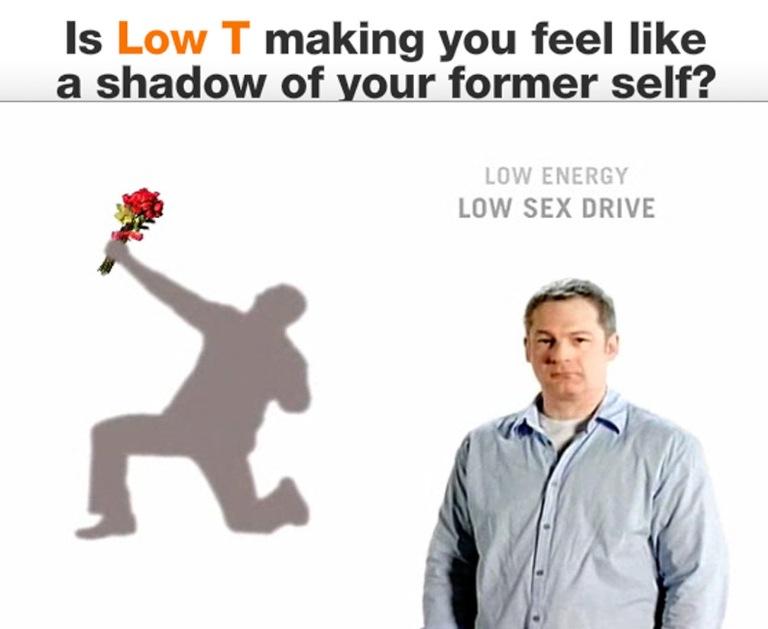
The front page of the Sunday New York Times business section yesterday led with an important story called “Selling That New-Man Feeling.” The article details how the pharmaceutical industry, especially the company that manufactures Androgel, has made literally billions of dollars exploiting adult men’s insecurities about aging, masculinity, and sexual performance. Although many scientists find the claims made by companies promoting testosterone supplements to be unpersuasive, still the market plays to guys who get suckered into thinking “low-T” is a major health problem and that boosting their testosterone levels with commercial products will lead to the fountain of youth or at least better boners.

new man
I do believe there are some men whose health is affected adversely by sub-normal testosterone levels. But that population is quite small, not big enough to enrich pharmaceutical companies. The way testosterone supplements are being marketed now, with vague questionnaires that link “low-T” to symptoms every breathing human experiences, constitutes the worst kind of snake-oil salesmanship. I have friends who’ve gotten suckered into trying testosterone patches, gels, and injections. Some of them have experienced the illusory effect of feeling stronger, peppier, and more libidinous — to my mind, indistinguishable from the placebo effect — but most of them have encountered significant side effects: irritability and short-temperedness at best, prostate cancer at worst.
lowTGranted, any doctor who’s any good monitors prostate health closely when prescribing such supplements, but not every patient collaborates with their physicians’ best practices. But in my work as a sex therapist, I have been appalled to hear that men in their sixties and seventies have been prescribed testosterone supplements by their doctors. It seems to me unconscionable to mislead middle-aged and elderly men into thinking they can maintain the same level of sexual performance they experienced when they were 25. Men can lead active, healthy, sexually fulfilling lives well into later life, but the key factors are diet, exercise, stress reduction, and emotional balance, not to mention a concerted effort to accept aging with grace and resourcefulness — all of which require patience and commitment, for which pills and gels are no substitute.

But don’t take my opinions and observations as the last word. Judge for yourself. Read the article here and tell me what you think. Another very smart article on this subject appeared in the Times two years ago, talking about how the use of steroids and hormone supplements by athletes has spread to the general population — see Steve Kettman’s “Are We Not Man Enough?”

RESOURCES: George Russell on gender and body image

My friend George Russell, an extraordinarily skilled chiropractor, bodyworker, and former dancer, recently wrote a blog post that I thought was so smart and thoughtful that I’d like to share it:

A good way to start that cultural revolution you’ve had on your bucket list ever since you bought the White Album, try starting with the body, your own and others’.

In our culture, women tend to think they’re too heavy, and men tend to think they’re not strong enough.  This tendency is physical as well as emotional.  My college dance professor Cheryl Cutler told me this 30 years ago and what’s amazing is that it’s as true now as then.

                 george blog pic

I taught “Alignment for Actors” for several years at NYU’s Atlantic Theater Company conservatory.  On the first day, I would have 16 freshman actors in front of me, 2/3 girls, 1/3 boys, dressed for movement.  The vast majority of the girls were dressed carefully, and moved in a way that was neat, self-aware, and used a small amount of personal space, like they were dancing in an airplane aisle.  An equal proportion of the boys could hardly tell what their bodies were doing, how they were shaped, or even what they were wearing, but they ate up space, spoke more than the girls, and moved boisterously and in front, like they themselves were the airplanes.  The girls were focused on how they were being seen.  The boys were focused on what they could do.  I found myself intrigued and concerned about how that would play out in their lives.  And I tried my best to make it a problem and project for them.

Now I turn my attention to you.  Let’s start with a couple of experiments.  First,

1.        Take off your clothes.
2.        Stand naked in front of the mirror.

What you tell yourself about your body may not surprise you (after all, you’ve been hearing it all your life), but it may surprise you (especially if you’re a man) to know how much what you think of yourself in private is culturally determined.  Are we having fun yet?  Great.  Then get dressed and come with me.

Go to a public place.  Observe a group of men and women you don’t know who are having a conversation.  See who takes more space, and who takes less.  See who is careful to smile and retreat in their shoulders or chest, and who pushes their body forward, dominating the conversation and the space with gesture and words.  See who ends statements with an inflection that sounds like a question.  When two people speak simultaneously, see who apologizes and yields the floor.  If a woman is interrupting, and/or speaking more than others, what do you think of her?  What are the habits and characteristics of the people you attracted to in the group?  Whom do you consider successful or likeable?

If any of these ideas sound right to you, keep your eye on them.  Track what you think, and it will change.

If these ideas don’t sound right to you, you’re probably not especially gender-normative.  This is neither good nor bad, but you might ask yourself how you got that way and how you feel about it.

You might think I’m saying that the way we hold our bodies, how we regard ourselves physically, and how bodies interact in public situations is political. But what I’m saying is actually far MORE radical than that. What our bodies are to us, and what our bodies do IS our politics.  The body enacts what we really believe about ourselves in relation to others, and those beliefs are different, and often opposite, to our “political beliefs.”

YIKES.  Let me know what you discover.

You can find out more about George and his work on his website here.

                    george_hp_pic

DID YOU SEE: Wall Street Journal on why couples have sex

married sex cartoon

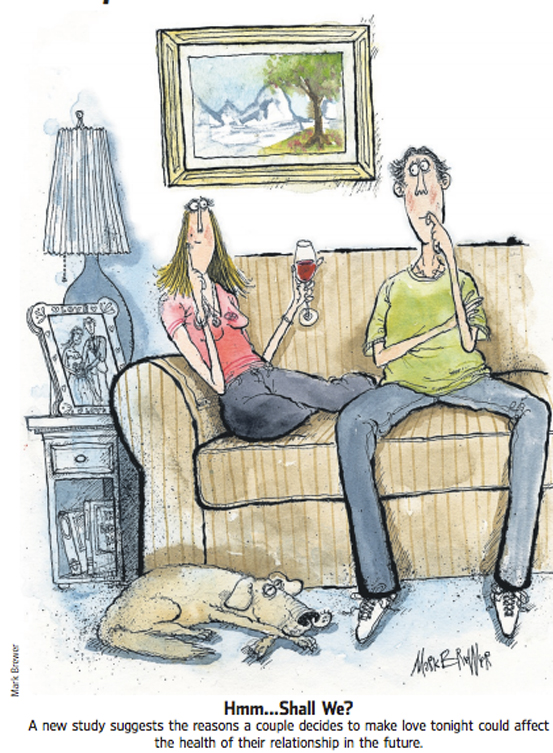
An article by Elizabeth Bernstein in the Wall Street Journal recently summarized findings from a couple of Canadian research studies about what constitutes satisfying sex for married couples.

For many years, scientists believed that humans had sex for a few simple reasons: to reproduce, experience physical pleasure or relieve sexual tension. Then a 2007 study from the University of Texas identified 237 expressed motives for sex. The reasons ranged from the mundane (stress reduction) to the spiritual (to get closer to God) and from the altruistic (to make the other person feel good) to the spiteful (to retaliate against a partner who cheated by cheating).

Now, two studies by University of Toronto researchers published this month in the journal Personality and Social Psychology Bulletin, have divided the most common reasons why people have sex—and the ones most relevant to long-term relationships—into two broad categories of motivation: approach and avoidance. Approach motives pursue a positive outcome. (“I want to increase intimacy with my spouse” or “I want to feel closer to my partner.”) Avoidance motives aim to evade a negative outcome. (“I want to avoid conflict” or “I don’t want to feel guilty.”)

It’s a pretty interesting analysis (though focused exclusively on heterosexual married couples), with some testimonials about the value of sex therapy for couples wanting to deepen their physical intimacy.

How can you become more positively motivated when it comes to sex? If you’re feeling like you’d just rather go to sleep, try tuning into the emotional connection between you and your partner, says Julie Hanks, a clinical social worker in Salt Lake City. “Lead with what you want instead of what you don’t want to happen,” she says. 

About a year ago, Ms. Brinton decided she and her husband needed to work on their sex life. “I thought, ‘I want to enjoy sex. I want to feel connected to my husband. I want to reclaim my sexuality.’ ” So she started doing things to make herself feel sexy: She bought new lingerie and started reading erotic romance novels. Ms. Brinton also asked her husband to go to a sex therapist with her.

Her husband says he was thrilled. He figured there would be a lot of sex as homework. But, at least initially, their homework was to focus on real communication—not just small talk—about issues unrelated to sex. “I came to realize that you can’t have a great, intimate sex life until you have learned to connect outside of the bedroom,” says Mr. Brinton, who owns a custom-framing business. Eventually, their conversations led to talk of sex—and then more sex. Once “we knew how to talk about other things, we felt comfortable with the difficult questions about what the other person likes in bed,” says Mr. Brinton.

Check out the whole article here and let me know what you think.

EVENTS: “Sensual Massage for Couples,” a class for men at MMX in NYC October 26, 2013

I will teach a day-long class in sensual massage for gay male couples at the MMX studio on 14th Street in New York City next Saturday, October 26, 2013.

couples touch
Massage is one of the simplest and most profound forms of healing there is. Human beings thrive on being held and touched; in fact, healthy babies can’t do without it.  As adults, we are no less susceptible to the joy and pleasure of nurturing touch. For people in relationships, it’s easy to start taking touch for granted, letting it get perfunctory. Even if you have a robust sexual connection, there is a tendency to “cut to the chase,” skipping over some kinds of sweet, sensual touch that makes physical intimacy so nourishing. Sharing massage can be a wonderful prelude to lovemaking, and it can also be a delicious meal all it itself.

The class will meet from 10 am to 5 pm, with a one-hour break for lunch. I will demonstrate a full-body sensual massage and then provide guidance as each participant takes turns giving and receiving this treatment. The fee is $300 per couple.

The class is open to established couples, new couples, or temporary couples – if you’re single but would like to have this experience, feel free to enroll a friend to be your mate for the day.

For more information and to register for the class, go here.

MEDIA: “James Broughton Gave Me a Pearl Necklace”

The latest issue of RFD, the reader-written journal of the Radical Faerie community, is devoted to the late great poet and filmmaker James Broughton, the subject of recent documentary film by Stephen Silha and Eric Slade called BIG JOY. When I was younger and had a lot more hair, I had the pleasure of meeting Broughton in 1991 at the Gay Spirit Visions conference in North Carolina, and my brief remembrance of that occasion appears in RFD and below:

Joel Silver, James Broughton, and Don Shewey

Joel Silver, James Broughton, and Don Shewey

JAMES BROUGHTON GAVE ME A PEARL NECKLACE

I met James Broughton in September, 1991, when he graced the second annual Gay Spirit Visions conference in North Carolina as keynote speaker. Before that event, I knew he was a poet – his pithy, often humorous, often lightweight verses led some to consider him the contemporary gay incarnation of Rumi – and somehow I had absorbed the information that he had been married once upon a time to the legendary film critic Pauline Kael, of all people. But only in person did the full force of Broughton emerge.

He was elderly then, 77 and snowy-haired, a little frail but in pretty good health and attended by his loving companion Joel Silver. He was friendly and approachable, though of course he was also a showman. He knew how to attract and hold an audience, not so much by being loud and ostentatious but by radiating an amused intimacy and the elfin twinkle of someone who has marinated his epiphanies in joy rather than solemnity. He wore the mask of an airy-fairy gentle sprite, but when he opened his mouth to speak the hardcore metaphysical prankster revealed himself. Joseph Kramer, the visionary founder of the Body Electric School, also attended the conference as a guest speaker, and I vividly recall his rapturous attention as Broughton held forth on what he called “The Holy Trinity” – the phallus, the anus, and the perineum. Raven Wolfdancer, a beloved Atlanta faerie (later murdered on his doorstep by an unknown intruder, but that’s another story), introduced Broughton to the conference as “my bliss mentor, my ecstasy mentor. He taught me to parade my peculiar.”

For his keynote address, Broughton delivered a talk he had apparently given more than once, alternately titled “The Sexual Holiness of Men” and “The Sexuality of Spirit.” It was a kind of sermon, a dharma talk, a benediction dense with the distilled wisdom of a lifetime. You can find the verbatim text online, but in my diary I took notes, and looking at them now they contain one jewel after another. I realize that in the hour he was speaking I became a disciple, because the sentences that leapt out at me have stuck with me ever since.

Since this is a spiritual conference, I begin with a blessing: Hail Mary, quite contrary…

I’m a poet – do not expect reasoned argument.

I take my text from Novalis: “There is only one temple in the world, and that is the human body.” And the only proper activity in a temple is worship.

Churches exist to make you feel miserable.

Buddha is down on desire. Broughton is very up on desire.

Your brains have been washed with the detergent of guilt too long.

The penis is the exposed tip of the heart, the wand of the soul.

I was born to love my own kind, not compete with or acquire them.

Most communication is made of sneers and complaints. One of my mottoes is “Reach, touch, connect.”

At the baths, each cock was a bead in my rosary. Sexual loving is the true practice of religion. Put lovemaking before moneymaking and troublemaking. Teach it in schools. Holding hands, okay. Hug, yes, but with your whole body. I would add kissing. Practice this lifesaving on your neighbors. Love the living as much as the dying.

Stop thinking of yourselves as outcasts. You are meridians, raising consciousness, not babies. You can be and not beget. You may be outside of society’s mainstream but in the mainstream of wisdom.

I’d rather be kissed than stamped with approval.

MEDIA: “An Eye for an Eye”

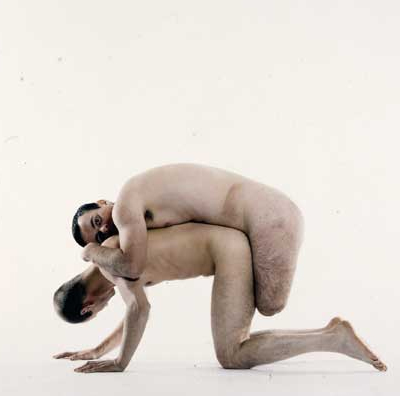
I frequently bemoan the dearth of images of explicit physical affection that doesn’t resemble commercial pornography, so I’m delighted to call attention to this beautiful short film by Polish visual artist Artur Żmijewski.

As the website for his gallery explains, “The film features people with disabilities, who suffer from severe difficulties in their everyday lives as a result of amputations. A temporary relief in their struggle with daily activities is brought by healthy people, who lend them parts of their own bodies. In order to make up for the deficiencies of the body with disability, they lock with it in an uncanny embrace. However, offering a healthy limb requires breaking the barriers of intimacy, i.e. touching the scar – the most sensitive part of the body after amputation. Thus, Żmijewski’s film becomes a story of intimacy and ways of overcoming the mechanisms of exclusion.”

Artur Zmijewski – An Eye for An Eye, 1998 from Hurford Center on Vimeo.

artur 2

LET’S TALK ABOUT SEX: Learning from porn

8-13 learning from porn
At the Rowe Labor Day retreat in Massachusetts for gay, bisexual, and questioning men, I conducted a workshop called “Learning from Porn.” I felt ever-so-slightly scandalous broaching this topic while attending a conference at a Unitarian Universalist retreat center. At the same time, like my teacher and mentor Joseph Kramer I’m committed to healing the split between sexuality and spirituality in our culture. We all have bodies, and it is our spiritual invitation to inhabit them fully and mindfully. And reading a poster in the Rowe library enumerating the core values of Unitarian Universalism, I resonated with its championing “a free and responsible search for truth and meaning.”

As a number of participants in the workshop immediately acknowledged, almost every male adult has some kind of love/hate relationship with pornography, that ubiquitous form of entertainment that heavily influences the norms by which we judge our bodies, our desires, and our sexual partners — but we hardly ever talk about it to anyone. I wanted to create a safe, non-judgmental context in which to consider a few pertinent questions: What is hot about porn? What myths about sex does porn perpetuate, for better or for worse? What aspects of pleasurable sexuality never show up in porn? I quickly learned that men have plenty to say on all these topics.

Most public discussions about pornography tend to focus on addiction, abuse, exploitation of women, and so on. Those problems clearly exist, but I believe that as human beings we always have a positive reason for doing what we do. And as a sex therapist, especially one who works with a lot of gay men, I’m acutely aware of the paradox of porn — that however much it contributes to shame, compulsiveness, and distorted ideas about sexuality, looking at pornography is for many men an important doorway into erotic existence. So I purposely wanted to open the discussion by asking what’s valuable about porn…. Read more

SEX IN THE CINEMA: Christina Voros’s documentary KINK

Jessie-Colter blindfold

Christina Voros‘s documentary Kink, which had its world premiere at the Sundance Film Festival last January, had one screening this month in the New Fest, the LGBT film festival that has entertained New York’s gay cinemaphiles for the last 25 years. Produced by that unpredictable enterprising Energizer Bunny James Franco, the film provides an extremely illuminating tour of the San Francisco studios of Kink.com. That’s the empire that creates the BDSM porn that shows up on websites like Bound Gods and Naked Kombat familiar to kinky gay guys, as well as non-gay sites such as FuckingMachines.com, WhippedAss.com, and Bound Gang Bangs.

Need I say that this is not a film for the faint of heart?

The documentary incorporates talking-head interviews with directors, producers, technicians, and performers as well as scenes of them going about their daily business. There are lots of hardcore scenes, some of which turned me on, some of which made me cringe. But what makes this a compelling and admirable film is the high quality conversation it models about sex, kink, BDSM, boundaries, consent, violence, abuse, why people make porn, and what people get out of watching it.

sf armory

Many of the producers interviewed are very smart, attractive women — such as Princess Donna and Maitresse Madeline — who not only speak with great intelligence and nuance about BDSM and porn but who operate on the set with fascinating flexibility, compassion, humor, and sophistication. Same goes for transman TomCat.

The Kink site I’m most familiar with is Bound Gods, whose creator, Van Darkholme, is a major figure in the documentary, representing the gay male fetish fiefdom within Kink.com. Although I’ve been curious to check out the bondage and fetish sites he produces, I’ve always been put off by his personality and his manner. He’s extremely brusque and lacking in the qualities of caring that I would want in a kinky top. And he doesn’t come off any differently in the documentary. Considering how coldly he treats his performers, especially the way he berates and corrects the tops in scenes he’s filming, it’s hard for me to understand how he gets so many guys to do the things they do for him.

And it’s not just that the women are nurturing and the men are brutal — we get to watch a male top conducting a very intense scene with a woman who’s bound, suspended, and being worked over by an ingenious vibrating machine, and he exhibits a beautiful mixture of authority and attunement. Another male producer makes it very clear that he doesn’t like to have anyone on the set who isn’t really really into what’s going on.

John-Magnum-gag
This is not a film that’s going to be a hit in theaters or get an Academy Award nomination. It will most likely find its following on DVD. But I hope a lot of people will watch it. Just as the feature film The Sessions gave moviegoers an avenue to understand the world of sexual surrogacy, Kink succeeds in its intention to avoid sleazy sensationalism and to enlighten curious viewers.