Krystal Orwig invited me to be a guest at her Must Love Memoir monthly reading series devoted to personal stories. I will be reading from my latest book, Daddy Lover God, along with Felice Cohen and Minda Honey. The reading happens Tuesday, October 10, at 7:30 pm at Jake’s Dilemma, a sports bar on the Upper West Side with a cozy event room in the basement. Come say hello! Free admission. Good selection of beers!
I took my first Body Electric workshop – Celebrating the Body Erotic – in July 1990 in New York City, taught by Joseph Kramer, founder of the Body Electric School. That workshop changed my life. It introduced me to the concept of sexuality as energy. It gave me a new paradigm for understanding my own erotic body. And the combination of breath, touch, and erotic arousal helped break through a logjam of grief I’d been storing in my body as a gay man living through the AIDS epidemic.
Intrigued by the glimpse of healing through pleasure, I took the workshop again two or three times in the course of the next year. And I sat down for a long interview with Joseph Kramer for an article I wrote for the weekly newspaper The Village Voice. In that interview, Joe Kramer talked about a concept he’d been formulating, the archetype of erotic pioneers providing a community service. He called them “sacred intimates.”
“It comes from what was called the sacred prostitute,” he said. “It weaves together spirituality and sexuality. In my work, I see all kinds of gay men who are sacred intimates. When they’re intimate with you, a transformation takes place. You feel your wholeness. There are plenty of prostitutes around, so you can go and get off with a prostitute. And the next day you have exactly the same craving. A sacred intimate is different. This is about being around someone who you’re transformed by. You either model him — that is, you see that vibrational energy and you bring it into yourself — or maybe there’s an energy that comes from higher places through this person into you. Or you have the experience of being with an unconditional lover, just for a while, that changes you and you learn what unconditional love can be.
“The place where the sacred intimate is most activated in the gay culture right now is as midwives to the dying. This is one of those sacred intimate roles. I think lots of people who sit with people while they’re dying or do hospice work have moments where all of a sudden, they recognize that they are living out an ancient profession: midwife to the dying. Tending to someone’s erotic energy is about the departure of that energy, too, leaving the body and going on.”
As I heard him spin out his fantasy of a vocation called “sacred intimate,” I felt myself falling under a spell. I heard in his words a description of myself that I had never heard before. It pulled together my childhood as an altar boy — a kind of temple slave operating behind the scenes of the Catholic worship service by carrying props for the ritual priest — with my experience taking care of friends dying from AIDS, and my long history of committed domestic partnerships with lovers, not to mention my enthusiastic career as an exhibitionistic connoisseur of communal revelry in sex clubs. Suddenly, Joe had connected the dots, and I got a picture of my destiny.
As a preliminary experiment, Joe told me that the Body Electric School would be offering a ten-day training for sacred intimates the following summer at a retreat center called Wildwood in the Russian River resort area north of San Francisco. I signed up for that training, as well as two of the next three that followed. So I like to think I was present at the creation of sacred intimacy.
I was one of the few people brave, inspired, or simply foolish enough to take Sacred Intimate Training as vocational instruction. My new book, Daddy Lover God: a sacred intimate journey (Joybody Books), chronicles my experience participating in Body Electric workshops, launching my own sacred intimate practice, and finding my way through the struggles and discoveries that go with the territory of sexual healing. The book also includes the complete transcript of my interview with Joseph Kramer, which has come to feel like an essential historical document.
At the Body Electric Town Hall on September 24th at 5 PM ET, hosted by Craig Cullinane, I will share some passages from the book and answer questions. In addition, there will space for participants to share stories from their own experience of sex work. It is my experience that, if you scratch the surface of any sizeable gathering of LGBTQ+ folx, you will find a number of people who have engaged in one form of sex work or another at some time in their lives: erotic massage, escorting, sacred intimacy, go-go dancing, stripping, camming for cash, appearing in adult videos (porn), OnlyFans/JustForFans, hosting sex parties, selling used underwear online, etc. And we all have stories to tell. What circumstances brought you into sex work, and what, if anything, made you cycle out of it? What did you learn about yourself in the process? What were memorable triumphs or debacles for you? Bring a story to tell (5 minutes or less) or let yourself be interviewed by me. Connoisseurs of sex workers also welcome to share.
How often do you find yourself saying, aloud or to yourself, “I’m too old to (fill in the blank)”? How often do you find yourself saying or thinking, “I’m NOT too old to (fill in the blank)”? Whether we face the subject with defiance or dread, grief or gratitude, cringing or curiosity, aging happens to all of us, if we’re lucky. What tools have we gathered, individually and collectively, to equip ourselves for the challenge and the opportunity of aging gracefully?
The intention of this pilot program, conducted by me with Michael Mele, co-founder of Il Chiostro, is to re-write the book on aging as gay men. Our tribe doesn’t necessarily have a lot of role models for navigating this season of life. Some of us have family structures to provide continuity as we age. Others of us rely on peers and partners for support, camaraderie, and a sense of belonging. How do these things change over time? What sustains our capacity for growing in mind, body, and soul?
In the lovely atmosphere of a mid-winter getaway to sunny Mérida in Mexico’s Yucatan peninsula, we will gather for a week-long adventure with other soulful gay men, exploring best practices for not only surviving but thriving in our golden years.
The New York City launch of my new book, Daddy Lover God: a sacred intimate journey, will take place June 29 at the Bureau of General Services — Queer Division. Save the date!
Easton Mountain, the gay retreat center in upstate New York, will celebrate its 23rd anniversary with a weekend centered on celebrating the work of Joseph Kramer. I’m delighted that I will get to take part in saluting the founder of the Body Electric School and one of the most influential teachers of my life. Look who else: Betty Martin! David Dunn Bauer! JoJo Bear! Join us for the festivities! For more information and to register, go here.
In my experience and observation, many if not most guys look at some version of porn on a regular basis, whether viewing XTube sites, pic-swapping on hookup apps, or scrolling through Twitter/Tumblr/Reddit feeds. But we hardly ever talk about it or compare notes with others.
Last year Craig Cullinane and I conducted a five-week Zoom class called “The 30-Day Porn Cleanse,” inviting men to undertake an inquiry into their consumption of pornogaphy. It turned out to be a rich and productive experience, so we’re bringing it back this year for five weeks, March 5- April 2.
What would it be like to take a break to evaluate and refine your porn practice?
“The 30-Day Porn Cleanse” is an opportunity to consider the Marie Kondo principles: how does porn bring me joy, and how does it not? How does it expand my erotic imagination, and how does it constrict it?
Using my book “The Paradox Of Porn: Notes on Gay Male Sexual Culture” as a jumping-off point, Craig and I invite you to examine your relationship with pornography in a non-judgmental and supportive environment.
This is not about “treating porn addiction” – this course views erotic imagery as a portal to pleasure and self-discovery and offers “the pause that refreshes,” so you can return with mindfulness and choice to the porn-watching practice that serves you best.
For more information and/or to sign up for the class, go here.
If you have any questions, feel free to contact me directly.
On this day in 1993, I hung out my shingle and launched the practice I call Body and Soul Work. I was ostensibly offering massage. In my heart I knew I was offering sacred intimacy, a term then virtually unknown outside the world of the Body Electric School and its devotees. Twenty-seven years later, I remain committed to this transformational work. I have had many teachers and have studied numerous additional modalities since then. But today I primarily want to thank the teachers that led me to my practice: Joseph Kramer, Keith Hennessy, Doug Fraser (RIP), Chester Mainard (RIP), and Irene Smith. And much gratitude to the clients who have honored me with their trust and openness, in whose presence I have learned and grown. (P.S. don’t try calling the number on the flyer — I got rid of my landline ages ago!)
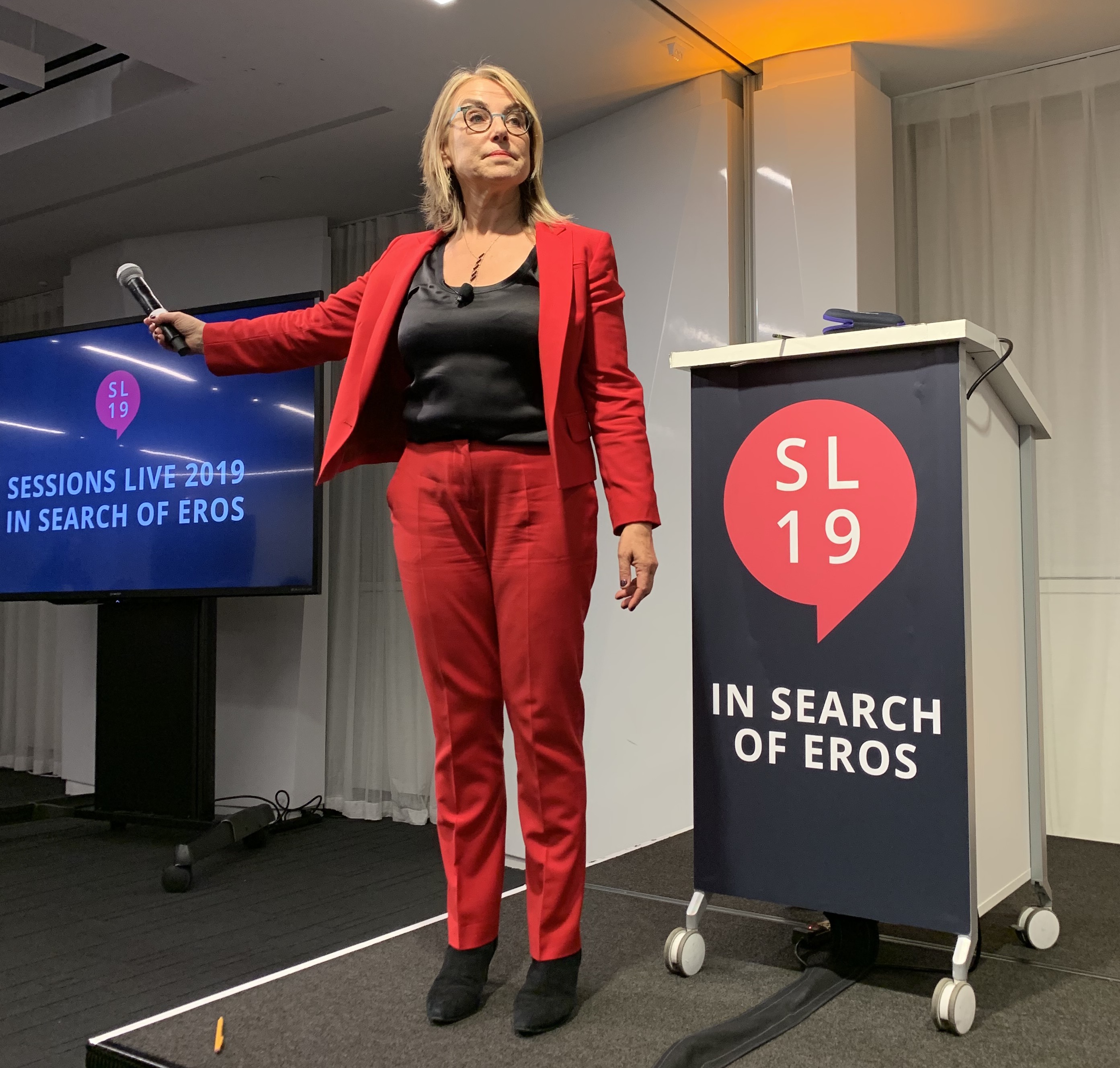
I had the pleasure last weekend of participating in “Sessions Live 2019: In Search of Eros,” an all-day gathering convened and hosted by Esther Perel, who’s probably the most famous sex-and-relationship therapist in the world right now. Her books (Mating in Captivity and The State of Affairs) and her TED talks (on desire and infidelity) have acquired a passionate following worldwide, as evidenced by the sold-out crowd of 400 who showed for the live event November 9 in midtown Manhattan (many of whom flew in from other countries) and the 1200 people viewing at home via Livestream.
A New York resident born in Belgium and educated in Israel, Esther brings a distinctly European flavor to her work, so what might have been a typical therapy conference with parade of academic talking heads became something else – a lively salon with a dynamic array of speakers presenting in a variety of formats with a very engaged audience, fueled by delicious food.
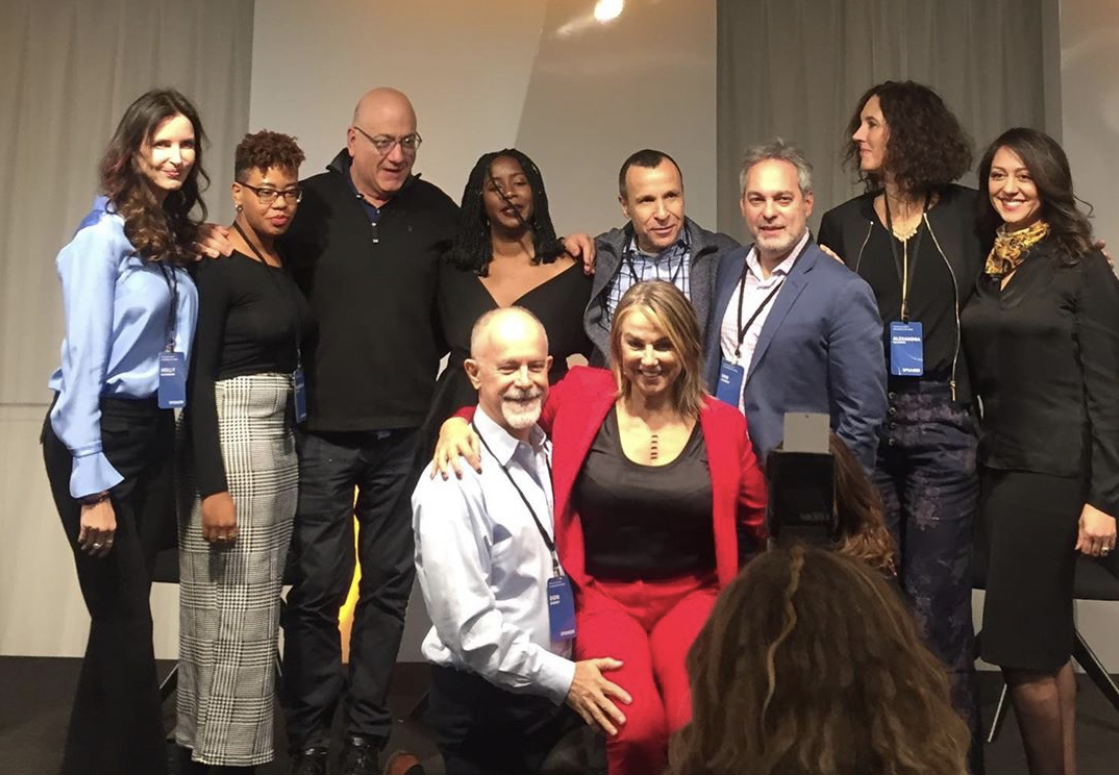
The morning began with an on-your-feet warm-up conducted by Esther along with 5 Rhythms teacher Amber Ryan, psychoanalyst Aviva Gitlin, and therapist-performer-ritualist Paul Browde. Esther gave an opening talk called “Finding the Erotic Self: A Journey for Practitioners,” which included dialogue with Alexandra Solomon. Before lunch, Holly Richmond talked about her work helping trauma survivors recover their sexuality, and I spoke about my own concentration on healing through pleasure.
After lunch Sara Nasserzadeh led the participants through a modified Sexual Attitudes Reassessment. Then there were presentations about erotic obstacles by Ian Kerner (author of She Comes First), psychologist Guy Winch, and the two young co-founders of the St. Louis-based educational company Afrosexology, Dalychia Saah and Rafaella Fiallo. The last hour brought a free-flow of questions and commentary from audience members both in the room and watching via Livestream.
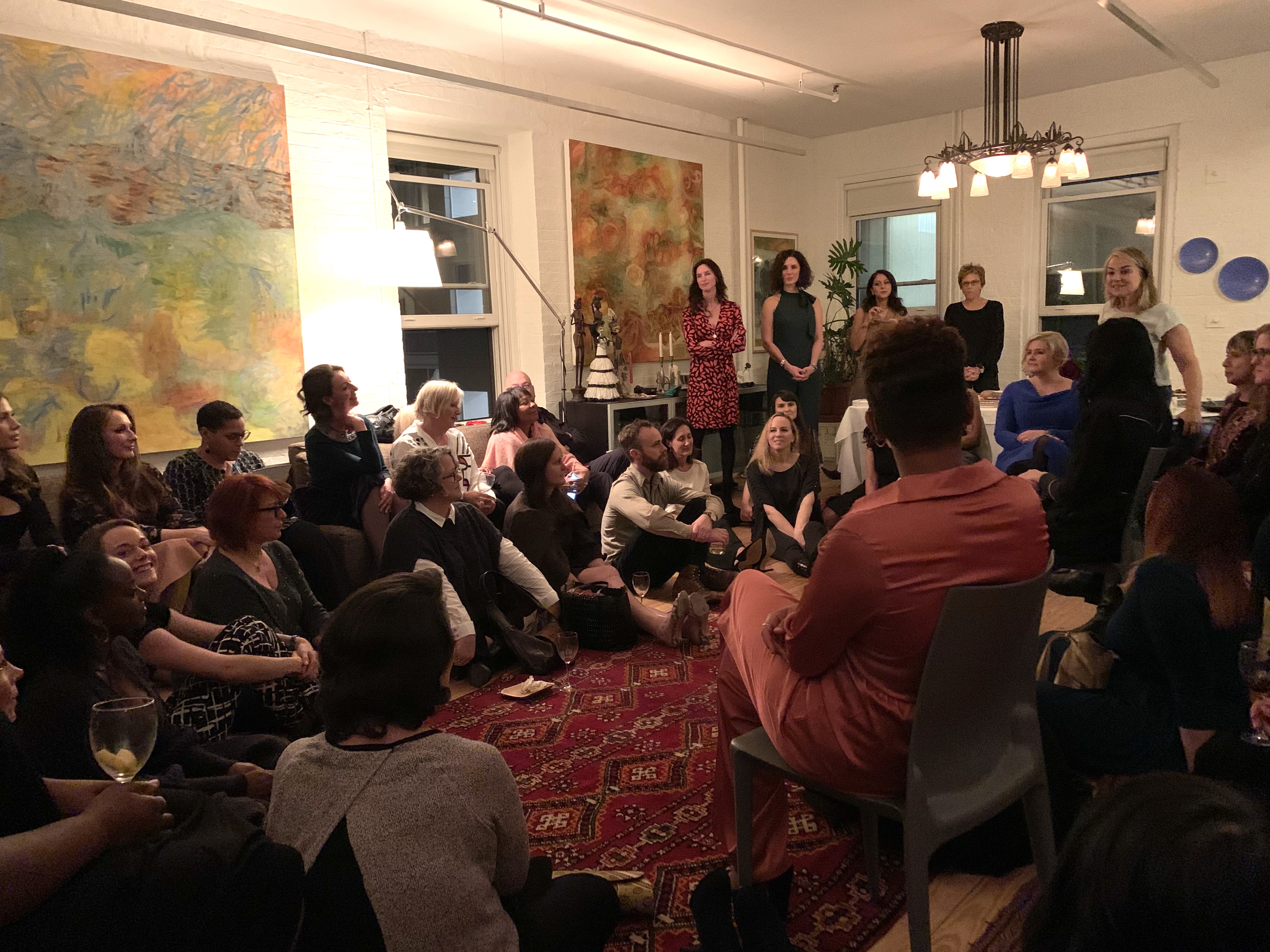
Women dominate the field of therapy and social work, and certainly Esther’s audience was 75-80% women (as became clear at the reception she hosted the night before — above), which is why she asked me to address the issues that men bring to a sex therapist. I talked about the dance between performance anxiety and being present for pleasure, the lessons I learned about erotic energy from Joseph Kramer and the Body Electric School, the paradox of pornography as liberator and oppressor, and my own formula for satisfying sexual encounters (PCM: your own Pleasure, Connection with your partner, and the Mechanics of what goes up and down, in and out).
For the rest of the day, I spent every break being pulled aside by people saying, “Do you have a minute? I have a question about…” I heard very touching stories from men who hailed from Iceland, Poland, and China, and female therapists who work with very specific populations (Catholic priests, homeless mentally ill, Jersey guys).
I walked away from the event feeling nourished by the high level of powerful questions that the day generated: What’s the difference between sex and eroticism? If I’m struggling to figure out what I want, what happens if I ask myself “What am I missing?” Which of the senses (sight, sound, touch, taste, smell) is most erotic to me? Which ones do I need to ramp up in my life? How do we teach vulnerability to young men who have no experience of that? How do we deal with different stages of erotic life?
Psychedelic science and exploration, which is currently undergoing a renaissance (chronicled in Michael Pollan’s best-selling How To Change Your Mind), has long been dominated – like the rest of the world – by straight white men. Horizons, the annual “Perspectives on Psychedelics” conference held in New York City every October for the last 12 years, is no exception. This year, things changed, as the conference dealt with its own #MeToo situation. Neal Goldsmith, a key organizer and frequently MC for the conference, was removed from the board of Horizons Media in response to multiple reports of sexual misconduct. Founder and director Kevin Balktick really stepped up not only by putting in place a lengthy and explicit “Code of Conduct and Safer Space Policy” but also by exponentially increasing the presence of authorities in the field who were women and people of color, which made for a terrific conference (October 5-7 at Cooper Union), best of the three I’ve attended.
Saturday’s program, focusing on science and medicine, was hosted by Dr. Julie Holland, author of many books, including Ecstasy: The Complete Guide. Highlights of the first day, which culminated in the rock-star appearance of Michael Pollan, included Sophia Korb’s report on the latest research results on microdosing (based on 8000 people from 59 countries using 18 different substances) and Monnica Williams’s incisive talk “Race-Based Trauma: The Challenge and Promise of MDMA-Assisted Psychotherapy.” Also useful: Peter Hendricks and Sara Lappan reporting on psilocybin to treat cocaine dependence and “New Findings on the Therapeutic Potential of Ayahuasca” by Brazilian neuroscientist Dráulio Barros de Araújo (below), who memorably proclaimed, “The placebo effect is a beautiful thing!”
Brazilian plant medicine specialist Bia Labate MC’d Sunday’s events, which centered on culture and philosophy. I had to leave early but got to hear two terrific presentations. Besides reading entertaining excerpts from The Wild Kindness: Between Sacred and Secular in the New Mushroom Underground, her queer psychedelic memoir, Bett Williams paid tribute to Kai Wingo, charismatic leader of a high-dose psilocybin Afro-futurist community in Cleveland, who sadly died in 2016 at the age of 43.
Event producer and human rights activist Annie Oak delivered a talk on “Building Risk Reduction and Community Safety Systems in Festival Environments” that was so clear, so sensible, and so visionary that one of the first questions from the audience was “Have you considered running for the Senate?” Oak, a member of the Women’s Visionary Council and founder of the Full Circle Teahouse, an alcohol-free chill space at Burning Man, tossed out one plain-spoken truth after another. “The majority of people who use these [psychedelic] substances will not use them in controlled settings… but rather (will be engaged in) ‘unsupervised self-experimentation’…Having women as leaders is automatically risk reduction…If you want to change the world, throw a better party.” Not a huge fan of social media, she pointed out that “Facebook is an insecure platform that sells your data.” And she shared, point by point, a list of “Safety Tips for Participating in Ceremonies that Use Psychoactive Substances” that the WVC created in 2014. You can find it online here – I encourage you to check it out and let me know what you think.
One big event of the summer season for me was the publication of my new book, THE PARADOX OF PORN: Notes on Gay Male Sexual Culture.
Based on my twenty years of experience as a sex therapist/educator and pleasure activist, this book-length essay explores the topic of pornography from a unique, specifically gay male perspective, surveying in depth what’s valuable and what’s problematic about the ubiquitous forms of erotic imagery we encounter on a daily basis.
My intention in writing the book is the same one that drives my professional practice: to encourage and support gay men in having more pleasurable and more satisfying sex. I would like to share more widely the questions, discoveries, curiosities, and wisdom that I encounter every day of my working life.
The book has been receiving some gratifying positive attention. Kirkus Reviews, which is aimed primarily at libraries and booksellers, called it “A relatable, timely analysis of pornography’s history and its effect on the mindset of the gay community.” The Bay Area Reporter said, “Given how pervasive porn is in the gay male world, it’s encouraging to read a thoughtful and clear-eyed analysis of how it impacts and shapes our sexual lives.” The Advocate published an excerpt from the book, and Edge Media interviewed me, calling the book “an enlightening and useful meditation on pornography.”
Some writers I admire have offered words of praise. Michael Bronski, author of A Queer History of the United States, said “The Paradox of Porn is the best book about pornography, the lives and imaginations of gay men, and state of erotic gay culture written to date.” Novelist Andrew Holleran called it “sane, helpful, and fascinating.” Journalist and commentator Jay Michaelson said, “Don Shewey’s book is wise, informed, and fearless. The Paradox of Porn busts through several closet doors and explodes taboos. A rich and rewarding read.”
I hope you’ll check it out for yourself and let me know what you think.
If you’re in New York on Saturday September 22, I invite you to join me in celebrating the publication of The Paradox of Porn at a book launch event called “Written on the Body/Queer*Sex*Life” at the Bureau of General Services Queer Division, the bookstore located in Room 210 at the LGBTQ Community Center, 208 W. 13th Street.
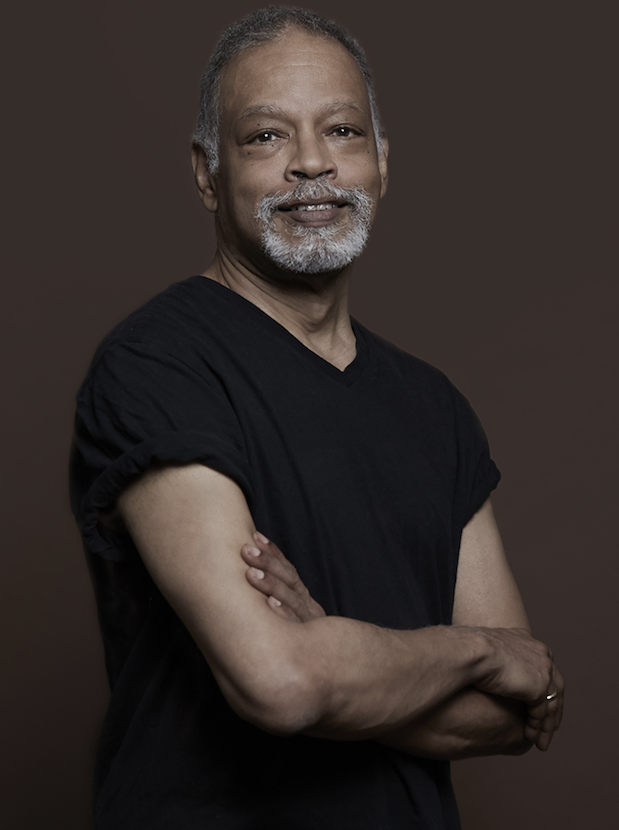
I will be appearing with my friend Ishmael Houston-Jones (above), the super-talented dancer-choreographer who has just published his terrific first book, FAT and other stories: some writing about sex. We will be reading from our work, answering deeply personal questions, and selling and signing copies of our books. I’ll also have a big box of vintage porn to give away. The event starts at 6:00 pm with an informal reception. The reading will begin at 6:30, and we will be done by 8:00. Please come!
If you can’t join us for the book launch, you always order my book online at Amazon or Barnes and Noble, though if you prefer to patronize independent booksellers, you can find one here and ask them to order the book for you if they don’t already stock it.






 food for the joybody