DID YOU SEE: New York Times article on sex ed before pornography

A thoughtful and sensible article by Lara Vapnyar in today’s New York Times (“Soviet-Era Sex Ed”) gives a Russian-born mother’s observations on the difference between how her generation learned about sex (in the dark, with no help from parents and schoolteachers) and how her daughter is being taught (in New York City private school, anyway). Check it out and let me know what you think.

SEXED-articleLarge

DID YOU SEE: New York Times op-ed piece on “Low T”

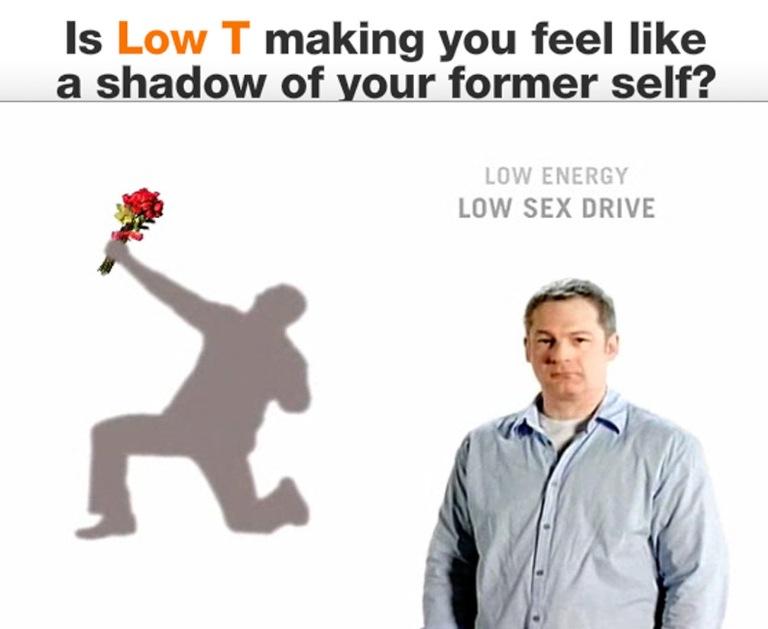
It’s been clear for some time that the pharmaceutical industry has been preying on adult men’s fear of aging and losing sexual vitality to overprescribe testosterone supplements. In a New York Times op-ed piece published yesterday, physician John La Puma reports on a study that just came out finding that taking prescription testosterone doubled the rate of heart attacks in men 65 and older, as well as in younger men who had heart disease, within three months.
This is serious business and worth reading by men who are taking or considering taking male hormone supplements.

Fortunately, La Puma doesn’t just critique the pharmaceutical industry but offers concrete advice to men on how to address the crucial health issues for which they tend to seek testosterone supplements:

Too many doctors are now writing testosterone prescriptions without even measuring the patient’s hormone levels, much less re-testing for confirmation and adjusting the dose after prescription. Up to a quarter of these prescriptions are dispensed without a blood test.

From a psychological perspective, this isn’t helping men. From a medical perspective, it’s devastating. In addition to the cardiac risks, prescription T can mean a permanent shut-off in men’s own, albeit diminished, testosterone production. In other words, once you start, you may well be hooked for life.

Instead of heading to the pharmacy to get their fix, men should address the leading cause of the problem. Losing weight is a tried and true way to naturally boost testosterone levels. According to findings presented at the annual meeting of the Endocrine Society in 2012, obese men who lost an average of 17 pounds saw their testosterone levels increase by 15 percent. In general, a man’s waist should be half his height.

Some diet changes may be useful for reasons other than just weight loss. If you drink too much booze, switch to water — alcohol lowers testosterone levels. Eating more cruciferous vegetables like broccoli and collard greens can also help, by blunting the effects of estrogen in a man’s body. At the end of the day, eating more of the right foods and fewer junk foods improves mood and energy — which may be the only fix many men need.

You can read the whole article online here.

low-t illo

DID YOU SEE: Newsweek cover story “Sex and the single tween”

Newsweek, which has been wavering between being a print publication or an online-only entity, has just published a long, absorbing article by Abigail Jones called “Sex and the single tween.” The title, of course, bounces off of Sex and the Single Girl, Helen Gurley Brown’s 1962 then-provocative treatise championing the idea that women should pursue economic self-sufficiency and sexual pleasure without depending on marriage to supply those things. Brown’s book and its spiritual descendant, Sex and the City (both the epochal TV show and the book of essays by Candace Bushnell that inspired it), exemplify and promote what we might call don’t-call-me-a-feminist feminism — the kind of female self-empowerment and quest for gender parity made possible by the women’s movement, yet distancing itself from intellectual ideology and hard-core political struggle because, well, they’re not as much fun. What’s fascinating and unnerving about Jones’s article is how much it says not just about pre-adolescent girls but about the impact of social media, sexual norms, and consumer culture on the rest of us.

tweens coverHere are some passages that leapt out at me:

The tween years are a period of learning and acclimation, yet the lessons of gender and sexuality begin much earlier. Forty-five percent of 6- to 9-year-old girls use lip gloss or lipstick, 61 percent wear nail polish (up from 54 percent in 2008) and 42 percent use perfume or body spray, according to a 2013 study by Experian Marketing Services. Those numbers jump when girls hit their early teens: 65 percent of 12- to 14-year-olds use lipstick or lip gloss, 84 percent wear nail polish and 78 percent wear perfume. And according to a 2009 Newsweek article, girls ages 8 to 12 each spend approximately $7,170 on hair, face, hands and feet during their tween years. Among 8- to 11-year-old girls, 46 percent like to keep up with the latest fashions and 35 percent think it’s important to wear “cool” clothes, according to Experian.

This desire to dress up is learned from parents, older siblings, friends, toys, magazines, books, computer games, apps, social media platforms, Disney characters, parent-approved celebrities, parent-disapproved celebrities, pop music, shopping malls, advertisements, billboards and more.

*

Marketers have turned preteens into consumers, but parents are the enablers, buying their children those tablets, toys and clothes. (To be fair, many parents hand down older models and keep the upgrades for themselves.) When it comes to fashion, clothing is sold at every price point. By the time preteen girls are teenagers, Abercrombie & Fitch – or whatever clothing line they prefer – is more than a brand; it’s a part of their identity.

*

Ashley would likely do well at Applike Couture. “Most girls my age are trying to find the happy medium: not too scandalous but they’re also getting in with the culture. It’s really hard sometimes,” she says. “On the weekends, people wear short shorts and inappropriate tank tops. I have, too. It’s just like, hard trying to fit in. If you don’t, they’ll say, Why are you wearing that instead of this? It’s hard to subject yourself to that.”

Isabella Rose Taylor, 12, of Austin, Texas, grew so frustrated with the styles available to her that she designed and launched her own clothing line, which she describes as girly with boyish charm. “There is a gap between clothes that are too young and too old for tweens,” she says. “A lot of girls are trying to be sexy and revealing because they think that’s cool. It’s just so our entire universe, and it’s hard not to be influenced by that. But I think that we can change it. I really want to show girls that you can just be whatever you want. You can be yourself.”

*

Ruby disappears into her bedroom in search of the crop top. Her room is a confection of maturing girlhood with the pink walls, polkadot curtains, countless photographs, a snow globe collection and handmade collages dedicated to newly discovered writers. Ruby admires Tina Fey, and wants to be a journalist and a comedian when she grows up. She joined YouTube when she was 8 years old, was on Tumblr by 11, Instagram later that year, and Facebook when she was 13. She also uses Vine, SnapChat and We Heart It.

*

“There is not enough monitoring in the world for the technology we have today,” jokes Kendra’s mom, Erika, who wears a light-green sweater, her black hair pulled back into a ponytail.

“Our kids are probably mentally and cognitively better prepared, but I think they’re not emotionally prepared for the world,” says Kimberly, Ava’s mom. Ava has an iPad, an iPod and a Mac computer and is into Disney celebrities and pop music. “The disparity between the two makes them even more emotionally immature. At some point it’s gonna really throw them.… They’re mature in many, many ways, but at heart they’re still 8.”

When I first interviewed Buckingham four years ago, she explained that parents were the gatekeepers, helping girls navigate popular culture, make good decisions, recover from bad ones and hold onto what remains of an authentic childhood. Two months ago, she had something very different to say: “Before, if you wanted to find out about sex or something innocuous – history, travel, whatever – you had to ask your parents. Now, you just google it.… It’s the pervasiveness of technology,” she says. “Parents have lost their role as gatekeepers.”

*

“People have this general, nebulous idea of girls as this mass of pink, selfie-taking, Kardashian clones,” Gevinson says. “And not only do I think that a lot of girls aren’t like that, but I also think the girls who are like that are maybe smarter than people give them credit for. For as much as there are a lot of awful messages sent out to girls at the moment, I think that they are better equipped to deal with it.”

Censorship, she argues, isn’t the solution. “You’re not helping a young person teaching them abstinence in the same way that you don’t help them by making sure they never, ever come across anything bad online. If you’re gonna have sex, this is the safe way to do it. When you use the Internet and find things that could be potentially damaging, this is what you do.”

For tween girls, having sexual knowledge is not the same as being sexualized, and the girl who understands the difference probably has a strong support system. If preteen girls are more capable of navigating their world than adults realize – if their new playground is online, on apps and on smartphones – should parents let children plug and play?

*

“There’s a question in child development about whether all of this social media will change the way we think normal development should be,” says Selter. “Either one of two things will happen. We see that it doesn’t really affect it, or we’re going to have to rewrite some of the theories about social development and reconsider what social development will look like in the age of social media.

“The framework is lagging, and I think it will only begin to evolve as we have more data. Based on older models, we’ll end up with a lot of self-centered, narcissistic people who can’t tolerate it when things don’t go their way. I hope not, but the jury is still out on that one.

“I don’t know what the long-term effect will be on these kids,” says Selter. “I don’t think anyone does.”

These are issues and ideas I don’t think about all that much because I don’t have kids (an article like this reinforces my gratitude for that). But I don’t want to cocoon myself in a bubble of ignorance or avoidance because this is the world I live in, and I need to think about these things. Check out the article yourself here and let me know what you think.

DID YOU SEE: Esther Perel interviewed in The Sun

Belgian-born sex therapist Esther Perel is an expert on the subject of sex, intimacy, love, and desire in long-term relationships. The author of Mating in Captivity and the subject of a very smart and widely-circulated TED talk on desire, she was recently interviewed by Mark Leviton in The Sun, an excellent literary magazine renowned for its in-depth Q-and-As with remarkable thinkers.

perel2
I’m a tough customer when it comes to speaking and writing in this field, I suppose because these subjects are near and dear to my heart, and I hate the amount of misinformation, bad advice, and stale thinking that goes out under the rubric of relationship counseling. But Perel passes my bullshit-detector with flying colors.  I found myself completely engrossed in this article (“A More Perfect Union”) and in agreement with her almost every step of the way. I particularly like the way she talks about fantasies and also how she addresses the subject of parenting in contemporary life. Since I’ve quoted those passages online already, I’ll offer an excerpt here in which she talks about the subject of infidelity:

I don’t abide by the perpetrator-victim model of infidelity, in which the cheater is criminalized and the victim is given all the empathy. I also don’t believe an affair automatically means the relationship is bad. Here’s the usual view: If we, as a couple, have everything we want from each other, there’s no reason for either of us to go elsewhere. Hence, if one of us goes elsewhere, there’s something missing between us; infidelity is a symptom of a problem in the relationship.

That’s sometimes the case, but affairs often have more to do with the unfaithful individual than with the couple. People go elsewhere for sex not so much because they want to leave their partners but because they want to escape who they themselves have become. They are looking for parts of themselves that they’ve lost because of the relationship. But many adulterers are reasonably content in their marriage and monogamous in their beliefs. In my experience most have been faithful for ten or fifteen years before they’ve cheated.

If you see adultery only as a symptom, you sometimes take good relationships that have worked well for decades and make them look like failures. I don’t think that’s right…

I’ve seen couples in which I’m convinced there’s an affair going on but no one wants to talk about it. I’ve seen couples in which one person keeps asking the question and the other keeps denying it, or one keeps dropping hints and the other doesn’t want to pick up on them. I’ve had clients who are resisting having an affair, and others who can’t talk clearly about their marriage because they are intoxicated by an ongoing affair and everything else pales in comparison. Or they are irritable and don’t want to go home because of their guilt or because they don’t like their partner at the moment. Other clients might want to be in the relationship, but their partner has Alzheimer’s and can’t recognize them, and they need a way to rejuvenate themselves so they can spend an hour every day with their partner at the nursing home. I hear about kinds of infidelities that never existed before now, but infidelity itself is timeless. At all four corners of the world, at any moment, someone is either betraying a beloved or being betrayed. Infidelity: historically condemned, universally practiced.

You can read the entire interview online here. Check it out and let me know what you think.

DID YOU SEE: New York Times on the “low-T” industry

The front page of the Sunday New York Times business section yesterday led with an important story called “Selling That New-Man Feeling.” The article details how the pharmaceutical industry, especially the company that manufactures Androgel, has made literally billions of dollars exploiting adult men’s insecurities about aging, masculinity, and sexual performance. Although many scientists find the claims made by companies promoting testosterone supplements to be unpersuasive, still the market plays to guys who get suckered into thinking “low-T” is a major health problem and that boosting their testosterone levels with commercial products will lead to the fountain of youth or at least better boners.

new man
I do believe there are some men whose health is affected adversely by sub-normal testosterone levels. But that population is quite small, not big enough to enrich pharmaceutical companies. The way testosterone supplements are being marketed now, with vague questionnaires that link “low-T” to symptoms every breathing human experiences, constitutes the worst kind of snake-oil salesmanship. I have friends who’ve gotten suckered into trying testosterone patches, gels, and injections. Some of them have experienced the illusory effect of feeling stronger, peppier, and more libidinous — to my mind, indistinguishable from the placebo effect — but most of them have encountered significant side effects: irritability and short-temperedness at best, prostate cancer at worst.
lowTGranted, any doctor who’s any good monitors prostate health closely when prescribing such supplements, but not every patient collaborates with their physicians’ best practices. But in my work as a sex therapist, I have been appalled to hear that men in their sixties and seventies have been prescribed testosterone supplements by their doctors. It seems to me unconscionable to mislead middle-aged and elderly men into thinking they can maintain the same level of sexual performance they experienced when they were 25. Men can lead active, healthy, sexually fulfilling lives well into later life, but the key factors are diet, exercise, stress reduction, and emotional balance, not to mention a concerted effort to accept aging with grace and resourcefulness — all of which require patience and commitment, for which pills and gels are no substitute.

But don’t take my opinions and observations as the last word. Judge for yourself. Read the article here and tell me what you think. Another very smart article on this subject appeared in the Times two years ago, talking about how the use of steroids and hormone supplements by athletes has spread to the general population — see Steve Kettman’s “Are We Not Man Enough?”

DID YOU SEE: Cindy Gallop’s TED Talk on Make Love Not Porn

A colleague sent me a link to this TED Talk by Cindy Gallop, correctly assuming that I would be interested. I’d read an article about her in the New York Times that made me feel like I’d discovered a kindred spirit. She certainly speaks my language. As she says at the beginning of her talk, dating younger men has put her in direct contact with “what happens when total freedom of access to hardcore pornography online meets our reluctance as a society to talk openly and honestly about sex and results in porn therefore becoming by default the sex education of today.”

Gallop launched a website, a YouTube channel, and a kind of movement she calls Make Love Not Porn. What I like about her vision of Make Love Not Porn is that she defines her philosophy succinctly as: Pro-Sex, Pro-Porn, Pro-Knowing the Difference. Like me, she has concerns that pornography adversely affects the sex that people have by giving a distorted picture of what constitutes pleasurable erotic interaction. Commercial porn often depicts certain extreme acts (slapping, hair-pulling, ejaculating on faces) as if they’re commonplace and universally desirable while leaving out lots of stuff that contributes to satisfying sexual encounters. “Real-world sex is funny, messy, and responsible,” she points out, and she is determined to make real-world sex socially acceptable to have, to talk about, and to witness. Her solution is to create a Web 2.0 TV channel where regular people can submit videos of themselves having “real-world sex” that, for a modest fee, can be viewed by people who want to watch something that looks more like their own sex lives than commercial porn.

I’m all for the idea in theory, with a couple of reservations. I don’t share her assumption that all, most, or even many people are eager to share video of themselves in the throes of erotic intimacy. I know that social media make it seem like no one cares about privacy anymore and we’re all letting it hang out for the world to see. But I also know that’s not true and that people who post pictures and videos of themselves having sex online constitute a self-selected minority. They may be generous and right-minded and wonderful, but they’re still members of the tribe of exhibitionists, which I don’t think includes everybody. Also, when I go to the website and check out the free previews (“peeks”) of the videos (which are carefully curated by Gallop and her associates), none of them make me want to plunk down my $5, mostly because they are 100% hetero but also because they don’t look that different from the enthusiastic amateur videos you can see on XTube. I wonder what MakeLoveNotPorn videos made by and for gay men would look like.

Check out Gallop’s video and let me know what YOU think.

DID YOU SEE: female sexual desire can change the world

The cover story in the Sunday New York Times Magazine this week reports on “the pharmaceutical quest to give women a better sex life.” An excerpt from Daniel Bergner’s new book What Do Women Want? Adventures in the Science of Female Desire, the article made me sad and annoyed. It tells women who have been married for 15 years and aren’t interested in having sex with their husbands “There May Be a Pill for That.” That’s the refrain of the multibillion-dollar pharmaceutical industry, which is fervently trying to find a chemical compound that they can market to women that will become the financial bonanza Viagra became in treating erectile dysfunction for men. I’m all for anything that results in people having better sex, but in my experience focusing on mechanics rather than pleasure tends to create anxiety and frustration more than satisfaction. Clearly, keeping a sexual spark alive in any long relationship challenges everybody, and what a grotesque misunderstanding of how intimacy works to think that a magic pill can create desire where no desire exists.

Luckily, there are other smart people out there working in this field. I’ve known about Nicole Daedone and her One Taste centers for a few years. I only just now watched her 2011 TED Talk, which impressed me tremendously and moved me to tears a few times. (TED Talks do that to people, like Barbara Walters interviews and the Readers Write section of The Sun magazine.) She contests the diagnosis that is getting hyped in the new Diagnostic and Statistical Manual (DSM) of “hypoactive female sexual desire disorder” — she prefers to call it “pleasure deficit disorder.” And she’s devised a simple 15-minute sexuality practice to treat it. She makes a case for the notion that “turned-on women (and those who dare to stroke us) will change the world.”

Pamela Madsen is a prolific blogger, teacher, and pleasure activist whose writings and retreats guide women through the journey to sexual awakening that she herself describes in her book Shameless.

And this week on the website Oh Joy Sex Toy, cartoonist Erika Moen writes a paean to Babeland, the women’s sex-toy emporium, which helped correct the horrible misinformation about sex she learned from her mother and taught her to respect and enjoy her own body.

Those are just a couple of examples of how women have been thinking about, talking about, researching and practicing simple ways of expanding female sexual pleasure. Check them out, let me know what you think, and tell me about other pioneers doing exceptional work in this arena.

DID YOU SEE: Joe Kort in Huffington Post on tops, bottoms, and “sides”

Kort_grab_edge_new
Detroit-based author and gay sex therapist Joe Kort wrote an interesting essay recently for The Huffington Post that should give comfort to gay guys who resist the pressure to fit themselves into only one of two categories sexually, top or bottom.

“What if a guy isn’t a top, a bottom or even versatile? What about gay men who have never engaged in anal sex and never will, ever? I think they deserve a name of their own. I call them “sides.” Sides prefer to kiss, hug and engage in oral sex, rimming, mutual masturbation and rubbing up and down on each other, to name just a few of the sexual activities they enjoy. These men enjoy practically every sexual practice aside from anal penetration of any kind. They may have tried it, and even performed it for some time, before they became aware that for them, it was simply not erotic and wasn’t getting any more so. Some may even enjoy receiving or giving anal stimulation with a finger, but nothing beyond that.”

You can read the whole article online here. Let me know what you think.

Did you see: Gary Wilson’s TEDTalk on how internet porn affects the brain

Scientist Gary Wilson (who teaches anatomy and physiology) reports findings from studies on the correlation between heavy-duty viewing of internet porn and erectile dysfunction. It speaks only to heterosexual men and how they “check out babes,” etc. But the discussion is compelling. Check it out and let me know what you think. (Wilson has an extensive and informative website named after his six-part YouTube series, “Your Brain on Porn.”)

DID YOU SEE: Margaret Talbot on transgender teenagers in The New Yorker

In the March 18, 2013, issue of The New Yorker, staff writer Margaret Talbot takes a careful look at the phenomenon of transgender teenagers – ambivalently gendered individuals choosing hormone treatments and surgical interventions at ever-earlier ages. In the late seventies, drugs were developed to forestall puberty, aimed at children who suffered from extremely precocious puberty. Then, starting in 2000, doctors began administering puberty blockers to kids struggling with gender identity. The advantage for those who go on to transition is that these drugs prevent the development of breasts and menstrual periods for FTMs and facial hair, Adam’s apples, and masculine facial structures for MTFs: “Puberty suppression and early surgery made for more convincing-looking men and women.” Because of exposure in the media, more kids with gender-identity issues identify themselves earlier.

talbot

As a longtime feminist, I’m happy to observe how the emergence of transgender identity has liberated people of all ages to embrace the gender expression that feels intuitively right for them. Gay identity has morphed from lesbian and gay to LGBTQ, and in more sophisticated circles (the West Coast, especially the Bay Area, and in certain college enclaves), the stream of gender rebellion has acquired many tributaries and gender-queer sobriquets. The farther you deviate from recognizable social norms, though, the more courage it takes to walk your own path – much easier said than done. Schoolkids are notoriously cruel when confronted with difference; many pockets of adulthood are no less welcoming to non-conformist gender behavior.

One sensitive area that Talbot tackles carefully yet directly is the overlap between transgender individuals and those who simply decline to conform to heteronormative expectations.

There are people who are sympathetic to families with kids like Jazz [who was born a boy and socially transitioned while still a toddler and appeared on “20/20” at age 6] but worry about the rush to adopt the trans identity. They point out that long-term studies of young children with gender dysphoria have found that only about fifteen per cent continue to have this feeling as adolescents and adults. (And these studies, which relied on data from Dutch and Canadian research teams, looked only at children who were referred to a clinic for gender issues – presumably, many more kids experience gender dysphoria in some measure.) The long-term studies have also found that, when such kids grow up, they are significantly more likely to be gay or bisexual. In other words, many young kids claiming to be stuck in the wrong body may simply be trying to process their emerging homosexual desires.

Walter Myers, a child psychiatrist and pediatric endocrinologist in Galveston, Texas, has prescribed puberty blockers and considers them worthwhile as a way to buy time for some kids. But, in an editorial that ran in Pediatrics last March, Meyer urged families not to jump to the conclusion that their fierce little tomboy of a daughter, or doll-loving son, must be transgender. “Many of the presentations in the public media…give the impression that a child with cross-gender behavior needs to change to the new gender or at least should be evaluated for such a change,” he wrote. “Very little information in the public domain talks about the normality of gender questioning and gender role exploration, and the rarity of an actual change.” When I called Meyer, he said, “What if people learn from the media and think, Hey, I have a five-year-old boy who wants to play with dolls, and I saw this program on TV last night. Now I see: my boy wants to be a girl! So I wanted to say in that article that, with kids, gender variance is an important issue, but it’s also a common issue. I’m saying to parents, ‘It may be hard to live with the ambiguity, but just watch and wait. Most of the time, they’re not going to want to change their gender.’”

Eli Coleman, a psychologist who heads the human-sexuality program at the University of Minnesota Medical School, chaired the committee that, in November, 2011, drafted the latest guidelines of the World Professional Association for Transgender Health, the leading organization of doctors and other health-care workers who assist trans patients. The committee endorsed the use of puberty blockers for some children, but Coleman told me that caution was warranted. “We still don’t know the subtle or potential long-term effects on brain function or bone development. Many people recognize it’s not a benign treatment.”

Alice Dreger, the bioethicist, said, of cross-gender hormones and surgery, “These are not trivial medical interventions. You’re taking away fertility, in most cases. And how do you really know who you are before you’re sexual? No child, with gender dysphoria or not, should have to decide who they are that early in life.” She continued, “I don’t mean to offend people who are truly transgender, but maybe a kid expresses a sense of being the opposite gender because cultural signals say girls don’t shoot arrows, or play rough, or wear boxers, or whatever. I’m concerned that we’re creating feedback loops in an attempt to be sympathetic. There was a child at my son’s preschool who, at the age of three, believed he was a train. Not that he liked trains – he was a train. None of us said, ‘Yes, you’re a train.’ We’d play along, but it was clear we were humoring him. After a couple of years, he decided that what he wanted to be was an engineer.”

I was grateful to Talbot for laying out these factual and ethical considerations because I’ve wrestled with them a lot, trying to understand them myself. In my teens and twenties, I spent a lot of time and energy and study investigating my own masculinity and femininity and forging a healthy gay identity at odds with the mainstream world and the family that I grew up in. Much as I support the right to do with your own body what you will, I’ve worried sometimes that the practice of surgically altering your body so that you look like “the boy/girl that you feel like inside” might wind up reinforcing the rigid gender-role stereotypes that oppress everyone. Who says what a man or a woman is supposed to look or feel like? Why can’t a butch girl be a butch girl or a femme-y boy be a femme-y boy? When Cher’s lesbian daughter Chastity transitioned to become Chaz Bono, to me it felt like a defeat in some way, as if Chastity couldn’t tolerate being publicly gay. My wise boyfriend pointed out to me, “She went from an identity you understand to one you don’t understand.”

Mostly, I’m aware that whatever advances we’ve made in terms of freedom of choice in sexual practice and gender expression, the pressure to conform to traditional gender-role expectations continues to wound and scar people. In my practice I hear these stories every day. The gay 28-year-old South Asian student for whom completing his graduate degree means he must go home and get married or risk losing his family. The thirtysomething Italian professional emotionally traumatized by his father’s saying to him, “Are you a fag? Because if you’re a fag, I’m going to get a gun and I’m going to kill you first and then myself.” The 70-year-old bisexual executive still at the mercy of childhood religious teaching that the only permissible way to ejaculate is during intercourse with your wife. It takes a huge amount of courage, support, and self-compassion to work through these issues one step at a time.

The full text of Talbot’s article is available online only for subscribers to The New Yorker but her blog post accompanying the article includes links to a number of videos in which transgender adolescents share their individualized journeys on the road to personal freedom.