Quote of the day: Lucretius on sexual pleasure

swerve

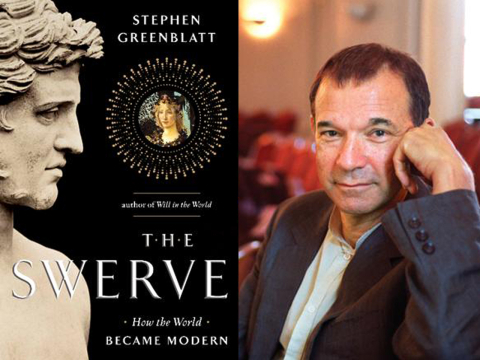
In his Pulitzer Prize-winning book The Swerve, Stephen Greenblatt offers a detailed summary of Lucretius’s provocative, far-reaching, influential epic poem from the first century B.C., De rerum natura (On the Nature of Things), which is itself a digest for Roman audiences of the teachings of Epicurus, the ancient Greek philosopher. Epicurus certainly looms large in my own personal pantheon — his philosophy proclaims that the highest good in life is pleasure. Here’s a passage from The Swerve that speaks to the concerns of this blog…

The greatest obstacle to pleasure is not pain; it is delusion. The principal enemies of human happiness are inordinate desire –the fantasy of attaining something that exceeds what the finite mortal world allows – and gnawing fear. Even the dread plague, in Lucretius- account – and his work ends with a graphic account of a catastrophic plague epidemic in Athens – is most horrible not only for the suffering and death that it brings but also and still more for the “perturbation and panic” that it triggers.

It is perfectly reasonable to seek to avoid pain such avoidance is one of the pillars of his whole ethical system. But how is it possible to keep this natural aversion from turning into panic, panic that only leads to the triumph of suffering? And, more generally, why are humans so unhappy?

lucretius_360x450

The answer, Lucretius (above) thought, had to do with the power of the imagination. Though they are finite and mortal, humans are gripped by illusions of the infinite – infinite pleasure and infinite pain. The fantasy of infinite pain helps to account for their proneness to religion: in the misguided belief that their souls are immortal and hence potentially subject to an eternity of suffering, humans imagine that they can somehow negotiate with the gods for a better outcome, an eternity of pleasure in paradise. The fantasy of infinite pleasure helps to account for their proneness to romantic love: in the misguided belief that their happiness depends upon the absolute possession of some single object of limitless desire, humans are seized by a feverish, unappeasable hunger and thirst that can only bring anguish instead of happiness.

Once again it is perfectly reasonable to seek sexual pleasure: that is, after all, one of the body’s natural joys. The mistake, Lucretius thought, was to confound this joy with a delusion, the frenzied craving to possess – at once to penetrate and to consume – what is in reality a dream. Of course, the absent lover is always only a mental image and in this sense akin to a dream. But Lucretius observed in passages of remarkable frankness that in the very act of sexual consummation lovers remain in the grip of confused longings that they cannot fulfill:

Even in the hour of possession the passion of the lovers fluctuates and wanders in uncertainty: they cannot decide what to enjoy first with their eyes and hands. They tightly squeeze the object of their desire and cause bodily pain, often driving their teeth into one another’s lips and crushing mouth against mouth.

The point of this passage – part of what W. B. Yeats called “the finest description of sexual intercourse ever written” – is not to urge a more decorous, tepid form of lovemaking. It is to take note of the element of unsated appetite that haunts even the fulfillment of desire. The insatiability of sexual appetite is, in Lucretius’ view, one of Venus’ cunning strategies; it helps to account for the fact that, after brief interludes, the same acts of love are performed again and again. And he understood too that these repeated acts are deeply pleasurable. But he remained troubled by the ruse, by the emotional suffering that comes in its wake, by the arousal of aggressive impulses, and, above all, by the sense that even the moment of ecstasy leaves something to be desired. In 1685, the great poet John Dryden brilliantly captured Lucretius’ remarkable vision:

…when the youthful pair more closely join,
When hands in hands they lock, and thighs in thighs they twine;
Just in the raging foam of full desire,
When both press on, both murmur, both expire,
They grip, they squeeze, their humid tongues they dart,
As each would force their way to th’others heart.
In vain; they only cruise about the coast.
For bodies cannot pierce, nor be in bodies lost,
As sure as they strive to be, when both engage
In that tumultuous momentary rage.
So tangled in the nets of love they lie,
Till man dissolves in that excess of joy.

epicurus

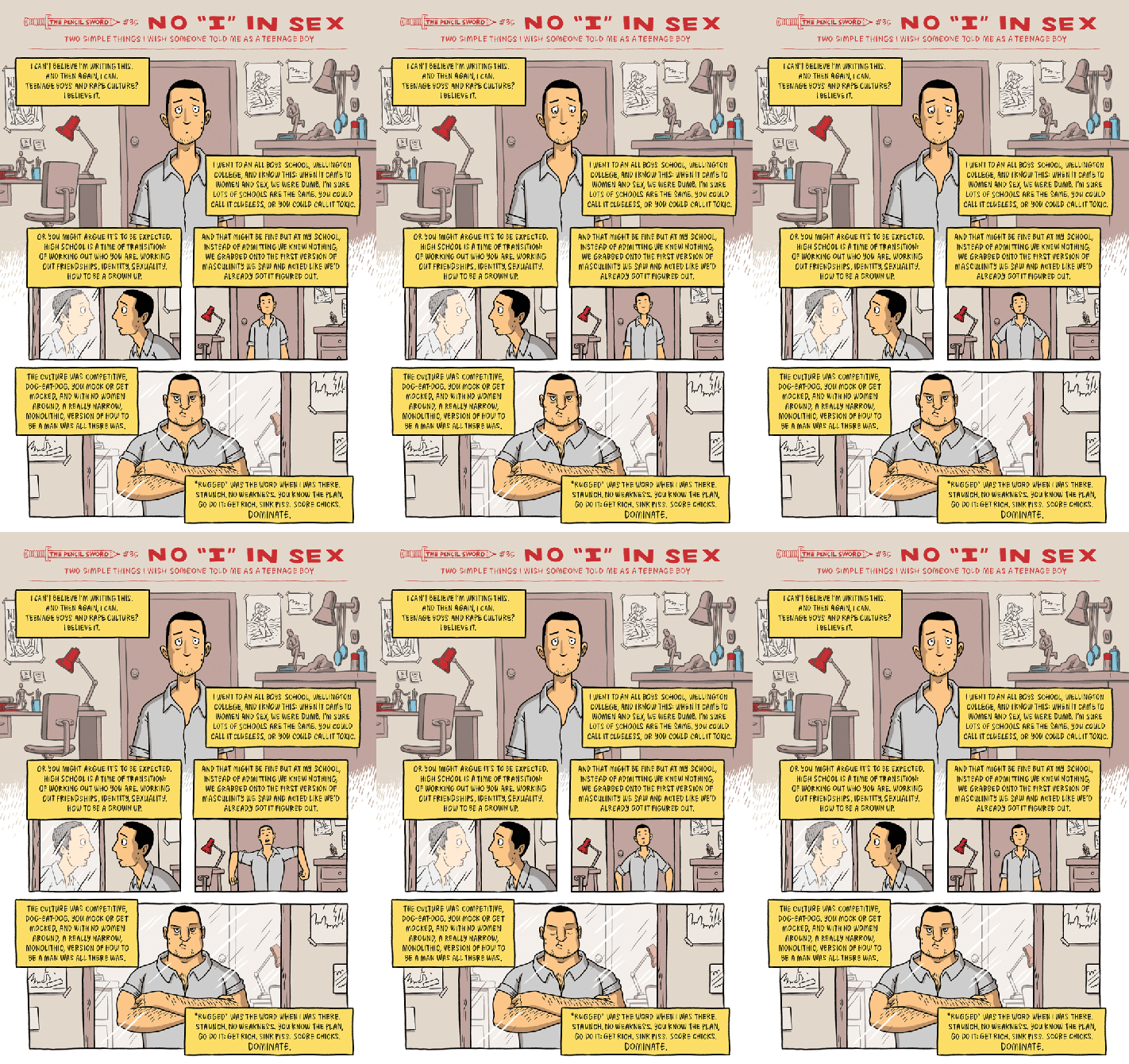
LET’S TALK ABOUT SEX: advice for young men from New Zealand cartoonist

Auckland-based artist Toby Morris created and produces the webcomic The Pencil Sword. His latest post speaks frankly about sex to young men and delivers what he describes as “two things I wish someone told me as a teenage boy.”

Here’s the first page:

Pencilsword35_01v3

Check out the rest of his comic here and let me know what you think.

SEXUAL HEALTH: psychedelics and sex therapy

In recent years, medical research into the therapeutic use of psychedelic drugs has cautiously re-emerged after decades of being shut down by War on Drugs rhetoric. Major medical centers are now participating in multi-stage trials of MDMA (ecstasy) for treatment of post-traumatic stress disorder (PTSD) and psilocybin (the active ingredient in magic mushrooms) for treating depression, cancer anxiety, and alcoholism. In South America, the Amazonian plant medicine ayahuasca has been used to manage a variety of ailments, especially alcohol and drug addiction.

Like a lot of people, I caught wind of this renewed research into psychedelics from reading an article by Michael Pollan called “The Trip Treatment” that was published in the New Yorker two years ago. Pollan noted:

Beginning in the nineteen-fifties, psychedelics had been used to treat a wide variety of conditions, including alcoholism and end-of-life anxiety…Between 1953 and 1973, the federal government spent four million dollars to fund a hundred and sixteen studies of LSD, involving more than seventeen hundred subjects…Psychedelics were tested on alcoholics, people struggling with obsessive-compulsive disorder, depressives, autistic children, schizophrenics, terminal cancer patients, and convicts, as well as on perfectly healthy artists and scientists (to study creativity) and divinity students (to study spirituality)…

By the mid-nineteen-sixties, LSD had escaped from the laboratory and swept through the counterculture. In 1970, Richard Nixon signed the Controlled Substances Act and put most psychedelics on Schedule 1, prohibiting their use for any purpose. Research soon came to a halt, and what had been learned was all but erased from the field of psychiatry.

It’s taken decades for conditions to shift so that research into the therapeutic use of pyschedelics can pick up where it left off in 1970. The bulk of Pollan’s article focused on participants in clinical trials at several universities, including N.Y.U., in which psilocybin was being administered to cancer patients in an effort to relieve their anxiety and “existential distress.”

One of the researchers was quoted as saying that, under the influence of the hallucinogen, “individuals transcend their primary identification with their bodies and experience ego-free states . . . and return with a new perspective and profound acceptance.”

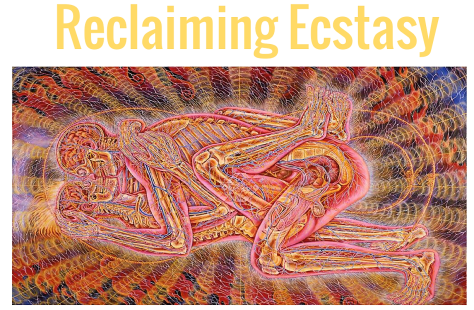
Naturally, as a sex therapist, I was intrigued to attend a presentation last December called “Reclaiming Ecstasy: An Exploration of the Therapeutic Use of Psychedelics and Sacred Plant Medicines in the Treatment of Sexual Trauma and Dysfunction” given by my friend and colleague Dee Dee Goldpaugh. The presentation took place as part of the Sexuality Speakers Series, hosted by Dulcinea Pitagora and Michael Aaron, creators of the AltSex NYC Conference.

reclaiming ecstasy

image by Alex Grey

In her talk, Goldpaugh laid out some basic pharmacological information about the two classes of psychedelics (the hallucinogens such as psilocybin, LSD, and ayahuasca/DMT and the empathogens such as mescaline, 2cb, and MDMA) and the difference between therapeutic use (pure substances in measured doses) and self-administration. She shared the distinction that clinicians make between big-T trauma (rape, incest, assault, molestation) and little-T trauma (being catcalled, medical exams, being belittled, punished for masturbation, boundaries not respected by caregivers). And she explained the numerous ways in which sexual abuse has lasting effects on those have been sexually abused: PTSD, depression, dissociation, substance abuse, distrust, dysfunction, shame, self-blame, body image issues, sexually transmitted infections.

Citing the work of Friedericke Meckel Fisher (Therapy With Substances) and Bessel van der Kolk (The Body Knows the Score), Goldpaugh then laid out some of the explorations researchers are conducting to use psychedelics to treat trauma, especially in the area of sexuality, intimacy, and relationships. MDMA, for instance, was first patented in 1914 and until it was outlawed in 1985 was used for couples therapy, among other things, because of its effectiveness in treating symptoms of PTSD and because it seemed to activate long-term memory and allow subjects to reprocess traumatic material safely. Because it induces pleasurable sensations, MDMA allows users to feel fully embodied, increases empathy, and reduces shame.

Psilocybin studies suggest that it increases openness and facilitates mystical experiences by helping the brain bypass habitual thinking. Goldpaugh proposed that psilocybin could be useful in sex therapy to reduce body anxiety and to be present with pleasure. Similarly, ayahuasca enables users to override old responses and write new stories of their own experience. Goldpaugh suggested that these substances have potential to enhance a spirituality often neglected in sex therapy. She gave examples of using guided visualizations with trauma survivors who experience intrusive images during sex, helping them identify non-sexual images they can connect to in an embodied way during sexual activity (including masturbation).

Goldpaugh was very upfront in saying that she doesn’t give psychedelics to her clients or refer them to “underground” practitioners who do. At the same time, she does advocate working to legalize the use of these medicines and to support further research through organizations such as MAPS (Multidisciplinary Association for Psychedelic Studies). Her website introduced me to the term “psychedelic integration therapy,” indicating that she helps clients process their experiences with psychedelics, as I have begun to do in my own work.

I consider Goldpaugh a kindred spirit in many ways, including how she describes a “psychedelic” approach to working with clients. This approach, she said, is based on strengths, not pathology; engages spirituality, “whatever that means for the client,” as an aspect of identity; embraces radical sex-positivity; sees all people as capable of change and growth; and views sexual pleasure as a sacred human right.


R.I.P. Mark Thompson

The latest issue of RFD, the radical faerie digest, is rightfully dedicated to commemorating Mark Thompson, the visionary gay writer and editor who died last August at the age of 63.

As I say in my contribution to the issue:

The radical faerie world will always be indebted to Mark Thompson for his skill and generosity in chronicling the emergence of this gay spiritual movement as a professional journalist and as an observer-participant. He attended the legendary first “Spiritual Conference for Radical Fairies” Labor Day weekend 1979 in the Arizona desert, convened by Harry Hay, Mitch Walker, and Don Kilhefner, and he wrote about it in Gay Spirit: Myth and Meaning, his ground-breaking anthology of writings that linked contemporary gay liberation thought to previous generations of gay visionary writing by the likes of Walt Whitman, Edward Carpenter, and Gerald Heard. Few books ever published have had as big an impact on the gay world as Gay Spirit did. It emerged from and contributed to a hunger for deep exploration of gay people’s evolutionary purpose on the planet, and it spawned a small but important pocket of gay scholarship that manifest in essential titles such as Randy Conner’s Blossom of Bone and Walter L. Williams’ The Spirit and the Flesh.

I am pleased to have my short essay published alongside the work of many dear friends and colleagues, including Andrew Ramer, Winston Wilde, Robert Croonquist (Covelo), Keith Gemerek, Bo Young, Stephen Silha, and Leng Lim. You can find the magazine in the kind of bookstores that still carry small-press gay journals, or you find out how to order it online here.

Here is my piece (click to enlarge):

markthompsonp1markthompsonp2

DID YOU SEE: Washington Post column on what to do when marital sex wanes

Scrolling through the Washington Post website, I couldn’t help noticing a headline that reflected a sentiment I’ve heard from many a client: “Husband who hasn’t had sex in years wonders, ‘Is this normal?'”

I was impressed with columnist Carolyn Hax‘s answer, the gist of which was this:

What’s “normal” in a marriage is less important than what’s mutual.

If you’re worried, then, yes, you should be; if you’re not worried, then you shouldn’t be.

By that measure, the cause for concern at home is that you and your wife aren’t talking or touching.

Talking and sex are a fickle combination, though, with couples just as often cooled off by it as warmed up. If you tend to the former, then try this, first: Introduce more fun, physical but nonsexual activity to your lives together. As it stands now, you’re not touching, you’re not passionate, you’re putting on weight — this is about more than sex, no? It’s about losing your connection to your own bodies. When was the last time you and your wife hiked, biked, paddled, danced?

Using your body is the best way to wake it up — and not coincidentally, movement is a known emotional conductor. Get yourselves going, together, in a way that you both enjoy, and you stand to improve your connection (1) and communication (2) as much as you do your blood flow (3), all while adding an (I’m guessing) urgently needed shot of novelty (4) to your marriage — thereby accounting for the four cornerstones of passion. So. Take her hand, and go.

She has a few other things to say that make sense as well. Check out the whole column here and let me know what you think.

get-naked-emotionally

DID YOU SEE…?: Bruce Perry on how stress works

Starting from my own personal experience and extending into my professional practice as a psychotherapist, I’ve long been aware that managing stress is a crucial part of health and well-being, every bit as important as diet, exercise, sleep, and touch. But I’ve never known the scientific particulars of how stress works on the body, especially the brain, for better and for worse, until reading an article published in the latest issue of The Sun, an excellent literary magazine published in North Carolina that doesn’t accept advertising and is completely supported by its readers — the magazine equivalent of National Public Radio, without the big federal grants. Each issue contains a lengthy Q-and-A interview with someone who’s an authority on some important political, social, spiritual, or medical concern. The November 2016 issue presents an interview conducted by Jeanne Supin with Bruce Perry, a North Dakota-born Houston-based psychiatrist and researcher who has co-authored two books, The Boy Who Was Raised as a Dog and Born for Love: Why Empathy Is Essential — and Endangered. In this conversation, titled “The Long Shadow: Bruce Perry on the Lingering Effects of Childhood Trauma,” Perry gives the simplest, most thorough explanation I’ve ever read of how stress interacts with the human body.

The interview is long and interesting and worth seeking out in full. I’d like to share here a significant chunk specifically talking about stress. Here’s the gist of what he has to say.

On the harmful impact of chronic stress: “When you are overstressed, you no longer have efficient access to your higher brain functions. By the time you’re in a state of alarm, significant parts of your cortex – the highest-functioning part of your brain – have shut down entirely. This is adaptive if you’re confronted by a predator, because you don’t want to waste time thinking about how to respond: you want to fight or run away. But to do your best reasoning, you need access to that sophisticated part of your brain. To learn and plan, you need to be in a relatively calm state.”

On the healthy aspect of stress: “Resilience comes from stress. It’s important that parents, teachers, and coaches not be afraid of it. Exploring, getting dirty, and falling down help you build resilience and tolerate novelty and discomfort.”

To put those passages in context, read on, and let me know what you think.

bruce-perry-sun-interview

Supin: Can you explain how our stress-response systems work?

Perry: All input – feelings of hunger or thirst, loud noises, the sound of someone’s voice, some information we learn – first enters the lower, more primitive part of our brains, which determines if this input is familiar or unfamiliar. If the input is familiar, it then travels to a higher, more evolved part of our brain, where we decide based on memory whether it’s good, bad, or neutral. If the input is unfamiliar, the brain’s default conclusion is This can’t be good. Any novelty – even desirable novelty, like learning something new – activates our stress-response system.

Some stress is actually good for us – for example, the stress related to meeting a new person or traveling to a new place. Predictable, controllable, and moderate activation of the stress-response system has been shown to build our capacity to manage challenges. When a child has the opportunity to challenge herself in the presence of supportive adults, it builds resilience. It’s the dose, the pattern, and the controllability that determine whether the stress is adaptive or harmful.

Let’s say you’re a six-year-old boy, and up until now your life has been OK. Mom and Dad split up, and there was some conflict around the divorce, but nothing too horrible. Then all of a sudden Mom has a new boyfriend in the house. That’s novel, so it generates moderate stress. At dinner he raises his voice at you; that’s unpredictable. He soon starts barking orders at you more frequently. He yells at your mom. He hits you, or he hits your mom. Your stress-response system doesn’t have time to return to baseline before another source of stress arrives. You start having anticipatory anxiety about what will happen next. Your baseline level of stress increases; things that would not have bothered you much before now bother you a lot. A harsh tone of voice that may have been mildly upsetting is now overwhelming. If the boyfriend’s behavior continues, your stress-response system may start to register any angry tone of voice as threatening. You’ve become what we call “sensitized.”

Conventional wisdom might suggest that the boy would get used to the angry, violent behavior and be less affected by it over time, but you’re saying the opposite is true.

Exactly. The more our stress-response system is activated in uncontrollable ways, the less able we are to handle even small amounts of stress.

When you are overstressed, you no longer have efficient access to your higher brain functions. By the time you’re in a state of alarm, significant parts of your cortex – the highest-functioning part of your brain – have shut down entirely. This is adaptive if you’re confronted by a predator, because you don’t want to waste time thinking about how to respond: you want to fight or run away. But to do your best reasoning, you need access to that sophisticated part of your brain. To learn and plan, you need to be in a relatively calm state.

Let’s go back to the six-year-old boy in your example. What happens to him at school?

The brain is good at generalizing from one kind of experience to another. Most of the time this ability is a gift, but this boy may generalize that all male authority figures who raise their voices are terrifying. This starts a vicious cycle: The boy arrives at school already on heightened alert due to his home situation, and he can’t pay attention. The teacher gets frustrated and raises his voice. The child is now even more on red alert. It’s impossible for him to concentrate. The rational parts of his brain shut down. Instead he has access only to the parts that process information valuable in threatening situations. He’s attuned to the teacher’s tone of voice, to whom the teacher is smiling at. He’s learning to read nonverbal cues. The calm child will learn the state capitals; the sensitized child will learn who is the teacher’s pet.

Can he recover from that?

Yes, opportunities for controlled, moderate doses of stress can shift these systems back toward well-regulated functioning. The key is that a moderate challenge for a typical child may be a huge challenge for a sensitized child.

The achievement gap in schools has a lot to do with the child’s home and community life if the family is concerned about not having money for food or rent or a doctor’s visit, that creates a pervasive sense of anxiety and unpredictability. The longer the child is in that environment, the worse the vicious cycle at school becomes. Eventually the kid says to himself, “There’s something wrong with me. I’m stupid.” And he drops out as soon as he can.

What about the character-building benefits of facing down adversity, of “rising to the challenge”? Is that ever applicable in these situations?

If you start from a healthy place, adversity can be character building. But if you grow up amid constant adversity, you are less likely to have the flexible and capable stress-response systems you need to face down adversity. Certainly many children do grow up with remarkable gifts and strengths despite their challenges, but when this happens, it’s often because there were people in the child’s environment who helped create a safe, predictable space for the child at least part of the time.

Are there instances in which well-intentioned parents protect their children from stress too much?

Yes, I’ve seen upper-middle-class children develop anxiety disorders because they had never been given the opportunity to explore the world. They’d been told only, “Don’t do this, don’t do that, don’t get dirty.” By the time these children went to preschool, they hadn’t learned to tolerate even slight discomforts. They became overwhelmed by the novelty of preschool and had meltdowns.

Resilience comes from stress. It’s important that parents, teachers, and coaches not be afraid of it. Exploring, getting dirty, and falling down help you build resilience and tolerate novelty and discomfort.

How might we apply this to whole communities?

First we have to understand that feeling connected to other people is one of our most fundamental needs. We feel safer when we are with kind and familiar people. Tension can arise from being part of a marginalized minority, whether you define that minority status by economics, race, ethnicity, religion, gender identity, sexual preference, or whatever. The marginalized group has a much higher level of baseline stress. It’s not a specific traumatic event; it’s a continuous sense of disconnection.

Our brain is constantly monitoring our environment to gauge whether or not we belong someplace. If we frequently get feedback that we don’t belong – or, worse, overt threats – then our body’s systems stay in a constant state of arousal. This increases the risk for diabetes and hypertension and makes learning, reflection, planning, and creative problem-solving harder. Over time it will actually change the physiology of your brain.

For example, for someone who already feels marginalized and is hypervigilant, even a relatively benign interaction, such as a police officer asking for your license, can trigger a volatile reaction. This is true for both the person being stopped and for the cop who’s doing the stopping. They both can be sensitized. People in law enforcement should know the principles of stress and trauma. It’s the key to understanding why some of their policies and behaviors have a destructive effect.
 

DID YOU SEE…: New York Times on workday stress reduction

Phyllis Korkki’s Applied Science column in today’s Sunday New York Times offers good sensible advice about using conscious breathing, posture, and body awareness tools to reduce stress and anxiety on the job. These are simple mechanisms that we all know about but it’s easy to forget them.

Seeking some assistance in dealing with mounting stress, Korkki says, “My first stop was Belisa Vranich, a clinical psychologist who teaches — or rather reteaches — people how to breathe. Dimly I sensed that the way I was inhaling and exhaling was out of whack, and she confirmed it by giving me some tests. First off, like most people, I was a ‘vertical’ breather, meaning my shoulders moved upward when I inhaled. Second, I was breathing from my upper chest, where the lungs don’t have much presence.

“In her Manhattan studio, Dr. Vranich taught me the right way to breathe: horizontally and from the middle of the body, where the diaphragm is. You should expand your belly while inhaling through your nose, she said, and squeeze your belly inward while exhaling.l way to breathe — the way children and animals do it, Dr. Vranich said. It’s when society begins to exert its merciless pressure on us that we start doing things the wrong way.

stress reduction illo by michael waraska                                  illustration by Michael Waraska

“When we are under stress at work, we tend to brace and compress ourselves, and our field of vision becomes narrow, Dr. Vranich said in a recent interview. This causes us to breathe more quickly and shallowly. The brain needs oxygen to function, of course, and breathing this way reduces the supply, causing muddled thinking. Also, the digestive system doesn’t receive the movement and massage it needs from the diaphragm, and that can lead to problems like bloating and acid reflux, she said. Stress can send people into fight-or-flight mode, which can lead them to brace their bellies to appear strong. This is exactly the stance that interferes with calm, alert thinking.”
Paying attention to these body cues and shifting your response to them is good practice. Check out the whole article online here and let me know what you think.

Quote of the day: MINDSET

MINDSET

My research started out looking at how people cope with failure and setbacks, especially students who were asked to solve challenging problems. Some students acted as though a failure was a catastrophe, while others actually relished the challenge. I was particularly interested in the latter group. I vowed that I’d figure out what their secret was and try to bottle it. It comes down to whether you focus on growing your abilities, as opposed to proving and validating them all the time. When you’re in what I call a fixed mindset, your goal in life is to prove you’re a smart, competent, worthwhile person and avoid doing things that could undermine that image of yourself. In the growth mindset, you believe these abilities and talents can always be developed, so you’re not on the spot every second to prove yourself, and you can focus on developing those abilities through taking on challenges and seeing them through. You can be more resilient from setbacks because they don’t define who you are. In other words, the fixed mindset is the idea that you have a fixed amount of intelligence, ability, or talent, and the growth mindset is the idea that you can always develop these abilities and talents. Of course, people differ in their abilities, but the underlying premise that separates people is the degree to which they believe they can develop their talents and capacities further.

–Carol Dweck, interviewed in Psychotherapy Networker

carol dweck

QUOTE OF THE DAY: Sue Johnson on passion and female desire

PASSION

Passion is attachment longing—the longing for emotional connection twined with attunement and erotic exploration and play. Passion is about so much more than responding to novel stimuli or ramped-up lust. In the dance of sex, passion can be constantly renewed, not simply by finding more exotic sexual positions (although who can resist being intrigued by the positions in the new Joy of Sex, such as Wailing Monkey Climbing Tree) but by changing the level of our engagement in the moment and with our lover. If we really understand love, we can also understand how to shape lasting passion.

In today’s world, we’re surrounded by impersonal sex—to the point where young men are routinely seeking help because, having conditioned their brains every day since the age of 12 to respond to porn sex images, they can’t get an erection with their girlfriends. We’re also regularly told that sex in long-term relationships is almost always “vanilla,” bland. To be spicy at all, it just has to be ramped up with constant novel stimuli, new lovers, rougher sex, new toys. So let’s look at the difference between impersonal—what I call avoidantly attached sex—and sex that’s infused with emotion and attachment.

This focus on emotional safety may be a particularly crucial defining element in sex for women. If you expose men and women lying in brain-scan machines to explicit or subliminal sexy pictures, everybody’s brain lights up. But only in women does the cortex—the judgement/control center of the brain—light up. Women’s brains naturally pair up desire and safety concerns. Makes sense! Sexual intercourse is literally much riskier for women. So women most often need to check out the relationship context—to talk as part of foreplay before allowing themselves to descend into conscious, active desire. Women, in particular, may be physically aroused (their body registers a cue as sexually relevant) but may not necessarily translate this into explicit desire—wanting to have sex.

All the new evidence is that women are more sensitive to relational context—safety!—and so for them, desire often follows arousal, versus the classic model of sexuality, where desire comes first. Desire is in response to interactions with their partner. Note: this means that a woman can be totally healthy and normal and never experience spontaneous sexual desire. This research helps me explain to a husband that the fact his wife doesn’t come on to him or instantly respond to any sexual signal isn’t a sign that she doesn’t desire him—and that the emotional context he creates is key in moving her into a sexual space. The way he demands sex actually activates her sexual brakes—pushes her out of sexual and into safety/survival mode. He needs to get curious about what context cues activate her sexual accelerator.

Bonding science says that a loving relationship also offers us a secure base to go out from. What this says to me is that great sex is a “safe adventure.” Thousands of studies show that safe emotional connection fosters curiosity and confident exploration. Think of a zip line: the freedom, the exhilaration you feel comes precisely from knowing you’re on a line and you’re held. Would you be screaming, “Weeeeee!” if you weren’t sure that the line would hold?

Hundreds of attachment studies show that safe emotional connection is the opposite of deadening, in or out of bed. Security increases risk-taking and spontaneity. A secure base allows us to play, to learn, to explore each other’s bodies and minds. Thrilling sex is about being secure enough to surrender to the moment—to let go and see what happens.

–Susan Johnson, author of Hold Me Tight

SueJohnson

THE PARADOX OF PORN: Joe Kort on straight vs. gay approaches to porn

Recently, my partner Andy and I shared a barbecue dinner with three straight women in their 40s of various marital statuses — one married and cohabiting, one married but living apart for work reasons, the other not married but cohabiting. It was a wide-ranging adult conversation, and I got up the nerve to pose a question I’d never dared to ask a group of women: how much time do you spend looking at porn? The woman in the long-distance relationship admitted that she sometimes looks at porn when she’s horny (she wouldn’t reveal what she looks at — we weren’t that friendly). The others said they virtually never look at porn, though one said her first exposure to porn came from accompanying friends to a gay bar. They all agreed that their men probably look at porn almost every day.

This conversation confirmed the basic thesis of gay sex therapist Joe Kort‘s recent article in the Huffington Post, “Porn Is Not a Public Health Crisis for Gay Men: Then Why Is It for Straight People?” Kort asserts that men tend to view porn matter-of-factly, as a ready source of healthy sexual stimulation. In relationships between two men, it’s assumed that both partners look at porn on a regular basis and it’s not a problem, whereas in relationships between men and women there is often tension about the men’s porn-watching, which is seen as tantamount to infidelity. It’s a very interesting and complicated topic, which Kort covers with considerable nuance.

Porn typing on the white keyboard. Online porn concept

He says, among other things, “The real public health crisis is a lack of sexual education. A step in the right direction could be having a conversation about gay men and lesbians who watch porn and are not in crisis over it. It would be better if all children in schools could receive a proper sex education that included balanced representation of porn and all the ways that exist to be sexual that are not primarily and only heterosexual. There is no sex education in schools for gay boys, and so they have to turn to porn to get it. Discovering gay pornography is almost a rite of passage for young gay men. For sexually fluid men, or sexually repressed men, watching porn can begin to connect them to who they really are sexually.

“Sex is messy, politically incorrect, taboo on so many levels. Porn is not what we would do in real life. Just like in watching movies, it is fantasy. Straight people need to learn what porn means to men. Men objectify more than women, who are more relational. And it is a scare tactic to say that watching porn leads to infidelity, as some have said. In fact, it is often way of not engaging in infidelity, an outlet that allows them to vicariously enjoy an act that they cannot do, like watching football—they can’t play it but boy to they enjoy watching it. Some may say, ‘see what porn did to you?’ but my belief is that they are discovering something already alive within them, and can begin to move toward more authentic sexuality.”

Check out the whole article online here and let me know what you think.