LET’S TALK ABOUT SEX: Getting to the Bottom of It

Bottoming is theoretically one of the prime joys of gay men’s sex lives. And it’s true that for some people it’s absolutely the center of their erotic universe. For them, anal sex is the epitome of “going all the way,” the top prize when it comes to intimate companionship. In reality, though, anyone honestly investigating the relationship between men and their buttholes will quickly discover that, in Facebook parlance, “it’s complicated.”

furbooty
In my practice as a sex therapist, I counsel many men whose ability to participate in the pleasures of bottoming is compromised by several flavors of fear and shame. I think it’s important right off the bat to acknowledge that there are plenty of myths and fears about butt-sex, and it’s normal to feel them. People who are new to anal pleasure typically face 1) fear of pain, 2) fear of disease, and 3) squeamishness about shit. These are understandable fears to have, and they can be addressed with practical information and communication. Having a sensitive partner or teacher can make a big difference.

But let’s face it – you can equip yourself with all the information in the world about safer sex, douching, lube, breathing, and pillow talk… and still be phobic about bottoming. That tells us that shame is in the picture.

There are two varieties of shame I see a lot. We might call the first one “competence shame”: Gay porn makes it look like all gay guys are experts at fucking and getting fucked, and if I’m not, or if I don’t enjoy it, then that means there’s something wrong with me. Then there’s what’s commonly known as “bottom shame”: If I like to get fucked or even fantasize about it, that means I’m less than a man. Bottoming brings up deeply held, often unexamined attitudes about gender roles, power, desire, being gay, being yourself. What stops men from embracing the pleasure of bottoming almost always has to do with the meaning we attach to the experience. Where do those meanings come from? And is it possible to shift those meanings?

First of all, even to talk about bottoming requires running the gauntlet of casually brutal colloquial speech, where “getting screwed” or “getting fucked in the ass” means to be exploited, humiliated, or otherwise degraded. That language stems from the stereotypical straight male’s horror of being penetrated, which gets exclusively associated with being gay. “Virtually all men in our society learn negative attitudes toward homosexuality early in life,” writes Jack Morin, a San Francisco-based psychologist, in his valuable book Anal Pleasure and Health. “Those who turn out to be gay internalize the same anti-gay messages, sometimes to a greater degree than straight men.” As Morin points out, men’s fear of homosexuality conjures the more basic fear of being viewed by oneself and others as unmanly and feminine. “A great many men try to suppress, at all cost, the soft, receptive aspects of themselves. They fear their masculinity will be compromised and, therefore, their value as people reduced.”

210
“For men, weakness and vulnerability and need are negative qualities associated with women,” says Michael Cohen, a gay psychotherapist in New York City who teaches classes on anal pleasure for the Body Electric School. “Being submissive for someone else’s pleasure may feel like being passive, like our long-suffering mothers, whom we both love and despise. And sometimes just the desire for love, for attention, to be opened up can feel humiliating and helpless, the opposite of strong and self-sufficient.”

Gay guys who’ve been tormented in childhood for being sissies learn that it’s bad enough to be considered effeminate. If you believe that the only real man is the stud who gets hard and does the fucking, then getting fucked threatens to make the fear I’m not a man come true. “There’s a surrender of what we think masculinity ought to be when we take a man’s dick into us,” says Keith Hennessy, award-winning performer and sex educator in San Francisco. “That’s why so much porn shifts that moment to rape, to being taken, to not being responsible, to not choosing. The top knows that the bottom can’t willingly give in to his desires, so the top forces the bottom for his own good.”

The internalized homophobia that Morin described shows up in the way gay guys, even among ourselves, adopt a smirky attitude toward bottoming. To call someone “a big ole bottom” is usually a put-down in the form of a comic punchline. The drag queen working the crowd picks out an audience member and asks, “Are you a top or a bottom?” And before her target has gotten two words out, she howls, “Bottom!” The essence of the joke is: Don’t kid yourself, honey, nobody thinks you’re a man, you’re just a Big Girl. (That kind of joking strikes me as surprisingly hostile, as when straight guys use “cocksucker” as an insult. Shouldn’t a word that means “pleasure-giver” be the highest praise?)

Working with sex therapy clients, I often notice that all roads lead to the same conclusions: “There’s something wrong with me…I’m not man enough…I’m weak, I’m no good, I’m foolish.” That tells me that we’re not just dealing with sex; we’re really talking about existential shame. Who I am is bad and wrong. At the core of bottom shame is the very human struggle for self-acceptance, and it can be a lifelong task to work through it.

In his book The Velvet Rage, Alan Downs suggests that gay men have their own specific journey when it comes to working through shame. “It was early abuse suffered at the hands of our peers, coupled with the fear of rejection by our parents, that engrained in us one very strident lesson: There was something about us that was disgusting, aberrant, and essentially unlovable,” Downs writes. “To experience such shame, particularly during our childhood and adolescent years, prevents us from developing a strong sense of self.” That sense of self develops from a strong identity that is validated by your environment. However, a gay man afraid to show himself for fear of rejection may create a “best little boy in the world” persona just to please others. Paradoxically, the validation earned by that persona ultimately doesn’t feel very satisfying, Downs notes, “since authentic validation can only occur in the context of one’s true, authentic self.”

The good news is that it is possible, with patience and support, to work through shame and early conditioning to arrive at a place of authentic self-validation. (The Velvet Rage closes with a smart list of “Lessons on Being an Authentic Gay Man, Or What Mom Didn’t Know and Dad Couldn’t Accept.”) Virtually every gay man who enjoys the pleasure of bottoming has encountered the same cultural prohibitions and potholes of shame as everybody else but has assigned a different meaning to sex, power, and pleasure, usually by focusing on his own body rather than someone else’s opinion.

“There’s power in rejecting rules and expectations of what others think a man should be,” says Hennessy. “The hungry or willing bottom definitely has power. Getting fucked is generally very active. You want it. You ask for it. You let it happen. Often you prepare (cleaning outside and/or inside) and even rehearse (with fingers or dildos).”

cartoon fucking
Pornography isn’t always effective as sex education – it can be intimidating and misleading – but you don’t have to look far to discover men getting fucked without sacrificing their masculine identity. In fact, some consider getting fucked to be the hallmark of “taking it like a man.” Scott Smith, webmaster of BillinExile.com, has written extensively about serving in the US Marine Corps, notoriously if surprisingly tolerant of rampant man-on-man sex. “With Marines I always found a willingness to play either role with a high degree of comfort and definitely without shame,” Smith told me. “In the Marines, sex is what men do together. It doesn’t matter if you’re top or bottom, you’re still having an extremely manly experience.”

To view sexual role-playing as a multiple-choice question rather than an either-or proposition is another way that men learn to enjoy bottoming. In other words, welcoming your feminine side as well as your masculine side, the giver and the receiver. Clinging to masculinity and fleeing from femininity leaves you cut off from half your humanity. There’s wisdom in finding a balance.

My favorite example of how that plays out in the arena of buttfucking comes from Tom Spanbauer’s novel The Man Who Fell in Love with the Moon. The hero of the novel, Dellwood Baker, tells his young protégé a fable about a mythological character he calls the Wild Moon Man.

“Story goes he takes you to the bottom of the lake to his home, and teaches you how to breathe water instead of air. If you don’t trust him and do what he says – you drown and they find you floating the next morning. But if you do trust him and do as he says, story goes, when you start breathing water, that muddy old hairy goat turns into a beautiful, strong warrior and he teaches you many secrets about the true power of being a man.

“When the Wild Moon Man takes you underwater, to the hairy rusty mud, he’s taking you to your asshole. To the place that’s as female as a man can get. You find your natural male power through your asshole, not your dick. You find your prostate. Fire down there under all that mud and hair and water. You find in yourself what most men love women for: their ecstasy, their hole into the other world. By receiving a man into you, by receiving a man like a woman, by being as female as a man can get, what you find — if you don’t drown — is the beautiful warrior in yourself who knows both sides.”

“Men like us are lucky,” Dellwood says, “We’ve learned to breathe water.”
This article was first published online by Gay.com, October 1, 2010




LET’S TALK ABOUT SEX: Neil Bartlett on sexual fantasies

neil bartlett
Neil Bartlett
(above) is an exemplary British man of letters — novelist, playwright, performer, stage director, adaptor, and Shakespeare scholar, to name his best-known talents. On the occasion of publishing his most recent novel, The Disappearance Boy, he has mounted an art installation at the Wellcome Collection in London called “Excuse Me, Would You Mind If I Asked You a Few Personal Questions About Sex?” The installation is part of a larger survey of the history of sexology, including such giants in the field as Sigmund Freud, Margaret Mead, Masters and Johnson, and Alfred Kinsey. At the end of the gallery, visitors are invited to fill out a questionnaire and drop it into a locked box. Each week Bartlett reads and analyzes the results. In this entertaining article for the Guardian, Bartlett discusses some of his findings so far. Check it out and let me know what you think.

His questionnaire asks things like:

  • Would you say you are generally frank about sex — while you are doing, when you are talking about it, or both?
  • What do you think your life would be like without sex?
  • Would (or could, or should, or does) being a feminist make you have better sex?
  • Which would you say has had the greatest influence on you, your best sexual experience or your worst sexual experience? And what was that experience?
  • What’s the biggest problem you have with sex these days? Would you say this is your problem, or a problem caused by Society in general?

At the end, visitors are invited to submit the questions they would like to ask others or answer for themselves. Any suggestions?

QUOTE OF THE DAY: Jon Kabat-Zinn on Mindfulness

MINDFULNESS

Back in 1979, when I started Mindfulness-Based Stress Reduction, I came up with an operational definition of mindfulness that still serves as well as anything else: mindfulness is the awareness that arises from paying attention on purpose in the present moment nonjudgmentally. That doesn’t mean you won’t have any judgments. In fact, when we start paying attention, we realize that we almost have nothing but judgments going through our heads. Just about every thought has reactive emotions associated with it: liking, disliking, wanting, rejecting, greed, aversion, and with plenty of delusion thrown in to leaven the pot. So mindfulness is about getting access to our own awareness with equanimity and without falling into a stream of conceptual thinking that goes on and on and on.

You could say that mindfulness is about cultivating a relationship of intimacy with oneself. But what does that mean? The body is really a big part of this because most of the time, except under very specialized circumstances, we tend to tune out the body completely. We’re in our heads most of the time because it’s challenging to stay in touch with the body. So a good place to start as a focus of attention is the breath. After all, as they used to say, you can’t leave home without it. And we’re always one breath away from not being alive.

The challenge is actually just experiencing one breath in and one breath out. And that means not thinking about the breath or patting ourselves on the back for how wonderfully we breathe or anything like that. It’s just the direct knowing of breathing. But breathing is just the object of attention. Mindfulness isn’t about the object: what it’s really about is the attending itself.

The message of mindfulness is an invitation to everybody to wake up to the true dimensionality of who we all are, and to move in a direction of maximizing the good that comes from our activities and minimizing the harm both to ourselves and others. And that could be done on a corporate level, on a national level, on an international level.

I think the reason we’re seeing so much interest now in mindfulness is that, as a species, we’re starving for authentic experience. But the impulse is to make mindfulness into a kind of catechism, in which some inner circle understands what mindfulness really is and everybody else is deluded. Instead, I think of mindfulness as a big umbrella. The difference between various traditions are unimportant as long as the focus is on creating greater well-being and minimizing harm.

–Jon Kabat-Zinn, “The Reluctant Guru,” Psychotherapy Networker

jon kabat-zinn

DID YOU SEE: NY Times Magazine on sex education

Bless Julie Metzger. The former pediatric nurse (originally from Pittsburgh, now based in Portland OR) has found a smart and effective way to educate adolescents about their sexual bodies. Bonnie Rochman’s terrific article in the New York Times Magazine March 29, “Rewriting ‘The Talk’,” describes the two-part course on puberty Metzger designed and has taken around the country. Each class lasts two hours, and there are separate classes “For Girls Only” and “For Boys Only,” attended by kids and their parents.

On a recent winter evening, Metzger stood at the door to the hospital auditorium and greeted every mother-daughter pair with animation, as if she’d known them for years, and told each girl to take an index card and a ballpoint pen with the name of her company, Great Conversations, on it. The first hour of each class amounts to an informative stand-up routine — Metzger sticks a sanitary pad on her shoulder to show that it won’t slip around — but the second hour is devoted to answering the girls’ questions. Metzger believes that having kids pose questions fosters intimacy and allows parents to hear for themselves what their children’s concerns are. In the first class, when the focus is on the physical changes caused by puberty, Metzger tends to be asked: Why do we have pubic hair? What does it feel like to have a growth spurt? How do I know when I’m getting my period?

As the girls scribbled on their index cards, some used their elbows to block an inquisitive mother’s gaze. (Bolder girls will sometimes go so far as to write things like “This is from Susan in the third row, in the red shirt.”) After intermission, during which Metzger collected the cards into a disorderly pile, she put on a pair of thick red reading glasses and began.

Can boys stick a tampon in their penis?” she read. “Absolutely not. They can try, but I wouldn’t recommend it.” She flung the card to the floor.

Do you always get a baby from having sex?” she read. “My husband and I have been married 28 years. We may have had sex over 1,000 times. I am happy to report we do not have 1,000 children. There are ways to show and share your love without having a baby.” Another card flew out of her hand.

Metzger’s company represents a distinct shift from the usual approach to sex education. She believes that adolescence and puberty should be the purview of children and their parents, not solely that of children and their teachers. “The idea that we are talking to two generations at the same time is at the core of this,” she says. Because they are voluntary, Great Conversations courses are free to be more frank than school-based sex ed; they can sidestep detractors who think kids shouldn’t be taught about masturbation, for example.

Check out the whole article online here and let me know what you think.

sexed2-superJumbo

THE PARADOX OF PORN: “Your Brain On Porn”

In his 2012 TED Talk “The Great Porn Experiment,” physiology professor Gary Wilson addresses the impact of watching online porn on the brains and sexual functioning of young heterosexual men. “Canadian researcher Simon Lajeunesse found that most boys seek pornography by age 10, driven by a brain that is suddenly fascinated by sex. Now, users perceive internet porn as far more compelling than porn of the past. Why is that? Unending novelty. With internet porn, a guy can see more hot babes in 10 minutes than his ancestors could see in several lifetimes. The problem is he has a hunter-gather brain. A heavy-user brain rewires itself to this genetic bonanza so it carefully becomes associated with this porn harem. Such behaviors that are associated with this are being alone, voyeurism, clicking, searching, multiple tabs fast-forwarding, constant novelty, shock, and surprise.” These habits develop in contrast to and sometimes to the exclusion of the behaviors involved in real sex, such as  “courtship, touching, being touched, smells, pheromones, emotional connection, interaction with a real person.”

How does watching porn become addictive? Wilson talks about the “reward circuit” in the human brain that evolved to drive us towards natural rewards such as sex, bonding, and food. “Extreme versions of natural rewards have a unique ability to capture us. For example: high-calorie foods or hot novel babes give us extra dopamine. Too much dopamine, though, can override our natural satiation mechanisms.

“For example: give rats unlimited access to junk food and almost all of them will binge to obesity. This is also why 4 out of 5 Americans are overweight and about half of those are obese. That is, addicted to food. In contrast to the natural rewards, drugs such as cocaine or alcohol only hook about 10% of users whether they are rats or humans. This binge mechanism for food or sex was once an evolutionary advantage. But what if mating season never ends? All those hits of dopamine can tell your brain to kick in a molecular switch called Delta-FosB, which starts to accumulate in the brain’s reward circuit. Now, with excess chronic consumption of drugs or natural rewards, this buildup of Delta-FosB starts to alter the brain and promote the cycle of binging and craving. If the binging continues, the Delta-FosB builds up and it can lead to brain changes seen in all addicts. So the dominoes are: excess consumption, excess dopamine, Delta-FosB, brain changes.


“One of the first changes is a numbed pleasure response. It kicks in so everyday pleasures really don’t satisfy a porn addict. At the same time other physical changes in the brain make the brain hyper-reactive to porn. Everything else in a porn user’s life is sort of boring, but porn is super-exciting. Finally, his willpower erodes as his frontal cortex changes.”

It’s possible to reverse these changes in the brain, says Wilson, but only by giving up looking at porn.  “Probably you want to know why any porn-loving guy in his right mind would give it up. Two words: erectile dysfunction. Internet porn is killing young men’s sexual performance. Young guys are flaming out with women. Sexual enhancement drugs often stop working for these guys, if they ever did, because the problem isn’t below the belt where Viagra works. Nor is their problem really psychological. It’s due to physical changes in the brain. Their numb brains are sending weaker and weaker signals to their bananas. As Dr. Carlo Foresta says: ‘It starts with lower reactions to porn’s sites. Then there is a general drop in libido, and in the end it becomes impossible to get an erection.’

“There are three takeaways from this. First, Foresta is describing a classic addiction process — gradual desensitization. Second, internet porn is qualitatively different from Playboy. Widespread youthful ED has never been seen before. And finally ED is often the only symptom that gets these guys’ attention. The question is what lesser symptoms are they missing? Most don’t figure that out until after they quit.”

In response to the physical changes caused by obsessive-compulsive porn consumption, some young men have taken it upon themselves to launch a movement called NoFap to encourage and support each other in breaking an unhealthy, addictive attachment to masturbating to porn. The trademarked website NoFap.com hosts short- and long-term challenges in which participants abstain from porn and masturbation (for a week, a month, a year, a lifetime) with the clearly stated intentions to “recover from porn-induced sexual dysfunction, stop objectifying and establish meaningful connections, improve your interpersonal relationships, and live a more fulfilling life.”

Wilson notes that guys in their early twenties aren’t regaining their erectile health as quickly as older guys. Even though older guys have been using porn longer, they didn’t start on today’s internet porn. Research indicates that older guys didn’t start having sexual problems until after they got high-speed internet. “Today’s young teens start on high-speed internet when their brains are at their peak of dopamine production and neuroplasticity. This is also when they are the most vulnerable to addiction, but there is another risk. By adulthood, teens strengthen heavily-used circuits and prune back unused ones. So, by age 22 or so a guy’s sexual taste can be like deep roots in his brain. This can cause panic if a guy has escalated to extreme porn or porn that no longer matches his sexual orientation. Fortunately, brains are plastic so his taste can revert once he quits porn. As a guy returns to normal sensitivity his brain looks around for the rewards it evolves to see, such as friendly interaction and of course real mates.”

(You can watch Wilson’s TED Talk online here. If you’re curious to know more, you can buy his e-book Your Brain On Porn here.)

Other commentators have questioned the scientific validity of studying sexual behavior the same way that as drug and alcohol addictions. In an article republished online by Psychology Today, clinical psychologist David J. Ley argues that the high levels of brain activity that anti-porn advocates pathologize as addiction could also signal healthy adults with high libidos. I have tended to side with those who prefer not to apply the terminology of addiction to sexual behavior, partly for semantic reasons — alcohol and drug dependencies can be quantitatively measured and treated — and partly because I’m aware that what constitutes normal/acceptable/healthy sexual behavior relies heavily on the values of the observer. Wilson’s talk and the studies he cites deal exclusively with heterosexual men and so have nothing to say about the ways that pornography has historically played an important role in validating the desires and experience of non-heterosexual men.

IMG_1212

In contrast to Wilson’s research, the refreshingly colloquial British gay publication FS (published by the health charity Gay Men Fighting AIDS) conducted an admittedly unscientific study of gay men’s porn habits. More than 1000 readers responded, 87% of whom watched porn at least once a week. One in four watched porn every day. Although the report acknowledged that some men felt out of control with their porn-viewing, the study reflected more concern about the impact of bareback porn on gay men’s sexual behavior offline than with issues of addiction.

IMG_1213

That being said, it’s undeniable that there are plenty of people whose social and sexual functioning has undeniably been damaged by excessive porn-watching. And I am always impressed, inspired, and moved by anyone who chooses to sacrifice short-term pleasures for long-term mental and physical well-being. It takes tremendous courage and self-compassion — not to mention support from others — to stop drinking, to stop doing drugs, or to make a profound change in sexual behavior, including looking at pornography. I want to be a resource and a champion for anyone for whom that’s a good choice to make.

Have you ever found that looking at pornography has become a problem for you? Did you ever try to stop? Did it work for you? Have you ever found that you were spending too much time on hook-up websites and/or mobile apps? Have you tried deleting those apps or taking a break for a while? How did that go for you?

DID YOU SEE…? New York Times essay on sexual desire

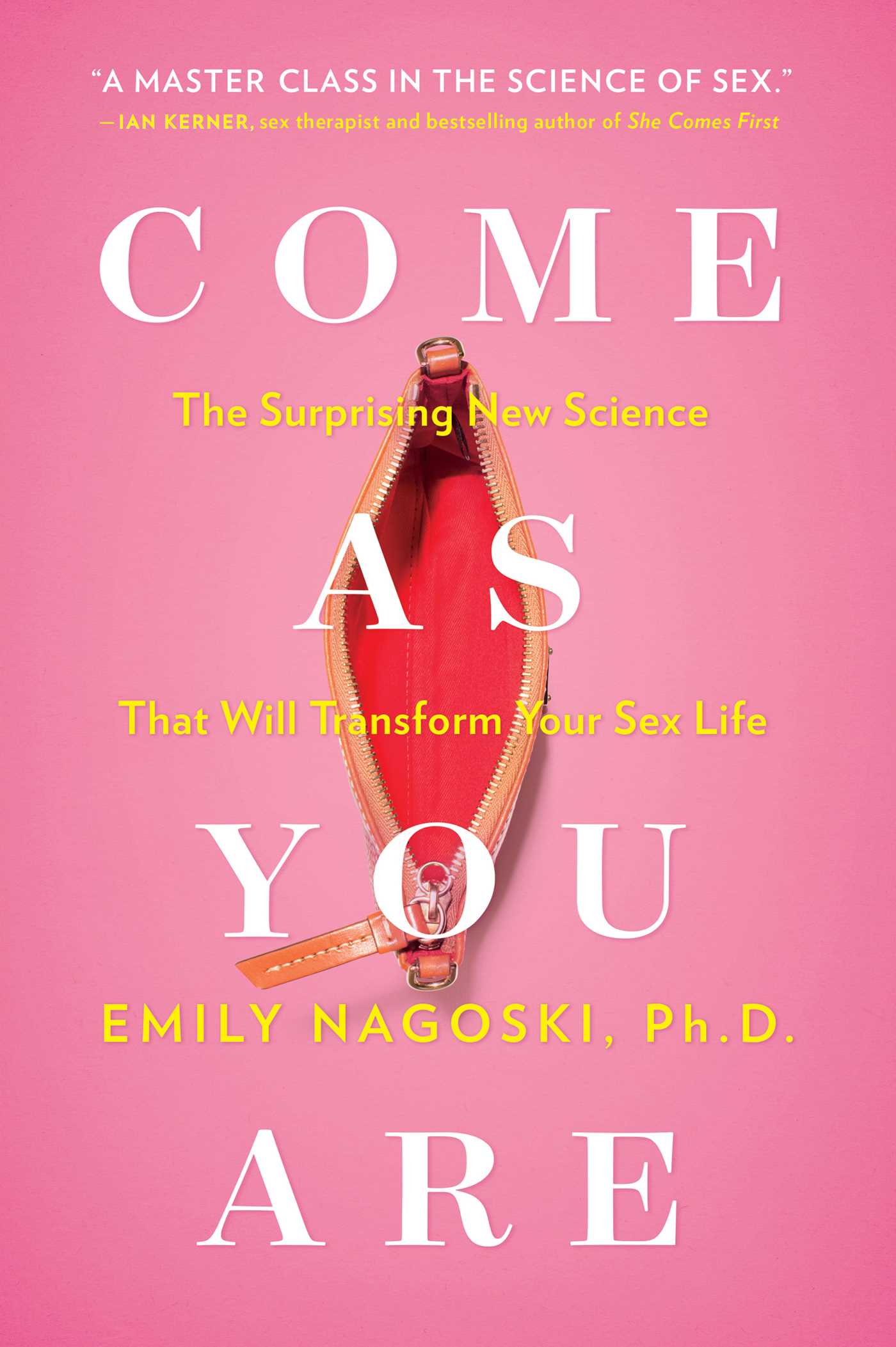
I’ve had a number of men and women, both friends and clients, confide in me privately about their concern about never feeling “horny.” They’ve heard people talk about this phenomenon, and perhaps looking at porn has given them the impression that most people are hot to trot at the spur of the moment, all hours of the day and night. And they worry that there’s something wrong with them, Men often think it’s their masculine duty to pop a boner on command, and that’s one of the perceptions that leads men to succumb to the “low-T” industry and take testosterone supplements or injections. Women fret that if they’re not sufficiently orgasmic, they will be perceived as frigid, unfeminine, unsexy. As a sex therapist, a big part of my job is helping people get to the place of accepting that your sexuality is your sexuality — it can be as individual as your fingerprint, and it doesn’t have to match anybody else’s, though it may take working through a lot of fears, assumptions, and social/cultural pressures to get there. Emily Nagoski’s op-ed piece in today’s New York Times gave me some new language to articulate a particular concern about sexual desire. Nagoski, a sex educator and the author of a forthcoming book called Come As You Are: The Surprising New Science That Will Transform Your Sex Life, takes as her starting point the effort of a company called Sprout Pharmaceuticals to get the Food and Drug Administration to approve a drug called flibanserin to treat low sexual desire in women.

“Researchers have begun to understand that sexual response is not the linear mechanism they once thought it was,” she writes. “The previous model, originating in the late ’70s, described a lack of ‘sexual fantasies and desire for sexual activity.’ It placed sexual desire first, as if it were a hunger, motivating an individual to pursue satisfaction. Desire was conceptualized as emerging more or less ‘spontaneously.’ And some people do feel they experience desire that way. Desire first, then arousal. But it turns out many people (perhaps especially women) often experience desire as responsive, emerging in response to, rather than in anticipation of, erotic stimulation. Arousal first, then desire. Both desire styles are normal and healthy. Neither is associated with pain or any disorder of arousal or orgasm.”

come-as-you-are-9781476762098_hr Nagoski acknowledges that medical or psychiatric treatment may be warranted for women who lack both spontaneous and responsive desire and are distressed by this. For these women, research has found that nonpharmaceutical treatments like sex therapy can be effective.

“But I can’t count the number of women I’ve talked with who assume that because their desire is responsive, rather than spontaneous, they have ‘low desire’; that their ability to enjoy sex with their partner is meaningless if they don’t also feel a persistent urge for it; in short, that they are broken, because their desire isn’t what it’s ‘supposed’ to be. What these women need is not medical treatment, but a thoughtful exploration of what creates desire between them and their partners. This is likely to include confidence in their bodies, feeling accepted, and (not least) explicitly erotic stimulation. Feeling judged or broken for their sexuality is exactly what they don’t need — and what will make their desire for sex genuinely shut down.”

I can attest that it’s not just women who have these concerns. While it is definitely an observable fact that plenty of men register the thought “Hey, I’m horny” and then go looking for a partner to satisfy the craving for sexual satisfaction (hello, Grindr!), it’s equally true that for other men that is a completely alien experience. Gay men who have that particular sexual temperament can feel completely inept and dysfunctional in many contemporary social environments, including social media, sex parties, cruising situations, even cocktail parties where single guys mix and mingle. It’s not uncommon for guys, whether strangers just meeting or people in established relationships, to engage in “checking” behavior — subtly or not so subtly reaching for the other guy’s crotch to see if he has a boner and if he doesn’t interpreting that to signal lack of interest. And yet, for each person, there are almost certainly specific circumstances under which their hearts and bodies get turned on — it’s probably in private, one-on-one, with a partner who has taken the risk of expressing desire or at least a context where mutual acceptance, appreciation, and flirty attraction have made themselves evident. Maybe it takes affectionate touching, or making out, or direct physical contact for arousal to happen, rather than waiting for an erection before making the first move. I’m happy to have Nagoski’s term “responsive desire” to describe that phenomenon.

Think about how your erotic body works. Do you experience spontaneous desire frequently, seldom, or never? Are you someone whose desire emerges in response to someone else’s stimulation? Check out the complete article online here and let me know what you think.

A meditation on love

Love is the mucillage that sticks the construction-paper pumpkins in the scrapbooks of our lives.
— David Mamet

What is love?
Baby, don’t hurt me
Don’t hurt me
No more.
–Haddaway

Valentine’s Day is a commercial bonanza second only to Christmas for the gift-giving industry. Businesses that sell flowers, chocolate, perfume, and greeting cards are busy and happy this time of year. For people who aren’t in romantic relationships, Valentine season can be excruciating, a taunting reminder of being left out of a central social ritual. Not everybody wants to be in a relationship. Plenty of people who are in relationships wish they weren’t. But most people experience at some time a deep, poignant, archetypal longing to have a Special Someone in their lives. I honor and respect that longing, and I treat it seriously when it shows up in conversations with friends and clients.

Lately there’s been a lot of conversation about an article that appeared in the Sunday New York Times’s popular Modern Love column called “To Fall in Love with Anyone, Do This.” Vancouver-based writing instructor Mandy Len Catron began her essay by saying, “More than 20 years ago, the psychologist Arthur Aron succeeded in making two strangers fall in love in his laboratory. Last summer, I applied his technique in my own life, which is how I found myself standing on a bridge at midnight, staring into a man’s eyes for exactly four minutes.” The method Aron crafted in order to generate love consisted of having two people answer a serious of increasingly personal questions (three sets of 12 questions) and then spend four minutes looking into each other’s eyes.

to fall in illo
Catron reports that her own experience confirmed Aron’s findings, though she conducted the experiment not with a complete stranger but with someone with whom she already felt an attraction. “Much of Dr. Aron’s research focuses on creating interpersonal closeness. In particular, several studies investigate the ways we incorporate others into our sense of self. It’s easy to see how the questions encourage what they call ‘self-expansion.’ Saying things like, ‘I like your voice, your taste in beer, the way all your friends seem to admire you,’ makes certain positive qualities belonging to one person explicitly valuable to the other. It’s astounding, really, to hear what someone admires in you. I don’t know why we don’t go around thoughtfully complimenting one another all the time,” she writes.

“Most of us think about love as something that happens to us. We fall. We get crushed. But what I like about this study is how it assumes that love is an action. It assumes that what matters to my partner matters to me because we have at least three things in common, because we have close relationships with our mothers, and because he let me look at him.”

Catron’s article quickly went viral. In just a few weeks, a cottage industry has sprung up around The Questions. The Sunday after her column appeared, the Times noted that the article had generated more than 5.2 million visits to the page online, 365,000 shares on Facebook, and 745 comments on the Times website. The newspaper also published the complete list of The Questions Themselves. Inevitably, the following week the New Yorker published a parody of the questions, “To Fall Out of Love, Do This.” (“5. What’s your favorite song? No, it’s not. I’ve never once heard you listen to that song.”)

to fall out illo
The online magazine Dame ran its own witty version. (“12. What would it take for you stop talking about the Paleo diet? 25. A nuclear bomb is detonated near your home, and you are slowly dying from radiation poisoning. Name the internal organ you’d like to keep functioning the longest.”) Last Sunday, the Modern Love column’s editor Daniel Jones wrote about the 36 Questions phenomenon, and the NY Times has even designed a smartphone app so you can conduct the experiment yourself.

Which I encourage you to do. Let me know how it goes. I probably won’t be going through the sequence myself. Personally, I love questions. I’ve spent most of my professional life asking questions, as a journalist and as a psychotherapist. And I also love being asked questions. Not everyone feels the same way. My sweetheart dreads it when I ask probing questions – he feels interrogated and fears that he will give the wrong answer and fail the test. When I asked one of my sisters why she didn’t call me more often, she confessed, “Because you ask difficult questions.” So I have come to understand that what I consider loving attention and genuine open-ended curiosity can come off as intrusive and demanding. There are, obviously, other ways of creating closeness and intimacy. Anything you do to reveal yourself to someone else, gradually and repeatedly, contributes to building trust and connection.

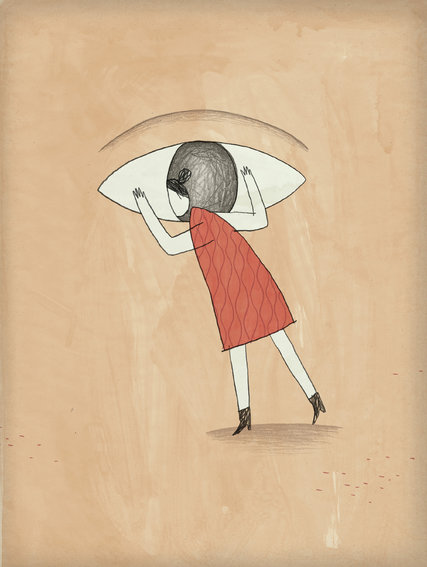
Eye contact is another ambiguous tool. It can be a great way to connect energetically but it can also feel threatening or challenging. I’m struck by how Catron’s article describes the closing extra-credit exercise of Aron’s experiment as “staring,” a word that seems to describe a hostile activity, something we’re taught as children to avoid. But I know from my experience teaching workshops about intimacy that no matter how careful I am to frame the experiment as “gazing into the other person’s eyes,” some people inevitably refer to it as “the staring exercise.”

Catron beautifully captures the vulnerability of the eye-gazing experiment: “I’ve skied steep slopes and hung from a rock face by a short length of rope, but staring into someone’s eyes for four silent minutes was one of the more thrilling and terrifying experiences of my life. I spent the first couple of minutes just trying to breathe properly. There was a lot of nervous smiling until, eventually, we settled in. I know the eyes are the windows to the soul or whatever, but the real crux of the moment was not just that I was really seeing someone, but that I was seeing someone really seeing me. Once I embraced the terror of this realization and gave it time to subside, I arrived somewhere unexpected. I felt brave, and in a state of wonder.”

Looking into someone’s eyes is an extremely brave activity. It’s never clear what you’re going to see looking back at you. Sometimes what gets mirrored back are your own harsh self-judgments or the scrutiny of a critical parent. It takes a lot of practice and presence to hold still long enough to witness the quality of acceptance in another person’s eyes. But that is the essence of intimacy – into-me-you-see.

My favorite meditation on this subject is Bobbie Louise Hawkins’s wonderful poem, “Take Love, For Instance”:

How can it be desirable, that flurry of feeling that if it continues and maintains intensity we call Love?
How perverse we are relative to our own good to have that in our feelings that from the age of thirteen or so, younger all the time they say, until seventy or whatever, no end to it they say, we give over or are given into the “divine emotion.”
Divine mix of anxiety, insecurity, longing that drives us until if we are fortunate, lucky in love, we have a brief relief that shines like fulfillment.
The constant fool’s miracle, like fool’s gold, but inherent; an inherent miracle. Passion brought to bear on eyes that shine back.
And then, or somewhat later, downhill all the way.
From here to there. Remember there.
Caught in the clutches of a one-way ticket. Express.

We are poor.
We are poor.
There is nothing here.

And we sling our everything into the void of it, to be caught.
What is that appetite that pretends to sustenance and ends with all the color gone from the day and no one funny anymore. The appetite that carries veils and obscures our memory.

And can you in that moment’s tender voice say No to it? How mean to refuse it, this little miracle that does so want in. Feel it knocking at your heart.

Poor heart.

See what followed me home.
Can I keep it?


MEDIA: interview online with filmmaker Brian Fender about “DICK: The Documentary”

When I met Brian Fender many years ago, he had completed one short film about LGBT youth (xyQ), and he was just beginning the process of making a documentary about men talking about their penises. I heard from him occasionally over the years and knew that he’d been diagnosed with ALS, a seriously debilitating illness. So I was pleased to read this EdgeMedia article online by my friend Killian Melloy to learn that a) Brian has completed his new film, DICK: A Documentary and that b) he is hanging in there, despite all the difficulties of living with ALS. In this interview, you can see a trailer for film, read about the making of it, watch xyQ in its entirety, and learn about the nonprofit organization Brian is funneling his energy into called Artists Lend Support.

brian fender

RESOURCES: how to cultivate self-compassion

Last week my teacher at the Iyengar Institute mentioned a concept new to me: the eight limbs of yoga. Buddhist practice has so many numbered constructs – the four thises, the five thats – it’s hard to keep track of them all. When he named the eight limbs that Patanjali outlined in the Yoga Sutras, I recognized many of them by name. I’d just never heard them organized this way. Apparently there is a particular hierarchical order, similar to Abraham Maslow’s pyramid of human needs.

The eight limbs of yoga are often represented as a tree (see below). The lower branches, the yamas and the niyamas, which guide moral behavior, are the foundation of the whole structure. The five yamas refer to conduct toward others; they counsel refraining from doing harm through stealing, lying, sexual misconduct, or taking what is not freely given. The five niyamas refer to self-discipline; they advocate for cleanliness, contentment, tapas, self-study, and surrender to God – or, for people who are allergic to the concept of God, celebration of the spiritual. Buddhism is not a religion but a philosophy, therefore there’s no dogma, no insistence on faith or belief. That’s why Buddhism has no commandments but rather guidelines for ethical behavior.

(A word about tapas, in the Buddhist sense rather than referring to Spanish-style small plates of delicious food.  Tapas is an important concept – the word is translated variously as austerity, discipline, and “zeal for yoga.” I like this explanation: “Tapas can mean cultivating a sense of self-discipline, passion and courage in order to burn away ‘impurities’ physically, mentally and emotionally, and paving the way to our true greatness.” In tantric practice, tapas is associated with “sitting in the fire” and expanding your tolerance for impatience, frustration, imperfection, and all the other obstacles that inevitably occur on the path to serenity.)

After the yamas and the niyamas, higher on the tree of yoga you find asana and pranayama, which are the practices we associate with yoga classes – postures and breathing practices. Above them are three limbs related to meditation: pratyahara (withdrawal of the senses), dharana (focus), and dhyana (state of meditation). Finally, at the top of the tree is samadhi, bliss, union with the divine. 8-limbs-of-yogathe-eight-limbs-of-yoga---yog-sundari-ulkup29dMy teacher brought up the eight limbs of yoga to introduce the theme of grounding oneself in the basics. Before you get to bliss, you have to learn to focus. In order to learn to focus, you have to practice the asanas and the breathing. In order to maintain the physical practice, it helps to be grounded in ethical behavior and self-discipline. That’s easier said than done. For the contemporary urban person, it’s pretty easy to find a class or a structure within which to study yoga postures, breathwork, and various forms of meditation. But where do you get instruction, guidance, and support for ethical behavior and self-discipline? Throughout much of time and throughout much of the world, organized religion has provided those services. That’s the strong appeal of membership in a church, a synagogue, a mosque: to have consistent access to a community and to teachers who have spiritual authority. Organized religion can offer comfort by providing answers to the timeless questions of what to do, how to behave, what to believe. The shadow side of organized religion is the potential for rigidity, fundamentalism, and intolerance of difference or questioning. Most people in my world live outside the culture of organized religion, even those who are deeply committed to spiritual practice.

I know from personal experience and from my therapy practice how valuable and yet how elusive the Buddhist concepts of svadyaya and santosha can be – self-study and contentment. Cultivating a spiritual practice requires a considerable amount of initiative, self-awareness, and willingness to take an honest and compassionate look at yourself. I like the phrase that comes from the recovery movement’s 12 Steps: “taking a searching moral inventory.” The dilemma that comes up when conducting such an inventory is that inevitably you bump into all your imperfections, your failings, your mistakes. It’s all too easy to get stuck there, identified only with your deficits, and to live with a constant barrage of harsh self-judgments and the feeling of never being _______ enough. Good enough, thin enough, successful enough…fill in the blank. Never enough. Arriving at a place of contentment and self-acceptance is the central spiritual challenge for most people: finding a way to hold one’s full humanity – all of who you are, your ups and downs, your triumphs and challenges, your joys and your sorrows, your assets and your imperfections – with kindness and compassion. Everyone struggles with this. It’s not easy for anyone.

I remember reading that when the Dalai Lama first started teaching in the United States, he was astonished and sad to learn how many Americans he encountered on the spiritual path live with a crippling self-hatred. Among the Buddha’s most beautiful teachings is the notion that compassion begins with oneself: “You can search throughout the entire universe for someone who is more deserving of your love and affection than you are yourself, and that person is not to be found anywhere. You, yourself, as much as anybody in the entire universe, deserve your love and affection.” The kicker is that if you live with a huge amount of self-judgment, being unable to summon self-acceptance or self-compassion can be one more thing to be down on yourself about.

Three things have helped me grow compassion for myself. Daily meditation practice has been an important foundation in my life for 25 years now, but something major shifted the first time I did a 10-day vipassana retreat at Insight Meditation Society in western Massachusetts. Sitting in silence hour after hour, day after day, I was forced to pay attention to the harsh critical judge in my head constantly blasting his criticisms through a loudspeaker, loudly announcing everything that was wrong with me and everyone around me. It was so painful that I had to realize that this voice came only from inside me (though traces of it sounded very familiar from my hyper-critical father) and it motivated me to learn the skills it takes to turn down the volume on that cruel broadcast and to replace the messages with more soul-nourishing words. Mindfulness retreats generally include instruction in metta, where one practices prayers of lovingkindness and compassion for yourself and others: “May I be peaceful. May I be healthy. May I be happy.” Self-compassion can be learned. It takes practice.

Years of therapy also helped me come to terms with myself, my resources, my limitations, my family heritage, my cultural imprints, my hopes, and my fears. In my training to become a therapist, nothing was more effective and revelatory than the hard long work I did on myself in individual and group therapy, along with clinical supervision from my teachers and colleagues.

I’m also a reader, so in addition to meditation and psychotherapy my svadyaya, my self-study, has always included books by spiritual teachers and seekers and thinkers. Many books have had a profound impact on me, but five of them resonate so strongly that I share them with therapy clients all the time. They have practically become the textbooks that accompany the careful, compassionate inner work that I do with people.

Taming Your Gremlin by Richard Carson came to me from the realm of life coaching. Carson introduces the extremely useful concept of the gremlin, that voice inside you that knows you so well and knows how to speak to you so persuasively and protectively and is absolutely expert at spoiling your fun. It’s a short, breezy, light-hearted but smart book that offers guidance on identifying and dealing with gremlins, mostly by not engaging or arguing with them but by taking some breaths and doing something different.

Radical Acceptance by Tara Brach directly addresses the struggle to win free of the harsh internal voices insisting that you’re not good enough. I met Brach when she co-facilitated that life-changing vipassana retreat with Jack Kornfield (another important teacher of mine), and I appreciate how much she draws from her own personal experience in humorous, honest, and self-forgiving ways. Often when I need to summon the voice of self-compassion, it’s her soothing voice that I hear (largely thanks to the CD, Embracing Difficult Emotions, that came with Radical Acceptance).

The Velvet Rage by Alan Downs is the best psychology book I know of that speaks directly to gay men. Downs charts three stages of gay men’s emotional development: working through toxic shame around being gay; working through toxic shame around imperfection; and arriving at authenticity. The key concept that made sense to me is how Downs describes the second stage as revolving around seeking validation from others, which is something we all do. The ultimate goal of authenticity arrives when the validation comes from within. But that can be a long journey. And when you’re seeking external validation, Downs points out, if you’re not being actively validated, it can feel like you’re being actively invalidated – which is simultaneously enraging and, you know, not nice, so it has to be hidden: thus, the Velvet Rage. How to identify these phenomena as they occur in your life and to manage them compassionately is the gist and the gift of his book.

A therapy client turned me on to David Richo’s How To Be an Adult. At first I was put off by the title of this slim volume because it sounded so Mickey Mouse, so simplistic to the point of being insulting. But it lives up to its subtitle: “A Handbook for Psychological and Spiritual Integration.” Richo addresses core issues such as fear, anger, guilt, and intimacy with remarkable succinctness and tremendous wisdom. He often organizes his brief chapters around lists and charts. The one that distinguishes anger from drama is so simple and clear yet surprisingly true that you have to laugh.

Daring Greatly by Brené Brown grew out of her social research on the subject of vulnerability (the subject of her famous TED talk). Her writing contains all the warmth and humor and self-revealing genuineness of her speaking voice. And she’s especially good at addressing the issue of shame, describing what it is, and sharing a pathway to acquiring what she calls “shame resilience,” a way to greet harsh self-judgments sensibly and effectively.

I don’t consider any of these books to be sacred texts to swear by. Nothing requires you to read and believe every word of them. Nor are they the only books that deeply resonate with me; I could just as easily talk about Jack Kornfield’s A Path with Heart, Byron Katie’s Loving What Is, or Pema Chodron’s teaching tape Getting Unstuck. To me the value of these books and these teachings is that they offer a vocabulary for identifying and understanding the emotional, spiritual, and psychological challenges that we all face as human beings. They provide a valuable, non-dogmatic road map for the journey to self-knowledge, self-forgiveness, self-compassion, and self-acceptance. Svadyaya and santosha.

For some people, reading books provides fantastic spiritual nourishment all by itself. For others, it helps to share books with other people, individually or in groups. As I mentioned, key concepts from these various books have provided fuel for many fruitful sessions with me and my therapy clients. If any of these topics resonate with you or sound like something you would like support to address and understand, please know that I am available as a resource to you.

EVENTS: STRETCH Festival in Berlin, April 3-5, 2015

Last year my friend and Authentic Eros teaching partner Kai Ehrhardt conceived and coordinated STRETCH, a weekend-long festival of workshops and performances for gay/bi/trans/queer men, in his hometown, Berlin. It was a big hit, so he has scheduled a second annual STRETCH Festival for Easter weekend this year.

stretch festival

This year I will be among the staff of teachers presenting an array of interactive experiences along the spectrum from yoga to music to breathwork to experimental performance to sexuality workshops. If you’re looking for a good excuse to visit Berlin and/or commune with a vibrant population of European gay/queer guys, here’s a good one.

Here’s how the festival describes itself:

STRETCH is a three-day festival for men in the heart of Berlin. It features 36 miniworkshops, performances, dance, time to socialize and mingle in order to inspire and experience a deeper, wider, more soul- and playful connection to one another and to life itself.
 
Expert teachers, practitioners, therapists, healers, renegades and artists invite you to this second gathering exploring the interface of bodywork, mindfulness, art, movement, sexuality, psychology, spirituality, gender, identity, ritual, performance and social engagement.
 
We are looking forward to welcome interested and curious participants: use this chance to discover and explore new things and to get nourished from body to soul.

You can check out the calendar of events online here and see if any of it calls out to you.