SEXUAL HEALTH: sex therapy for wounded veterans

In an article by Joseph Jaafari posted online May 12, The Atlantic covered creative therapies that are teaching veterans with genital injuries alternative ways to be intimate. “While all Veterans Affairs hospitals offer Occupational Therapy, which includes sexual therapy, the VA Long Beach Healthcare System in southern California and Walter Reed Medical Center in Bethesda, Maryland, are unique in that they have introduced courses and counseling focused on this issue. The programs offer guidance as veterans recover from genital wounds, and are part of an increasing effort by the military to both address these injuries and protect soldiers from them in the future.”

The article focuses on the treatment of a former U.S. Marine Corps staff sergeant named Timothy Brown. “Post-recovery, Brown has taken a different approach to sex than he had before—shifting the emphasis from his personal satisfaction to insuring that his partner enjoys the experience. ‘I went from being self-centered to trying to encompass everything for the both of us,’ he says. ‘Simple things like feeling [his partner’s] body, feeling their muscles when you hit the right spot.’ While he developed this outlook on his own, he notes that the program enabled him to feel more secure in his sexual life.”

Army Spec. Chris Smith, a soldier from the 10th Mountain Division stationed at Fort Drum, sits in The Different Drummer Internet Cafe in Watertown, New York April 16, 2008. The Different Drummer is a place where soldiers both active and discharged can go for support, counciling or just to socialize. Soldiers of the 10th Mountain Division are among those who've spent most time in Iraq and Afghanistan, making its base at Fort Drum a "canary in a coal mine" for a looming crisis of post-traumatic stress disorder.  Picture taken on April 16, 2008.     To match feature USA-MILITARY/ and USA-MILITARY/MARRIAGE         REUTERS/Mark Dye          (UNITED STATES) - RTR208HV

Army Spec. Chris Smith, a soldier from the 10th Mountain Division stationed at Fort Drum, sits in The Different Drummer Internet Cafe in Watertown, New York April 16, 2008. The Different Drummer is a place where soldiers both active and discharged can go for support, counseling or just to socialize. Soldiers of the 10th Mountain Division are among those who’ve spent most time in Iraq and Afghanistan, making its base at Fort Drum a “canary in a coal mine” for a looming crisis of post-traumatic stress disorder. Picture taken on April 16, 2008. Photo by Mark Dye

The article notes that “Brown’s approach is exactly what occupational therapists at Walter Reed have tried to teach other injured soldiers. Within the hospital there is a sexual health and intimacy service that focuses on education and therapy. According to Brown, therapy sessions were de facto sex classes that included sex toys aimed at stimulating different parts of the body. Officials at Walter Reed wouldn’t comment on what products were used during the sessions. In addition to funding classes like this one, the Department of Defense spent more than $84 million on erectile dysfunction drugs in 2014.”

Check out the whole story online here and let me know what you think.

DID YOU SEE: gay critique of mainstream tantra classes

Tantra is an ancient spiritual practice that seeks to channel divine energy through human experience. In our time, the word “tantra” is tossed around very lightly, and its meaning shifts wildly depending on the context. In its classic definition, tantra is a school of meditation that envisions universal consciousness as an intricate erotic dance between Shiva and Shakti, form and flow. In the West, the sexual metaphor has gotten literalized so that the most familiar manifestations of tantra are tantric sex and tantric massage, which invite participants to experience sex as energy. People are often drawn to study tantra by the invitation to deepen the connection between sexuality and spiritual practice that other religious traditions tend to keep strictly apart. There are many different ways to study tantra in schools, classes, and workshops, and like any educational process the quality of teachers and teachings can vary wildly. The original tantric teachings rely super-specifically on the dance of male and female energies, which complicates matters for queer people undertaking the study of tantra, as Lisa Luxx discusses in great detail in her article “Why is Gay Tantra So Taboo?” which appears on Ruby Warrington’s website The Numinous (subtitled “material girl, mystical world”). Her description of attending a tantra training and being pressured into ridiculously literal-minded tantric exercises that reinforce hoary old gender-role stereotypes matches my own experience when I first started exploring the world of tantra in the early 1990s, when most tantra workshops derived from the teachings of Margot Anand (best-known for her book The Art of Sexual Ecstasy).

concha on behance
credit: Concha on Behance

Luckily, there are tantra teachers that speak to the experience of queer people. The Body Electric School, founded in 1984 by Joseph Kramer, incorporated tantric and Taoist teachings into a series of workshops starting with “Celebrating the Body Erotic” that taught erotic massage as a healing practice combining breath and touch to connect the dots between the physical, the erotic, the emotional, and the spiritual. While the Body Electric School originally emerged from and spoke to the population of gay men struggling to preserve sexual health and vitality in the midst of the AIDS crisis, it expanded its offerings to include trainings for men, women, and those who decline the gender binary. Other trainings have evolved that address tantra specifically from a queer female perspective, such as Barbara Carrellas’s Urban Tantra program. One of the coolest things about Lisa Luxx’s article is that the comments thread provides information and links to other tantric explorations for women all over the world that transcend simplistic gender stereotypes.  Check it out and let me know what you think.

DID YOU SEE: “Prince’s Holy Lust”

Among the outpouring of tributes to the musical genius Prince, who died Friday morning at age 57, two in particular caught my attention.  One is the CNN interview with community organizer Van Jones, who talked about all the ways that Prince quietly used his money and his fame to help people all over the world, an inspiring model of selfless service. You can watch that online here.

prince
More to the point of this blog, in the Sunday NY Times, music critic Touré wrote an op-ed piece about how from the very beginning Prince embodied, articulated, and championed healing the split between sexuality and spirituality.

The piece begins:

“Let me tell you why ‘Adore’ is the central song in the Prince canon. Because in ‘Adore’ you get the commingling of two keys to understanding the man and his music: his sexuality and his spirituality. In the second verse he paints the picture: ‘When we be making love / I only hear the sounds / Heavenly angels crying up above / Tears of joy pouring down on us / They know we need each other.’ They’re having sex under a sprinkling of angel tears, which are flowing because of the angels’ admiration of their love.

“This is the erotic intertwined with the divine. The Judeo-Christian ethic seems to demand that sexuality and spirituality be walled off from each other, but in Prince’s personal cosmology, they were one. Sex to him was part of a spiritual life. The God he worshiped wants us to have passionate and meaningful sex.”

Read the whole piece online here and let me know what you think.

Quote of the day: PUBLIC NUDITY

PUBLIC NUDITY

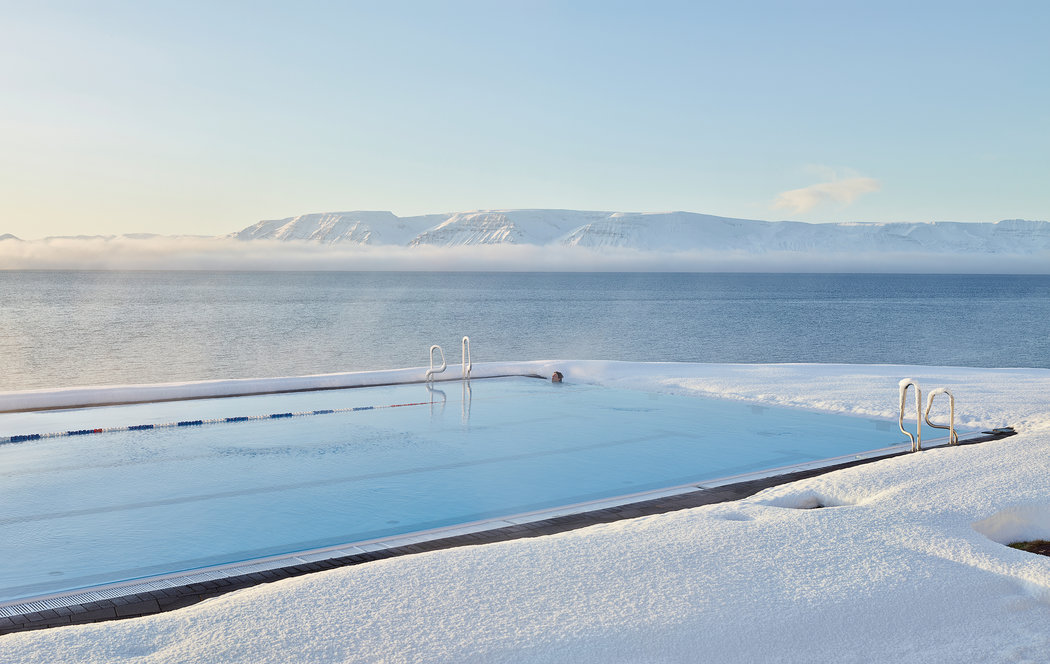
“Because of the weather, we don’t have proper plazas in the Italian or French style,” the writer Magnus Sveinn Helgason explained to me. “Beer was banned in Iceland until 1989, so we don’t have the pub tradition of England or Ireland.” The pool is Iceland’s social space: where families meet neighbors, where newcomers first receive welcome, where rivals can’t avoid one another. It can be hard for reserved Icelanders, who “don’t typically talk to their neighbors in the store or in the street,” to forge connections, Mayor Dagur told me. “In the hot tub, you must interact. There’s nothing else to do.”

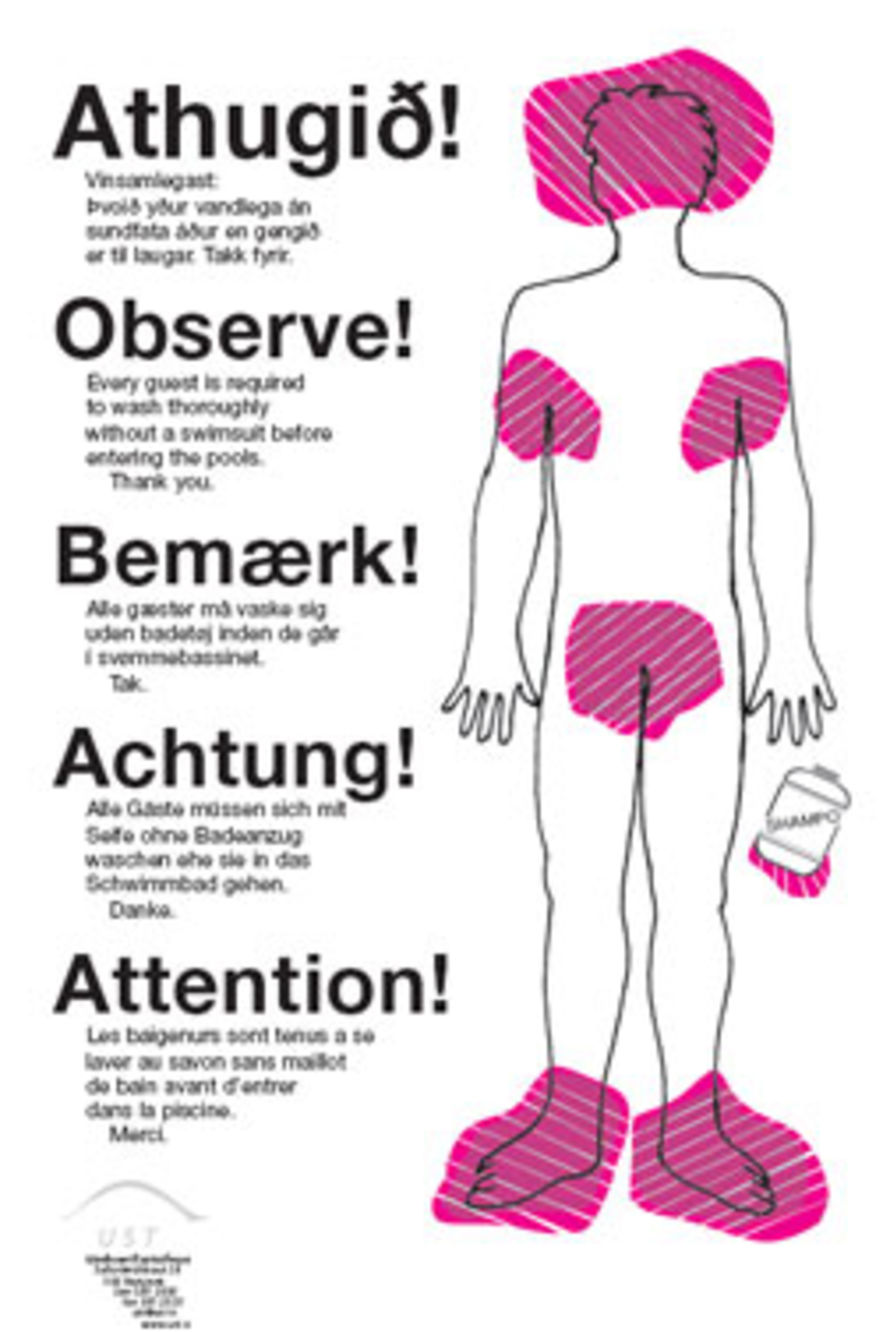
Not only must you interact; you must do so in a state of quite literal exposure. Most Icelanders have a story about taking visitors, often American, to the pools and then seeing them balk in horror at the strict requirement to strip naked, shower and scrub their bodies with soap from head to toe. Men’s and women’s locker rooms feature posters highlighting all the regions you must lather assiduously: head, armpits, undercarriage, feet. Icelanders are very serious about these rules, which are necessary because the pools are only lightly chlorinated; tourists and shy teenagers are often scolded by pool wardens for insufficient showering. The practice was even the subject of a popular sketch on the comedy show “Fostbraedur,” in which a zealous warden scrubs down a reluctant pool visitor himself.

That one of the buck-­naked bystanders in that viral video, Jon Gnarr, was later elected mayor of Reykjavik demonstrates that Icelanders are quite un-­self-­conscious about nudity in the service of pool cleanliness. This was made most clear to me, perhaps, in a dressing room in the town Isafjordur, where a chatty liquor-­store manager named Snorri Grimsson told me a long story about the time a beautiful Australian girl asked him to go to the pool but then revealed that she doesn’t shower before swimming. He mugged a look of comic horror, then brought home the kicker: “It was a very difficult decision. Thankfully, the pool was closed!” I could tell this bit killed with his fellow Icelanders, but my own appreciation of it was somewhat impeded by Snorri’s delivery of it in the nude, his left foot on the sink, stretching like a ballet dancer at the barre.

“It’s wonderful,” an actress named Salome Gunnarsdottir told me in the pool one evening. “Growing up here, we see all kinds of real women’s bodies. Sixty-­five-­year-­olds, middle-­aged, pregnant women. Not just people in magazines or on TV.” Her friends, all in their 20s and pregaming for a Saturday night out in the bars, nodded enthusiastically. “Especially pregnant women,” Helga Gunnhildursdottir agreed. “You can see: Oh yes, she really got quite big.”

iceland pool    The pool in Hofsos, an old trading port on the northern coast. Credit Massimo Vitali for The NY Times

“It’s so important,” Salome said earnestly. “You get used to breasts and vaginas!”

As a journalist, I will never forget the uniquely Icelandic experience of shaking hands with handsome Mayor Dagur and then, just minutes later, interviewing him as we each bared all. (In the tradition of politician interviews everywhere, an aide lurked nearby, in a manner I would call unobtrusive but for the fact that he was also naked.) I admit I found this disconcerting at first, but eventually there was something comforting about seeing all those other chests and butts and guts — which for the most part belonged to normal human-­being bodies, not sculpted masterpieces. And that comfort extends out into the pool proper, where you might be covered — only a little, in my case — but are still on display.

But near-­nudity, by encouraging a slight remove from others, also allows the visitor to focus, in a profound and unfamiliar way, on his own body, on its responses and needs. Despite its being a social hub, the pool also cultivates inwardness. Results of a questionnaire distributed by Valdimar’s research team suggested that women in particular go to the pool to seek solitude. According to women I talked to, most everyone respects the posture of aquatic reverie — head tilted back against the pool wall, eyes closed, mouth smiling a tiny smile of satisfaction — that you adopt when you come to the pool wanting to be left alone.

Sigurlaug Dagsdottir, a graduate student researching the pools, speculated that the sundlaugs’ social utility in Icelandic communities derives in part from the intimacy of the physical experience: In the pool, she said, you can “take off the five layers of clothing that usually separate you from everyone else.” As such, the pools are a great leveler: Council members in Reykjavik make a point to circulate among the city’s sundlaugs, where they often take good-­natured grief from their constituents. The filmmaker Jon Karl Helgason, who is shooting a documentary about Iceland’s pools, said, “When people are in the swimming pool, it doesn’t matter if you are a doctor or a taxi driver.” His girlfriend, Fridgerdur Gudmundsdottir, added, “Everyone is dressed the same.”

–Dan Kois, “Iceland’s Water Cure,” New York Times

LET’S TALK ABOUT SEX: how teenagers view pornography (well, Swedish teenagers, anyway)

I recently came across online a blog post that’s five years old but nevertheless intriguing to read. On the website for Psychology Today, Michael Castleman summarizes the results of a study in the Journal of Sex Research that explored how 73 middle-class Swedish teens, age 14 to 20, actually felt about pornography.

psychology today
Castleman found the researchers’ conclusion reassuring: “Most participants had acquired the skills to navigate the pornographic landscape in a sensible manner. Most had the ability to distinguish between pornographic fantasies on the one hand, and real sexual interactions and relationships on the other.”

Read his article online here (or check out the original journal article here) and let me know what you think.

DID YOU SEE: “When Did Porn Become Sex Ed?” in the New York Times

Peggy Orenstein has written very well for many years about the issues confronting young women in American culture. An excerpt from her new book, Girls and Sex: Navigating the Complicated New Landscape, was published in the Sunday New York Times today that directly addresses the question “When Did Porn Become Sex Ed?” While much has been written and discussed about the impact of pornography on how young men learn about and practice sex, not so much has been said about the same subject as it applies to young women.

orenstein-superJumbo

A passage that stood out for me:

According to the Centers for Disease Control and Prevention, fewer than half of high schools and only a fifth of middle schools teach all 16 components the agency recommends as essential to sex education. Only 23 states mandate sex ed at all; 13 require it to be medically accurate.

Even the most comprehensive classes generally stick with a woman’s internal parts: uteruses, fallopian tubes, ovaries. Those classic diagrams of a woman’s reproductive system, the ones shaped like the head of a steer, blur into a gray Y between the legs, as if the vulva and the labia, let alone the clitoris, don’t exist. And whereas males’ puberty is often characterized in terms of erections, ejaculation and the emergence of a near-unstoppable sex drive, females’ is defined by periods. And the possibility of unwanted pregnancy. When do we explain the miraculous nuances of their anatomy? When do we address exploration, self-knowledge?

No wonder that according to the largest survey on American sexual behavior conducted in decades, published in 2010 in The Journal of Sexual Medicine, researchers at Indiana University found only about a third of girls between 14 and 17 reported masturbating regularly and fewer than half have even tried once. When I asked about the subject, girls would tell me, “I have a boyfriend to do that,” though, in addition to placing their pleasure in someone else’s hands, few had ever climaxed with a partner.

Boys, meanwhile, used masturbating on their own as a reason girls should perform oral sex, which was typically not reciprocated. As one of a group of college sophomores informed me, “Guys will say, ‘A hand job is a man job, a blow job is yo’ job.’ ” The other women nodded their heads in agreement.

I love that Orenstein is calling attention to the discrepancy between the sex education that schools offer kids and what porn teaches them. And I love that enlightened sex educators like Carol Queen, who co-founded the women’s sex-toy emporium Good Vibrations in San Francisco, take it as their mission to teach people not just about sex but about pleasure. Her newly published The Sex and Pleasure Book, co-written with Shar Rednour, is a valuable resource for anyone’s sexual health bookshelf alongside Erika Moen’s web comic (collected into two book-length volumes so far) Oh Joy, Sex Toy.

oh joy sex toy

MEDIA: Presidential penis size

I’m as amused as anyone else by College Humor’s new video, “Donald Trump: Show Us Your Penis.” But I’d like to shift the conversation a little bit, out of compassion for my small-dick bros, who die inside a little bit every time they hear jokes about little dicks.

For the record, Trump never said, “I have a big dick.” He said, “I guarantee you, there’s no problem.” You can read that any number of ways. Perhaps he would like you to read it as, “I have a big dick.” He could also be saying, “No one’s ever made any complaints. My junk works.”

In any case, I’d like to go easy about equating “small dick” with “problem.” Mostly because “small dick” is entirely relative, and the ubiquity of porn (in which no one has a dick that is not big and hard) has oppressed legions of men into fearing that they are somehow inadequate because they don’t have a porn-star dick.

Not that Madonna speaks for all women or all connoisseurs of cock, but when I interviewed her for The Advocate in 1991 at the time of Truth or Dare, we had a playful conversation about her sex partners, in which she modeled the proper attitude for any sensible sex-positive person who has sex with men:

madonna coverHow do you feel about dildos?

I’m not really interested in dildos.

How about sex toys of any kind?

No. I like the human body. I like flesh. I like things that are living and breathing. And a finger will do just fine. I’ve never owned a vibrator, if that’s what you want to know.

Tell me about your boyfriend Tony Ward. Is it true he has an ass you can serve drinks off of?

Well, I’ve never been served a drink off his ass. But he does have a great ass.

How big is his dick?

I don’t know. I haven’t measured it, but it’s big enough for me.

Does size matter to you?

No.

Do you used a strap-on with Tony?

No. I don’t know where that story came from….

Tell me about Warren Beatty. How big is his dick?

Once again, I haven’t measured it, but it’s a perfectly wonderful size.

madonna cover
As for Donald Trump, I don’t care about his penis. Nobody cares about his penis. The problem with him is that he’s a racist demagogue and a pathological egomaniac who isn’t qualified to lead anything other than his own demented reality TV show. If you need concrete documentation of any of that, here’s the video you need to watch.

SEXUAL HEALTH: sensible talk about herpes

Researching medical conditions online is always a dicey proposition. Dr. Google almost always offers too much information (e.g., statistics without context), focuses on worst-case scenarios, and scares people to death, sometimes intentionally. All of that is especially true when it comes to the subject of herpes. “I have seen herpes make more people cry than a positive hepatitis-C result,” says my friend Brett, a veteran sex educator who recently graduated from nursing school. “Doctors really do the world dirty by how they present this.”

I have had conversations with numerous clients who were concerned (“freaking out” is not too strong an expression) to learn they themselves have herpes or that a partner has herpes, based on either a blood test coming back positive or experiencing an outbreak of herpes lesions. Because it is true that once you’ve acquired the herpes virus it stays in your nervous system forever and that herpes is sometimes transmitted through sexual contact, it’s not uncommon for someone in the throes of freaking out to leap to the conclusion that “OMG my boyfriend has given me an incurable disease and/or I can never have sex again!” Neither of those statements is accurate. Active herpes infections are something to take seriously, and of course conscientious people make every effort not to pass sexually transmitted infections on to their sex partners. But herpes is treatable, not tragic. I would like to take this opportunity to offer some calm practical information about the realities of living with herpes.

ScarletH

What we’re talking about is the herpes simplex virus, of which there are two types, HSV I and HSV II. HSV I affects the mouth and face and causes crusty cold sores on the lips or chancre sores inside the mouth. Almost everyone has HSV I; it’s usually acquired as an upper respiratory infection during early childhood. HSV II causes genital herpes, which can manifest as small clusters of itchy blisters on the penis, vulva, or anus. “There is some evidence of crossing over (HSV I causing genital herpes and HSV II causing oral herpes),” says Brett, “but the numbers don’t support the freakout.”

Guys usually learn they have herpes when they find tiny blisters on their dicks that turn into painful sores. It can take a couple of weeks for the sores to run their full cycle of scabbing over and then healing. (Anal and vaginal herpes can take longer to heal because of the moist environment in which they occur.) The first outbreak is always the worst. It can be treated with the antiviral medication acicyclovir (Zovirax) and its variations, famciclovir (Famvir) and valacyclovir (Valtrex). Taking this medication daily can reduce the severity of symptoms and frequency of recurrence. You can expect outbreaks to occur at unpredictable intervals, triggered by a cold or stress or friction. Recurrences usually get less severe and less frequent over time. If you have HIV or hepatitis-C, your immune system may be more susceptible to herpes outbreaks and so requires extra care and attention.

It’s possible to acquire the herpes virus without experiencing any symptoms. “How would you explain to someone what it means when a blood test returns positive for herpes simplex with no symptoms?” I asked Brett. He said, “It’s probably a mild or previously acquired infection, newly detected. If you discover you have it and you aren’t covered in lesions, rejoice, because it will continue to fade.” Another sex educator I know tells the people he counsels that a blood test that comes back positive for herpes most likely means that you’ve had sex with more than four people in your life.

How do you avoid passing genital herpes to a partner? That’s easy. You know when you have a herpes sore on your dick because it hurts and you don’t want anyone messing around with it in that condition anyway. Herpes is most infectious when there’s an open sore; once the skin has healed over, it’s safe to engage in sex with a partner. You may read online scary language about “viral shedding” that suggests that you’re infectious whether you have a visible sore or not. I don’t mean to be cavalier about this, but if it’s not measurable there’s no point in making yourself crazy about it, anymore than it makes sense to stay home all winter to avoid seasonal airborne colds.

How do you avoid contracting herpes from a partner? That’s also pretty easy. All sexually transmitted infections can be prevented by using condoms for insertive sex – there’s a reason that condoms used to be referred to as “prophylactics.” And let’s be honest, not everyone uses condoms for insertive sex. (Almost no one uses condoms for oral sex.) If you don’t, it’s common sense to take some other precautions, which can include having an honest and detailed conversation with your partners about possible infections (a conversation that does not limit itself to the offensive question “Are you clean?”) and/or visually examining the apparatus for suspicious bumps or rashes. I know it’s awkward to talk about these things, so try to make it fun and safe for yourself and others. For helpful suggestions on that front and a rational perspective on herpes from a woman’s point of view, check out the website of Ella Dawson, who has written numerous brave, informative, personal, mythbusting blog posts about many different aspects of herpes.

If you’re sexually active, it’s wise to get tested on a regular basis for sexually transmitted infections. If you know that you’re the kind of person who’s prone to hysteria and runs to the doctor to get tested after every sexual encounter that poses some risk, you might want to seek help and support from friends, peers, or professionals to scale back the behavior that causes you to freak out. Life is too short to let exaggerated fears get in the way of the pleasures of sex.


DID YOU SEE: Out Magazine on sex work as health care

The latest issue of Out magazine contains an honest, open essay by Andrew Gurza called “Price of Intimacy” in which the author describes his quest for nurturing erotic contact and his nourishing experience with a sacred intimate practitioner.

price of intimacy illo                                                              Illustration by Emiliano Ponzi

“I’d never considered the price of intimacy until I hired a sex worker,” Gurza begins. “Though I’d been learning to embrace my life in a wheelchair—a result of cerebral palsy—going without touch, or even access to my own body, was taking a toll. Even so, I didn’t come to my decision lightly. I was worried about shame, stigma, and fear, and concerned I’d pay for time and still not get what I needed. I spent weeks quieting the voices in my head telling me that using the services of a sex worker was not a good idea. Would this be the only way I could find intimacy? Would someone even want to do this with me, or would he only view it as a charitable opportunity to help a cripple? Despite all these questions, I sat in my apartment reflecting on my nearly year-long celibacy. It was time to take care of myself.”

The encounter he describes sound moving and hot. It reminded me of the movie The Sessions, based on a similar article by Mark O’Brien, a man living with cystic fibrosis who engages the services of a sexual surrogate partner.

It takes a lot of courage for anybody — whether well-bodied or differently abled — to see sexual healing from a professional. And although sex workers come in many sizes and shapes, skills and motivations, there are practitioners who know what they’re doing and can facilitate transformative pleasurable encounters.

Check out Gurza’s article here and let me know what you think. You can also check out the article I wrote on “Sex Work as Health Care,” adapted from a talk I gave at one of several Gay Men’s Health Summits in Boulder, Colorado.

EVENT: summer retreat in Tuscany for gay men

Have you ever been to Italy? If not, maybe it’s time. If so, do you miss it? I do. That’s why I’m going back this summer with my friend and colleague John Ballew to host

COME BACK TO YOUR SENSES – Cultivating Sensuality in Tuscany
A workshop for gay men
June 11-18, 2016

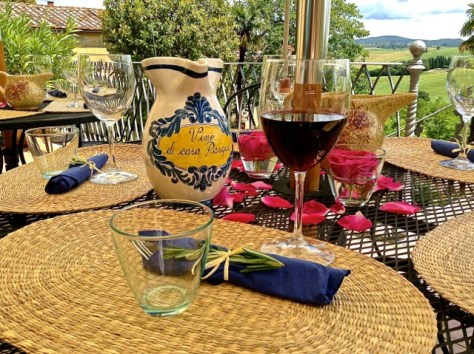
Terrace-Lunch-AH-2013

About the Program:

In today’s fast-paced world, hard-working people spend their days harnessed to computers and electronic devices. We believe it’s spiritually rewarding to take time to nourish yourself, to explore and refine simple pleasures. We invite you to come back to your senses.

Presented under the auspices of our friends at Il Chiostro, this retreat offers more than simply the opportunity to get away from ordinary life. We are inspired by the ancient philosophy of Epicureanism. Dating from the 4th century BC, Epicureanism taught that the pleasures of the senses offer a verifiable standard of truth and therefore can serve to cultivate wisdom, justice, and happiness.

During the week-long retreat, we will spend time cultivating all of the senses. You will be invited to really see what you see, taste what you taste, smell what you smell, hear what you hear, and touch what you touch – really slow down, savor your sensory impressions and replenish your skills of discernment.

In a setting that is both safe and inviting to gay men, we will help you remember the joy of life in a body!

pool and gazebo

“Come Back to Your Senses” is a rich but gently structured adventure. Our days together will alternate between two different kinds of activity:

1) interactive group exercises designed to help us slow down, engage our sensual mechanisms, recalibrate our awareness of what’s important in our lives, activate our creativity, and cultivate deeper intimacy with ourselves and others; and

2) expeditions to nearby towns such as Montalcino and Pienza or destinations such as the Abbey at Sant’Antimo or the spa Bagno Vignoni.

There will be time to relax and enjoy the beautiful Tuscan setting, and every evening we will sit down for a leisurely delicious multi-course dinner prepared just for us. There’s something really special about sharing these activities in Italy with a soulful group of open-hearted gay men. The size of the group is limited to 10 participants.

perfect moment dievole

Accommodations: The program will take place at Il Chiostro’s favorite new location, San Giovanni d’Asso in Tuscany, 40 km southeast of Siena. We will stay in an ancient farmhouse called “Il Tribbio,” which was completely refurbished in 2005. This large house has five double bedrooms, each of which has a private bathroom and air-conditioning. Outside there is a loggia with panoramic views of the surrounding area known as the Val d’Orcia. a swimming pool, and large outdoor spaces for gathering or relaxing. In front of the house there is a large, beautiful garden with olive and pomegranate trees and a wide grassland, from which you can enjoy a wonderful view of the rolling Sienese hills.

map

Il Tribbio is located in a peaceful countryside 10 minutes by foot (1 km) from the romantic village of San Giovanni d’Asso, which has a beautiful 14th century castle, a charming tiny 11th century Romanesque church, a crazy botanical garden called Il Bosco della Ragnaia (curated and owned by an American painter), and a truffle museum (most of the truffles that come from Italy originate here).

Price: $2,595 p/p

Includes:

  • Double room with ensuite bathroom and shower
  • Daily breakfast and dinner, including wine
  • Workshop tuition, daily experiences facilitated by the instructors
  • Selected excursions with the group

Price does not include:

  • Airfare
  • Lunch
  • Independent meals and sight-seeing

To register:  A non-refundable deposit of $500 is required to secure your spot in the workshop.  Payment can be made online here with a credit card, or you can follow the instructions to send in your registration and payment by mail.  Once we receive your deposit we will send you a formal Registration Confirmation with further information about the program.  You will receive 2-3 other correspondences by email prior to the workshop with information about Italy, a supplies list and an electronic invoice for the balance.  Final Balance is due by May 1st.

Contact us for more information:  info@ilchiostro.com or speak to the registration staff live at 800-990-3506. If you have any questions, feel free to contact either me or John Ballew directly.